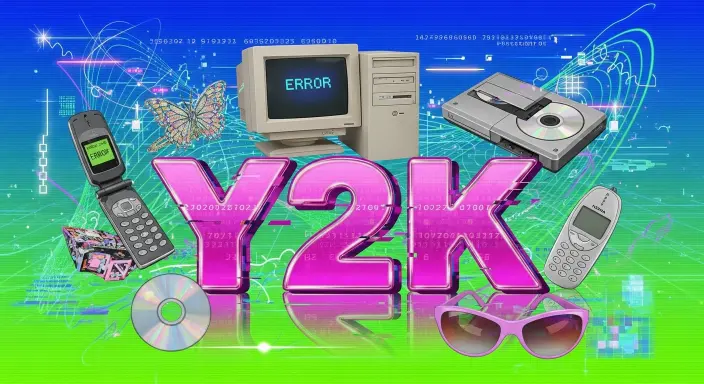
Y2K is one of those terms that instantly sparks curiosity, nostalgia, and even a little confusion.
If you’ve ever wondered what people were panicking about at the turn of the millennium, you’re not alone.
In simple terms, Y2K stands for “Year 2000,” and it refers to a computer-related problem that caused widespread concern as the year 1999 ended.
Back then, many computer systems used only two digits to represent the year like “99” for 1999.
Experts feared that when the clock struck 2000, computers would misinterpret “00” as 1900, potentially leading to errors in banking, airlines, utilities, and government systems.
The Y2K problem wasn’t just about technology it became a global topic, appearing in news headlines, movies, and pop culture.
In this article, we’ll break down what Y2K really means, why it mattered, how it was handled, and why it still captures our imagination today.
What Does Y2K Stand For?
Y2K stands for “Year 2000”, a simple phrase with a surprisingly complex history. The term became widely known in the late 1990s as experts began warning about potential computer failures at the start of the new millennium.
But why did such a short abbreviation cause global concern? The answer lies in how computers stored dates.
In older systems, memory and storage were limited, so programmers often shortened four-digit years to just two digits.
For example, 1999 was stored as “99.” This practice worked fine until the year 2000 approached. When systems read “00,” they might interpret it as 1900 instead of 2000, causing errors in calculations, software programs, and data processing.
This seemingly small problem became known as the Y2K bug or millennium bug. Businesses, governments, and tech experts worldwide realized that if the issue wasn’t fixed, it could affect critical systems such as banking, air travel, power grids, and medical equipment.
The term “Y2K” quickly spread beyond tech circles, appearing in news reports, movies, and even everyday conversations.
Today, Y2K is remembered not only as a technological challenge but also as a cultural phenomenon, symbolizing both the fears and ingenuity of the digital age.
Understanding what Y2K stands for is the first step to appreciating why the world took such extensive measures to prevent potential chaos when the calendar flipped to the year 2000.
The Y2K Problem Explained
The Y2K problem, also called the millennium bug, was essentially a coding issue that had the potential to disrupt computer systems worldwide.
As mentioned earlier, older computers and software often stored years using only two digits to save memory. While this shortcut seemed harmless, it created a hidden problem: when the year 2000 arrived, systems might read “00” as 1900.
This small oversight could cause serious errors in calculations, date-sensitive transactions, and automated processes.
For example, banking software could miscalculate interest rates, airline booking systems might fail to recognize correct flight dates, and even government programs could process data incorrectly.
Because computers form the backbone of so many essential services, the potential consequences were alarming.
The scale of concern led to a global effort to fix the problem. Tech experts and programmers worked tirelessly to identify vulnerable systems, update software, and test fixes before the new millennium arrived.
Companies spent billions of dollars preparing for potential failures, running simulations, and replacing outdated systems.
Interestingly, the Y2K problem also sparked widespread public attention. Media outlets covered it extensively, sometimes sensationalizing the threat.
While some feared total technological collapse, others viewed it as an opportunity for learning and improvement in digital infrastructure.
Ultimately, the Y2K problem highlighted how interconnected technology had become and showed that even small coding shortcuts could have far-reaching effects on society.
Real-Life Impact of Y2K
When the Y2K scare reached its peak, governments, businesses, and individuals around the world took action to prevent potential disasters. Companies spent billions of dollars reviewing computer systems, updating software, and replacing outdated programs.
Banks double-checked financial calculations, airlines tested reservation systems, and hospitals ensured medical equipment would function correctly after the date change. Even everyday devices, like elevators and traffic lights, were inspected in some regions.
The global response was unprecedented. Governments coordinated with technology experts, creating contingency plans to avoid widespread disruptions.
Organizations ran thousands of simulations to predict potential failures and tested emergency backup systems. The media fueled both awareness and anxiety, often highlighting worst-case scenarios, which made Y2K a household term.
When January 1, 2000, finally arrived, the results were largely uneventful. Thanks to careful planning and extensive preparation, major systems continued to function smoothly, and only minor glitches occurred.
While some critics argued that the Y2K scare was overblown, experts point out that the significant effort was the reason disasters were avoided.
Beyond the technical side, Y2K left a lasting cultural impact. It became a symbol of the millennium, inspiring movies, jokes, and even fashion trends.
It also served as a wake-up call for businesses and governments to modernize their IT systems, prioritize cybersecurity, and plan for future technological challenges.
The Y2K experience remains an important lesson in foresight, preparation, and the interconnectedness of the digital world.
Y2K in Pop Culture
While Y2K started as a serious technological concern, it quickly spilled over into pop culture, leaving a lasting mark on fashion, media, and entertainment.
As the world braced for potential computer failures at the turn of the millennium, movies, TV shows, and news outlets highlighted the looming “millennium bug,” often mixing fact with a bit of dramatic flair.
This media attention made Y2K a cultural phenomenon, turning a technical issue into a topic everyone talked about.
In fashion, the Y2K aesthetic emerged, blending futuristic and cyber-inspired styles with bright metallics, bold patterns, and tech-themed accessories.
This trend, popular among teens and young adults of the early 2000s, reflected society’s fascination with technology and the future. Even today, Y2K fashion is celebrated in nostalgic throwbacks and online communities.
Music and entertainment also embraced the term. References to Y2K appeared in songs, comedy sketches, and TV shows, often poking fun at the panic while acknowledging its significance.
Memes and jokes about “the end of the world” due to computers became common, cementing Y2K’s place in everyday conversations.
Overall, Y2K shows how a technical problem can influence culture. It wasn’t just about computers or software it was about a society standing on the edge of a new millennium, curious, cautious, and a little bit entertained.
Even decades later, Y2K nostalgia continues to influence fashion, movies, and internet humor, proving that some tech moments leave a mark far beyond their original purpose.
Common Misconceptions About Y2K
Despite all the preparation and media coverage, many people still misunderstand what Y2K really was. One of the biggest misconceptions is that Y2K was a catastrophic event waiting to happen.
While there was potential for serious problems, the extensive efforts by governments, companies, and tech experts prevented major disasters. Most of the world’s critical systems continued to function smoothly when January 1, 2000, arrived.
Another common myth is that Y2K affected all computers equally. In reality, only older systems using two-digit year formats were vulnerable. Modern computers at the time, as well as updated software, were largely immune.
This explains why many individuals never noticed any issues, despite the widespread media hype.
Some people also think Y2K was just a “technical problem” with no broader implications. While the bug itself was technical, its ripple effects touched finance, healthcare, transportation, and even cultural awareness of technology.
It highlighted the global reliance on computers and the importance of proper planning, risk assessment, and system upgrades.
Finally, Y2K is sometimes confused with other date-related computer problems, such as Y2K38, which is expected to affect systems in 2038. While both involve date storage issues, Y2K was unique to the transition from 1999 to 2000.
Understanding these misconceptions helps us appreciate Y2K for what it truly was: a technological challenge that could have caused significant disruption, but also a lesson in preparation, foresight, and the cultural impact of technology.
Y2K vs Y2K38
While Y2K is firmly a part of history, technology enthusiasts often talk about a similar problem called Y2K38. Like Y2K, it is a date-related computer issue, but it involves a different kind of system and timeline.
Y2K38 is expected to occur in the year 2038, primarily affecting computers and software that use a 32-bit system to store time.
In these systems, time is counted as the number of seconds since January 1, 1970, known as the “Unix epoch.” However, 32-bit systems can only count up to a maximum value, which will be reached on January 19, 2038.
When this happens, the systems could interpret the date incorrectly, potentially leading to software errors, miscalculations, or crashes in certain applications.
The main difference between Y2K and Y2K38 is scale and preparedness. Y2K involved widespread use of two-digit years in everyday computing, affecting a variety of industries immediately.
Y2K38, by contrast, is more technical and primarily impacts older or specialized systems that still rely on 32-bit time storage. Most modern systems use 64-bit time storage, which effectively eliminates the problem for everyday users.
Despite these differences, Y2K38 serves as a reminder of the lessons learned from Y2K: plan ahead, update systems, and anticipate potential failures before they happen.
Both Y2K and Y2K38 highlight how even small technical limitations can have far-reaching consequences if ignored, and they emphasize the importance of foresight in our increasingly digital world.
Modern Relevance of Y2K
Even decades after the year 2000, Y2K remains relevant in both technology and culture. While the immediate threat has passed, the lessons learned from the Y2K scare continue to influence how we approach computer systems, software design, and digital infrastructure today.
One of the most important takeaways is the value of proactive planning and risk management. Organizations now routinely test their systems for potential failures and create contingency plans for worst-case scenarios a practice that became standard after the Y2K experience.
Y2K also highlighted the importance of updating and maintaining software systems. Many of the problems were caused by outdated programs and legacy systems that hadn’t been designed to handle the transition to the year 2000.
Today, businesses prioritize software upgrades, cybersecurity, and data integrity, partly because the Y2K experience showed what could happen if technology is neglected.
Beyond technology, Y2K has a cultural legacy. It represents a moment when society collectively focused on the intersection of technology and daily life. From movies and music to fashion and internet humor, the Y2K era left a mark that continues to inspire nostalgia and curiosity.
Finally, Y2K serves as a reminder for future challenges, like Y2K38 or other potential software bugs, AI failures, and digital infrastructure risks. It shows that even small technical details can have wide-reaching consequences.
In short, understanding Y2K isn’t just about history it’s about learning how to manage, adapt to, and anticipate technological risks in our modern, interconnected world.
FAQs:
1. What caused the Y2K problem?
The Y2K problem was caused by a programming shortcut. Older computer systems often stored years using only two digits like “99” for 1999.
When the year rolled over to 2000, some systems misinterpreted “00” as 1900, which could lead to errors in calculations, software processes, and data handling.
2. Did Y2K actually cause disasters?
Thankfully, major disasters were largely avoided. Governments, businesses, and IT professionals worldwide worked tirelessly to fix vulnerable systems before January 1, 2000.
While minor glitches occurred, most critical systems functioned correctly, demonstrating the effectiveness of preparation and risk management.
3. Which industries were most affected by Y2K?
The industries most at risk included banking and finance, aviation, healthcare, utilities, and government services.
Any system relying on date-sensitive calculations had the potential to fail, which is why these sectors invested heavily in testing and updating software.
4. How did businesses and governments prepare?
Preparation included reviewing all computer systems, updating software, replacing outdated programs, and running extensive simulations.
Emergency backup systems were also tested to prevent disruptions in case of failures.
5. Is Y2K still a concern today?
The original Y2K issue is no longer a concern because systems have been updated and patched. However, it remains relevant as a lesson in foresight, planning, and the importance of maintaining and updating technology.
Related issues, like Y2K38, show that date-related computer problems can still arise in the future if ignored.
By answering these common questions, we can better understand Y2K not just as a historical event, but as a lesson in technology, preparation, and cultural impact.
Conclusion:
Y2K was more than just a computer bug it was a global event that captured the attention of governments, businesses, and the public alike.
At its core, Y2K stood for “Year 2000” and represented a challenge created by older systems that stored years with only two digits.
While the potential for disruption was real, careful preparation, software updates, and widespread testing ensured that the transition into the new millennium passed with minimal issues.
The Y2K phenomenon left a lasting mark, not only in technology but also in culture.
From movies and music to fashion and media coverage, it became a defining moment of the late 1990s, reflecting society’s fascination and anxiety about the growing role of technology in daily life.
It also demonstrated the importance of foresight, risk management, and the value of coordinated global efforts in preventing technological crises.
Even today, Y2K continues to serve as a valuable lesson. It reminds us that small technical details can have far-reaching consequences, and that proactive planning is crucial in an increasingly digital world.
Additionally, it provides insight into how society reacts to potential crises and how these reactions can shape culture.
Ultimately, understanding Y2K isn’t just about looking back it’s about learning how to navigate the present and future of technology responsibly.
The story of Y2K remains a fascinating mix of technology, culture, and human ingenuity, proving that preparation and awareness can prevent even the most daunting problems.

I am Zadie Smith, the mind behind witty words and viral laughs on Jokestide.com.
I am here to turn everyday moments into clever jokes, puns, and share-worthy humor.
I am all about fresh, trending fun that makes you smile, scroll, and come back for more.