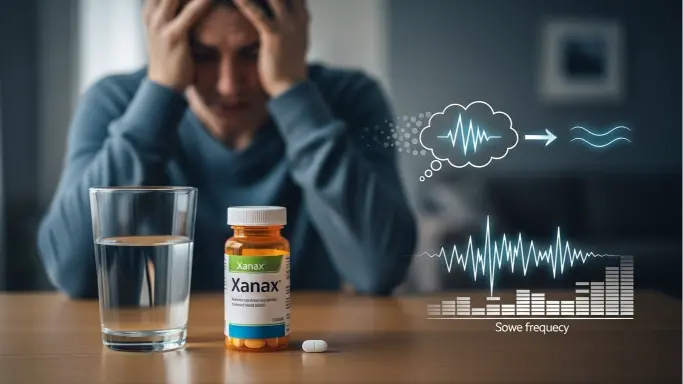
If you’ve ever wondered “What does Xanax do?”, you’re not alone. Xanax is one of the most commonly prescribed medications for anxiety and panic disorders, but many people are unsure how it works or what effects it has on the body and mind.
This powerful medication belongs to a class of drugs called benzodiazepines, which work by calming overactive nerves in the brain.
While it can provide quick relief from anxiety symptoms, it also comes with potential side effects and risks, including dependence if not used carefully.
In this article, we’ll break down everything you need to know about Xanax: how it works, its benefits, possible side effects, and safe usage guidelines.
If you’re considering Xanax for yourself or just curious about its effects, this guide will give you a clear, easy-to-understand overview of what Xanax does and how it impacts both mental and physical health.
What Is Xanax? A Quick Overview
Xanax, also known by its generic name alprazolam, is a prescription medication primarily used to treat anxiety disorders and panic attacks.
It belongs to a class of drugs called benzodiazepines, which work by affecting chemicals in the brain that may become unbalanced in people with anxiety.
Specifically, Xanax enhances the activity of a neurotransmitter called GABA (gamma-aminobutyric acid), which helps calm excessive nerve activity.
This calming effect can reduce feelings of anxiety, tension, and panic, providing relief for those struggling with severe stress or sudden panic episodes.
Common Medical Uses
Xanax is most often prescribed for generalized anxiety disorder (GAD), panic disorder, and, in some cases, social anxiety.
Doctors may also prescribe it off-label for certain sleep disorders or other conditions that involve extreme stress or agitation.
Its fast-acting nature makes it effective for sudden anxiety spikes, often working within an hour of ingestion.
Prescription and Forms
Xanax comes in various forms, including tablets, extended-release capsules, and orally disintegrating tablets. Dosages vary depending on the condition being treated and the patient’s medical history.
Because Xanax can cause dependence if used for extended periods, it is typically prescribed for short-term use under close medical supervision.
Understanding what Xanax is and how it works is the first step in using it safely and effectively. In the next section, we’ll explore how Xanax works in the body and what effects you can expect.
How Does Xanax Work in the Body?
Xanax works by targeting the central nervous system, calming overactive nerve signals that contribute to anxiety and panic.
The key player in this process is a neurotransmitter called GABA (gamma-aminobutyric acid). Normally, GABA reduces excessive brain activity, creating a calming effect.
Xanax enhances GABA’s action, making nerve cells less excitable, which helps lower feelings of fear, tension, and restlessness. This is why Xanax is so effective for anxiety relief and sudden panic attacks.
Onset and Duration
One of the reasons Xanax is widely prescribed is its fast-acting nature. After taking a dose, many users begin to feel relief within 30 to 60 minutes.
The effects can last for several hours, depending on the dosage, individual metabolism, and the specific form of Xanax used (regular tablets vs. extended-release capsules).
Mental vs. Physical Effects
Mentally, Xanax can reduce racing thoughts, excessive worry, and feelings of impending doom. Physically, it can relieve tension, reduce rapid heartbeat, and sometimes cause drowsiness or dizziness.
While these effects provide comfort during anxiety episodes, they also explain why caution is needed especially if driving or operating machinery.
Understanding how Xanax works in both the brain and body is essential for safe usage.
In the next section, we’ll explore the benefits of using Xanax, including its potential advantages for managing anxiety and panic disorders.
Benefits of Using Xanax
Xanax can provide significant relief for individuals struggling with anxiety and panic disorders.
One of its main benefits is its fast-acting nature, which makes it highly effective during sudden anxiety or panic episodes.
For someone experiencing a panic attack, Xanax can calm racing thoughts, reduce physical symptoms such as a rapid heartbeat, and help restore a sense of control within minutes.
Effective Anxiety Management
For people with generalized anxiety disorder (GAD), Xanax can help reduce persistent worry, tension, and stress, improving day-to-day functioning.
By lowering excessive brain activity, it promotes a sense of calm and mental clarity, making daily tasks more manageable.
Improved Quality of Life
When used responsibly under a doctor’s supervision, Xanax can enhance overall quality of life.
People who struggle with frequent anxiety attacks may find that Xanax allows them to participate in work, social, or family activities without constant fear or tension.
This short-term relief can be a critical support while long-term treatments, such as therapy or lifestyle changes, take effect.
Combination with Therapy
Many doctors recommend combining Xanax with counseling or cognitive-behavioral therapy (CBT).
While Xanax addresses immediate symptoms, therapy helps patients develop coping strategies for long-term anxiety management, reducing reliance on medication over time.
While the benefits of Xanax are clear, it is essential to remember that it is not a cure.
Safe, responsible usage is key to maximizing its advantages while minimizing risks, which we will discuss in the next section: Potential Side Effects of Xanax.
Potential Side Effects of Xanax
While Xanax can be highly effective for anxiety and panic disorders, it is important to understand that it also carries potential side effects.
Most side effects are mild and temporary, but some can be more serious, especially if the medication is misused or taken in higher doses than prescribed.
Common Side Effects
Many people experience drowsiness, fatigue, dizziness, and blurred vision while taking Xanax. These effects are usually mild and often decrease as the body adjusts to the medication.
Some users may also notice impaired coordination or difficulty concentrating, which is why caution is advised when driving or operating machinery.
Serious Side Effects
Though less common, serious side effects can occur. These include memory problems, mood changes, confusion, or severe sedation. Anyone experiencing unusual or severe symptoms should contact a healthcare provider immediately.
Long-Term Risks
Extended use of Xanax can lead to tolerance, meaning higher doses are required to achieve the same effect. This increases the risk of dependence and withdrawal symptoms, which can include anxiety rebound, insomnia, and, in extreme cases, seizures.
Individual Differences
Side effects can vary depending on factors such as age, overall health, dosage, and whether Xanax is combined with other medications or alcohol. This is why Xanax should always be taken under medical supervision.
Understanding the potential side effects is crucial for safe and effective use. In the next section, we’ll explore a critical concern for many users: Is Xanax Addictive? Understanding Dependence.
Is Xanax Addictive? Understanding Dependence
One of the biggest concerns with Xanax is its potential for addiction and dependence. Because Xanax is a benzodiazepine, it can be habit-forming if used for extended periods or in higher doses than prescribed. Dependence occurs when the body adapts to the drug, and suddenly stopping or reducing the dose can trigger withdrawal symptoms.
How Dependence Develops
Xanax works by calming overactive nerve signals in the brain. Over time, the brain may rely on the medication to maintain this balance. This can lead to tolerance, meaning the same dose no longer provides the same relief. Patients may feel the need to increase their dosage, which increases the risk of addiction.
Signs of Xanax Addiction
Addiction can manifest as cravings, taking the medication more frequently than prescribed, or using it for reasons other than anxiety relief. Emotional changes, irritability, and physical withdrawal symptoms like sweating, nausea, or insomnia may also appear.
Reducing the Risk
To minimize addiction risk, Xanax should be used exactly as prescribed and generally for short-term use. Doctors often recommend combining Xanax with therapy or lifestyle changes to reduce reliance on medication. Gradual tapering under medical supervision is essential if discontinuation becomes necessary.
While Xanax can be highly effective for anxiety and panic disorders, understanding its addictive potential is crucial for safe and responsible use. In the next section, we’ll cover safe usage and dosage guidelines to ensure maximum benefit with minimal risk.
Safe Usage and Dosage Guidelines
Using Xanax safely is essential to maximize its benefits while minimizing risks. Because it is a powerful benzodiazepine, taking the correct dosage and following a doctor’s instructions is critical for effective treatment of anxiety and panic disorders.
Typical Dosage
Xanax is available in several forms, including immediate-release tablets, extended-release capsules, and orally disintegrating tablets. For generalized anxiety disorder, doctors often prescribe a low dose to start, gradually adjusting based on the patient’s response.
For panic attacks, higher doses may be prescribed, but always under strict medical supervision. Extended-release forms are designed to provide longer-lasting relief with fewer doses per day.
Guidelines for Safe Use
- Take Xanax exactly as prescribed; never adjust the dose without consulting your doctor.
- Avoid combining Xanax with alcohol or other sedatives, as this can increase drowsiness and risk of serious side effects.
- Use caution when driving or operating machinery due to potential drowsiness.
- Short-term use is generally recommended; prolonged use increases the risk of tolerance, dependence, and withdrawal symptoms.
Discontinuing Xanax
If stopping Xanax is necessary, doctors usually recommend a gradual tapering plan to prevent withdrawal symptoms such as anxiety rebound, insomnia, or irritability. Never stop abruptly without professional guidance.
By following these safe usage and dosage guidelines, patients can effectively manage their anxiety while minimizing risks associated with Xanax.
Alternatives to Xanax
While Xanax can provide fast relief for anxiety and panic disorders, it is not the only option. Some individuals may prefer alternatives due to concerns about dependence, side effects, or long-term use.
Fortunately, there are several effective alternatives, ranging from medications to lifestyle changes and therapy.
Non-Benzodiazepine Medications
Doctors may prescribe other anxiety medications that are less likely to cause dependence. These include SSRIs (selective serotonin reuptake inhibitors) and SNRIs (serotonin-norepinephrine reuptake inhibitors), which work gradually to reduce anxiety over time.
Unlike Xanax, these medications are often safe for long-term use and do not carry the same risk of rapid tolerance or withdrawal.
Therapy and Counseling
Cognitive-behavioral therapy (CBT) and other forms of counseling can be highly effective for anxiety management. Therapy helps individuals identify triggers, develop coping strategies, and reduce anxiety naturally. Many patients use therapy alongside short-term medication like Xanax for a balanced approach.
Lifestyle and Natural Remedies
Simple lifestyle changes can also help reduce anxiety symptoms. These include regular exercise, mindfulness meditation, deep breathing exercises, and maintaining a healthy sleep schedule. Some people find relief from herbal supplements like chamomile or valerian root, though these should be used cautiously and discussed with a doctor.
Exploring alternatives to Xanax can provide long-term solutions for anxiety without the risks associated with benzodiazepines. Combining medication, therapy, and lifestyle strategies often produces the best results.
Frequently Asked Questions
Many people have questions about Xanax, its effects, and safe usage. Here are some of the most common queries:
1. Can I take Xanax every day?
Xanax can be prescribed for daily use, but typically short-term use is recommended. Long-term daily use increases the risk of tolerance, dependence, and withdrawal symptoms. Doctors usually monitor patients closely and may adjust dosages or recommend alternative treatments over time.
2. How long does Xanax stay in my system?
Xanax generally works within 30 to 60 minutes and its effects can last several hours. The drug can remain detectable in the body for up to 4 days in urine tests, depending on dosage, metabolism, and frequency of use.
3. Can Xanax cause weight gain?
Weight gain is not a common side effect of Xanax, but some people may experience changes in appetite or mild fluid retention. Most side effects are temporary and subside with continued use or after discontinuation.
4. What happens if I stop Xanax suddenly?
Abruptly stopping Xanax can lead to withdrawal symptoms, including anxiety rebound, insomnia, irritability, and, in severe cases, seizures. Always consult a doctor for a gradual tapering plan.
5. Is Xanax safe with other medications?
Xanax can interact with other drugs, especially alcohol, opioids, and other sedatives, increasing the risk of severe side effects. Always inform your healthcare provider about all medications and supplements you are taking.
Understanding these FAQs helps users make informed decisions about Xanax use and reinforces the importance of medical supervision.
Conclusion
Xanax is a widely prescribed medication for anxiety and panic disorders, offering fast relief from overwhelming stress, racing thoughts, and sudden panic attacks.
By enhancing the calming effects of the neurotransmitter GABA, Xanax helps reduce both mental and physical symptoms of anxiety, improving daily functioning and overall quality of life.
Its benefits, including rapid onset and short-term effectiveness, make it a valuable tool for many patients struggling with severe anxiety.
However, it’s important to recognize that Xanax is not without risks. Potential side effects, such as drowsiness, dizziness, and memory issues, can occur, and long-term use may lead to tolerance, dependence, and withdrawal symptoms. Understanding these risks is essential for safe and responsible use.
Safe usage involves following dosage guidelines, avoiding alcohol or other sedatives, and using Xanax under strict medical supervision.
For individuals concerned about dependence or seeking long-term solutions, alternatives such as therapy, lifestyle changes, and non-benzodiazepine medications can be highly effective.
Ultimately, Xanax can play a significant role in managing anxiety when used appropriately, but it should always be part of a broader treatment plan that includes professional guidance and healthy coping strategies.
By staying informed about its effects, benefits, and risks, patients can make educated decisions and achieve better control over their anxiety while minimizing potential complications.

I am Toni Morrison, the creative voice behind jokestide.com where humor meets trending jokes and puns.
I craft fresh, fun, and share-worthy content designed to make people smile instantly.
If you love viral laughs and clever wordplay, you’ve landed on the right joke tide.