Have you ever been texting someone and suddenly seen “RS” pop up in the conversation?
If you’re like many people, your first reaction might be confusion.
With so many abbreviations and slang terms used in modern texting, it’s easy to feel lost or unsure about what someone really means.
Texting language changes fast, and new shorthand terms appear almost every day on social media and chat apps.
One such term that often catches people off guard is “RS.”
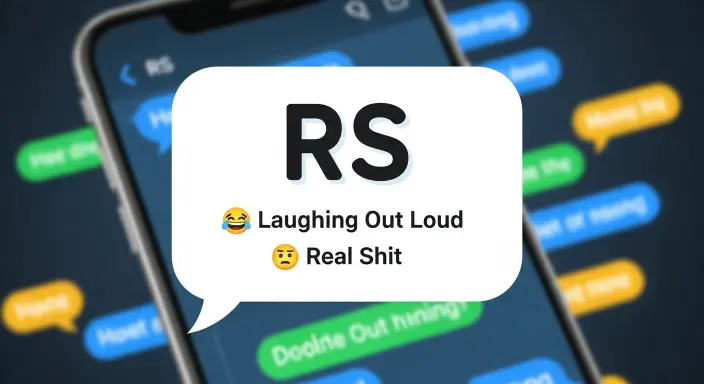
So, what does RS mean in text? The meaning can depend on context, but it’s most commonly used to express honesty, agreement, or seriousness in a casual conversation.
You’ll often see it in messages between friends or in online chats where people want to emphasize that they’re being real or truthful.
In this article, we’ll break down the meaning of RS, explore how it’s used in texting, and share clear examples so you can understand it confidently the next time you see it.
What Does RS Mean in Text?
In texting and online chat, RS most commonly stands for “Real Sh*t” or sometimes “Real Stuff.” People use this slang term to show strong agreement, honesty, or to emphasize that something is completely true.
When someone types “RS,” they’re usually signaling that they genuinely mean what they’re saying or that they strongly relate to the message being discussed.
For example, if one person says, “Life has been really stressful lately,” the other might reply with “RS,” meaning “That’s real” or “I completely agree.”
In this way, RS works as a quick emotional response that validates the other person’s feelings without needing a long reply.
The tone of RS is casual and informal, which is why it’s most commonly used among friends, peers, or in relaxed online spaces.
You’ll often see it in text messages, group chats, and social media comments where people communicate quickly and casually.
Because of its slang nature, RS is not usually written in professional or formal conversations.
It’s also important to understand that RS relies heavily on context. While it almost always refers to something being “real” or honest, the exact emotional meaning can vary.
Sometimes it expresses empathy, other times agreement, and in some cases, emphasis on a serious topic. Understanding the flow of the conversation helps clarify how RS is being used.
Once you recognize its purpose, reading and responding to messages with RS becomes much easier and more natural.
Origin and History of RS in Texting
The use of RS in texting comes from the broader evolution of internet slang and informal digital communication.
As people began spending more time chatting online, especially on early forums, messaging apps, and social media platforms, there was a growing need to express emotions quickly and efficiently.
Shortened phrases like RS became popular because they saved time while still carrying strong meaning.
RS is widely believed to be derived from spoken slang, where people say phrases like “that’s real” or “real stuff” to show agreement or emphasize honesty.
Over time, this spoken expression was shortened into the two-letter abbreviation RS for texting and online chats.
In some communities, it also stems from stronger language, which is why it’s often reserved for casual conversations rather than formal ones.
The term gained even more traction with the rise of platforms like Twitter, Instagram, Snapchat, and TikTok, where character limits and fast-paced interactions encouraged the use of short slang terms.
As influencers and everyday users adopted RS in captions, comments, and replies, it quickly became part of mainstream texting culture.
Like many slang terms, RS has evolved in meaning and tone depending on who is using it and where it appears.
While its core meaning remains tied to honesty and agreement, its popularity shows how digital communication constantly adapts. Understanding the history of RS helps explain why it feels natural in casual texts but out of place in professional or formal writing.
How RS Is Commonly Used in Conversations
RS is most often used in casual conversations where people want to express agreement, honesty, or emotional understanding without typing a long response.
In texting, short replies are common, and RS fits perfectly into fast-moving chats where users react quickly to what someone else has said.
One of the most common ways RS is used is as a standalone reply. For example, if a friend says, “That movie was way better than I expected,” responding with “RS” shows strong agreement.
It communicates, “I feel the same way,” without needing additional words. This makes RS especially popular in group chats and social media comment sections.
RS can also be used within a sentence to add emphasis. Someone might say, “RS, people don’t talk about how hard this job really is,” to stress that they’re speaking honestly or seriously. In this case, RS acts as an emotional signal that the message is genuine.
Tone plays a big role in how RS is understood. It usually carries a supportive or validating tone, but depending on the conversation, it can also highlight frustration or seriousness.
Because it’s informal slang, RS is mainly used among friends, peers, or online communities with relaxed communication styles.
Understanding how RS functions in conversation helps prevent misinterpretation. When you see RS, it’s typically not adding new information but reinforcing what has already been said.
It’s a quick way of saying, “That’s true,” “I agree,” or “I’m being real.”
Examples of RS in Text Messages
Seeing RS used in real conversations can make its meaning much clearer. Because it’s a short and flexible slang term, RS often appears in everyday texting situations where people want to react quickly and honestly.
In a one-on-one conversation, RS is commonly used to show agreement. For example, if someone texts, “I’m exhausted after work every day,” the reply “RS” means “That’s real” or “I completely understand.”
It shows empathy without requiring a long response. This makes RS especially popular when emotions or shared experiences are involved.
RS also appears frequently in group chats. When one person makes a statement that others relate to, someone might respond with “RS” to support or validate the comment.
It works almost like a digital nod, signaling agreement to everyone in the conversation.
On social media, RS is often seen in comments or replies. For instance, if a post says, “Mental health deserves more attention,” a comment reading “RS” reinforces the message and shows public support.
In these spaces, RS helps users express alignment quickly and casually.
Sometimes, RS is used at the beginning of a message for emphasis, such as “RS, this year has been challenging for everyone.”
In this case, it signals sincerity and seriousness. Across all these examples, the key idea remains the same: RS highlights honesty, agreement, or emotional truth.
Understanding these examples helps you recognize RS instantly and respond with confidence in your own conversations.
Different Meanings of RS Based on Context
While RS is most commonly used to mean “Real Sh*t” or “Real Stuff,” its meaning can change depending on context. Like many slang abbreviations, RS isn’t always literal, and understanding the situation is key to interpreting it correctly.
In casual texting, RS almost always expresses honesty, agreement, or seriousness. For example, if a friend says, “I can’t believe how much work we have this week,” replying with “RS” shows empathy or agreement. Here, the meaning is straightforward and informal.
However, RS can also appear as initials or abbreviations unrelated to slang, especially in messages where someone’s name or organization is involved. For instance, RS could stand for someone’s initials, a brand name, or a title depending on the conversation. Misreading it in these contexts can lead to confusion.
Additionally, the tone of the conversation affects RS’s interpretation. In playful chats, RS may carry a lighthearted or joking tone, while in serious discussions, it emphasizes sincerity. Some people also use it ironically, adding a layer of humor or sarcasm.
Because RS is flexible, it’s important to pay attention to the conversation flow. Look at what was said before and after, the platform (WhatsApp, Instagram, TikTok, etc.), and the relationship between the people texting. Once you recognize the context, deciphering RS becomes intuitive.
In essence, RS is not just a word it’s a conversation tool that communicates honesty, validation, or emotional understanding efficiently.
RS Meaning on Social Media Platforms
RS has become increasingly popular on social media platforms like WhatsApp, Instagram, Snapchat, and TikTok, where quick, casual communication dominates.
On these platforms, RS is often used to express agreement, honesty, or emphasize a point without typing a long response.
On WhatsApp, RS commonly appears in group chats or private messages. For example, if someone shares, “I can’t keep up with all this work!” a friend might reply with “RS” to show understanding and agreement.
In one-on-one chats, RS is often a quick way to validate feelings or experiences without overcomplicating the message.
On Instagram, RS is frequently seen in comments on posts or reels. Users type RS to show support or agreement with the content creator’s message.
For instance, under a post about stress or challenges, a comment like “RS” signals that the commenter genuinely relates to the experience being shared.
On Snapchat, RS can appear in captions or chat replies, often paired with emojis to express emotion alongside the slang.
Similarly, on TikTok, users may include RS in video captions, comment sections, or even voiceovers to underline authenticity or honesty in a humorous or relatable way.
Across all these platforms, RS functions as a quick emotional shorthand. It helps users respond faster while maintaining an authentic tone.
Understanding how RS works on social media ensures you can interpret it correctly, whether it appears as a comment, a reply, or part of a caption, keeping your online interactions smooth and relatable.
When You Should Use RS in Texting
RS is a casual slang term, so knowing when it’s appropriate to use is key to effective communication. It works best in informal conversations with friends, peers, or online communities where relaxed language is expected.
Using RS in these settings shows that you understand the tone of the conversation and can express honesty, agreement, or emotional connection quickly.
For example, if a friend texts, “I stayed up all night studying and I’m exhausted,” replying with “RS” signals empathy and agreement without needing a long response.
Similarly, in group chats, RS can validate what others are saying, acting like a digital nod or a quick affirmation. It’s especially useful when you want to react fast in a lively conversation without breaking the flow.
RS can also be effective on social media platforms like Instagram, TikTok, or WhatsApp comments.
Using RS in replies or comments emphasizes authenticity and shows you relate to what others are saying. In short, it communicates understanding and honesty in a concise way.
However, the key is context. RS is not suitable for formal or professional messages, emails, or academic writing. Its casual tone may be misinterpreted if used in the wrong setting.
By reserving RS for informal, friendly, and digital conversations, you can communicate naturally while keeping the tone appropriate.
In summary, use RS when you want to agree, relate, or express honesty in casual chats anywhere quick, relatable, and genuine responses are appreciated.
When You Should Avoid Using RS
While RS is a popular slang term in casual texting, it’s not appropriate in every situation. Understanding when to avoid using RS is just as important as knowing when to use it, especially to prevent misunderstandings or appearing unprofessional.
First and foremost, formal or professional communication is not the place for RS. Emails to colleagues, messages to supervisors, or any work-related chat should avoid slang entirely.
Using RS in these contexts may come across as careless, unprofessional, or confusing. For instance, replying “RS” to a client’s request or in a team discussion could be misinterpreted or make you seem informal when professionalism is expected.
Similarly, RS is generally unsuitable in academic or official communication. Whether you’re texting a teacher, submitting assignments online, or engaging in educational forums, the casual tone of RS doesn’t fit.
It may make your message seem disrespectful or unclear, especially if the reader isn’t familiar with texting slang.
RS can also be confusing in mixed-age conversations or with people unfamiliar with internet slang. Not everyone knows what RS means, and using it could lead to miscommunication.
If there’s any doubt about whether your audience understands, it’s better to avoid RS and use words like “I agree” or “That’s true” instead.
In short, RS is best reserved for casual chats, friendly texts, and informal online interactions. Avoid it in professional, formal, academic, or cross-generational conversations to maintain clarity, respect, and effective communication.
RS vs Similar Text Slang Terms
RS is just one of many slang abbreviations used in texting, and it’s helpful to compare it with similar terms to avoid confusion. Understanding the differences ensures you use each term correctly and respond appropriately in conversations.
One common comparison is RS vs FR. FR stands for “For Real” and is often used to confirm truth or seriousness, much like RS. However, FR is slightly more neutral, whereas RS emphasizes authenticity and emotional agreement.
For example, if someone says, “That movie was amazing,” replying with “FR” confirms truth, while “RS” adds a sense of personal agreement and relatability.
Another related term is RS vs TBH, which stands for “To Be Honest.” TBH is often used to preface an opinion or statement, signaling honesty before the message.
RS, on the other hand, usually reacts to a statement already made, validating it rather than introducing an opinion. For instance, “TBH, I don’t like that show” expresses a new thought, while “RS” would respond to someone else’s shared opinion.
Lastly, RS vs ONG is worth noting. ONG stands for “On God” and is used to swear honesty or seriousness, similar to RS.
The difference is ONG carries a stronger emphasis and sometimes a more dramatic tone, while RS is casual and conversational.
By comparing RS with FR, TBH, and ONG, you can see that each slang term has a specific nuance. Choosing the right one depends on context, tone, and the relationship between the people texting.
RS remains a versatile, concise way to show agreement, honesty, and validation in casual chats.
Common Misunderstandings About RS
Although RS is widely used in texting, it can be misunderstood by many people, especially those who aren’t familiar with internet slang. Misinterpretation often happens because RS is short, context-dependent, and flexible in meaning.
One common misunderstanding is thinking RS is offensive. While RS can originate from the phrase “Real Sh*t,” it’s rarely used to insult someone in casual texting.
Instead, it’s meant to express agreement, honesty, or validation. Knowing the tone of the conversation usually makes it clear that RS is supportive rather than rude.
Another frequent confusion arises when people mistake RS for someone’s initials or a brand. For instance, in a professional chat, someone might see “RS” and assume it refers to a person or company instead of the slang meaning. Context is crucial to avoid this kind of misreading.
RS can also be misinterpreted if the conversation involves sarcasm or humor. Because RS emphasizes honesty, using it jokingly may confuse the recipient if they don’t recognize the playful tone.
Emojis often help clarify meaning, such as pairing RS with 😂 or 😅 to indicate humor.
Lastly, people unfamiliar with social media slang may not understand RS at all. In these cases, the abbreviation can create a communication gap. The solution is either to clarify the meaning when necessary or avoid using RS in mixed audiences.
Understanding these common misunderstandings helps ensure RS is used accurately, effectively, and respectfully in casual texting.
How to Respond When Someone Says RS
Responding to RS is usually simple, but the right approach depends on the context of the conversation. Since RS is primarily used to show honesty, agreement, or validation, your response should generally match the tone casual, supportive, and relatable.
One common way to respond is by agreeing back. For example, if a friend texts, “This week has been so stressful,” and you see “RS,” you can reply with “I know, right?” or “Exactly!” This keeps the conversation flowing and shows that you share the same sentiment.
Another approach is to add a personal experience or comment that relates to the original message.
If someone says, “I can’t deal with all this homework,” and you reply “RS,” you might follow up with “Same here, I stayed up all night finishing mine.” This reinforces the shared feeling RS conveys and strengthens connection.
Sometimes, a simple emoji response works well. Pairing RS with a 👍, 🙌, or 😅 can show acknowledgment without needing a full sentence. Emojis help communicate emotion, humor, or empathy alongside RS.
It’s important to avoid overthinking RS replies. The term is casual and meant for quick validation. Respond naturally and keep your tone consistent with the context.
By matching the casual, honest vibe of RS, your replies will feel genuine and maintain smooth conversation flow.
In essence, responding to RS is all about agreement, empathy, and relatability, whether through words, personal experiences, or simple emojis.
Is RS Appropriate for All Age Groups?
RS is primarily a casual slang term, and its appropriateness can vary depending on the age and familiarity of the audience with internet culture.
While teens and young adults often use RS comfortably in texts, social media, and online chats, older generations or people less familiar with texting slang might not understand it or could misinterpret it.
For teenagers and young adults, RS is widely accepted and commonly used to express agreement, honesty, or validation. It fits naturally in school group chats, among friends, and in social media comments where fast, casual responses are common.
Emojis often accompany RS to convey emotion, making it even more relatable and easy to use in this age group.
However, for older adults or mixed-age conversations, using RS may lead to confusion.
People who are not familiar with texting slang might mistake it for initials, a brand, or even something offensive, especially if they don’t know the casual context.
In these cases, it’s better to use full phrases like “I agree” or “That’s true” to ensure clarity and avoid misunderstandings.
Cultural context also matters. While RS is generally harmless, some people may find the implied language behind “Real Sh*t” inappropriate, even in casual settings. Therefore, knowing your audience and context is crucial.
In summary, RS is perfect for younger, tech-savvy audiences and informal chats, but should be avoided or explained when texting older individuals or in mixed-age groups to maintain understanding and appropriateness.
Frequently Asked Questions
Many people have questions about RS because it is short, slangy, and context-dependent. Answering common questions helps clear up confusion and ensures readers understand how to use it correctly.
1. What does RS mean in texting slang?
RS most commonly stands for “Real Sh*t” or “Real Stuff.” It is used to express honesty, agreement, or validation in casual conversations, often as a quick response to someone’s statement.
2. Does RS always mean “Real”?
While the core meaning of RS is tied to “real” or authenticity, context matters. Sometimes RS can refer to initials, brand names, or other abbreviations, especially in professional or unfamiliar settings. Reading the surrounding conversation is important.
3. Is RS offensive?
RS can have a mild origin in strong language (“Real Sh*t”), but in casual texting it is rarely meant to offend. Its primary purpose is to emphasize honesty or agreement, not insult anyone.
4. Can RS mean something else?
Yes. Depending on the context, RS can represent someone’s initials, a company, or even a game or platform abbreviation. Always consider the conversation and platform to interpret RS correctly.
5. How should I respond to RS?
You can respond by agreeing, sharing a relatable experience, or using emojis to match the casual tone. Examples include replies like “Exactly!” or “I know, right?” with an accompanying emoji.
Understanding these common questions ensures you can recognize, interpret, and respond to RS confidently, making your casual conversations smoother and more relatable.
Final Thoughts:
RS is a versatile slang term that has become a staple of casual texting and online communication.
At its core, it expresses honesty, agreement, and validation, making it an efficient way to react to someone’s statement without needing a long reply.
Its short, two-letter format allows users to communicate emotion, authenticity, and relatability in a single, simple expression.
Understanding RS fully requires paying attention to context, tone, and audience.
While it is widely accepted among teens, young adults, and casual online communities, it may be misunderstood by older users or in professional settings.
Using RS appropriately ensures your messages are received as intended honest, supportive, and casual.
RS also demonstrates how digital communication evolves. Abbreviations like RS allow for faster, more expressive interactions in a world where social media, texting, and instant messaging dominate.
Pairing RS with emojis or other slang terms can further enhance its meaning and help convey emotion effectively.
In conclusion, RS is more than just two letters; it’s a conversation tool that signals authenticity, emotional connection, and shared understanding.
Next time you see RS in a chat or comment, you’ll know it typically means “real” or “honest agreement,” and you can respond naturally with empathy or a matching reaction.
By recognizing its usage and meaning, you can confidently join in casual conversations and stay fluent in modern texting slang.

I am Toni Morrison, the creative voice behind jokestide.com where humor meets trending jokes and puns.
I craft fresh, fun, and share-worthy content designed to make people smile instantly.
If you love viral laughs and clever wordplay, you’ve landed on the right joke tide.