If you follow news, social media, or political discussions, you’ve likely seen the word MAGA everywhere on red hats, in headlines, and across online debates.
Many people recognize the term, but not everyone fully understands what MAGA actually means or why it has become such a powerful and controversial phrase.
For readers outside the United States especially, the meaning of MAGA can feel confusing or even unclear at first glance.
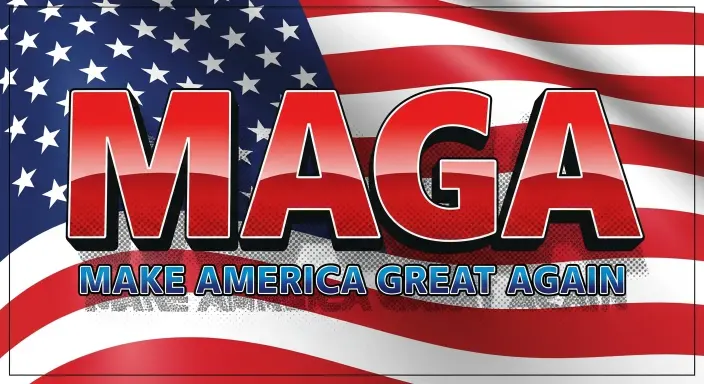
So, what does MAGA mean? MAGA is short for “Make America Great Again,” a political slogan that gained worldwide attention during the 2016 U.S. presidential election.
Over time, it has grown beyond a simple campaign phrase and become a symbol loaded with political, cultural, and emotional significance.
To some, MAGA represents national pride and political change.
To others, it carries controversy and division. In this article, we’ll explore the full meaning of MAGA, its origins, how it’s used today, and why it continues to spark strong reactions.
What Does MAGA Mean?
The term MAGA is an acronym that stands for “Make America Great Again.” At its most basic level, MAGA is a political slogan that expresses the idea of restoring the United States to a perceived better time in its history.
The phrase suggests that the country has lost something important economically, culturally, or politically and that it can be rebuilt or improved through strong leadership and change.
However, the meaning of MAGA goes beyond its literal words. For many supporters, MAGA represents a call for economic growth, stronger national identity, and policies that prioritize American interests.
It often reflects dissatisfaction with political elites, globalization, and long-standing government institutions. In this sense, MAGA becomes less about a specific time in history and more about a desire for change and reform.
At the same time, MAGA can mean very different things depending on who is using it. Critics argue that the phrase is vague and raises the question: “Great for whom?”
They believe the slogan ignores historical inequalities and can be interpreted as excluding certain groups. Because of these opposing views, MAGA has evolved into a highly charged political symbol rather than a simple statement.
In short, MAGA is both a slogan and a symbol. Its meaning depends heavily on personal beliefs, political views, and social context.
Understanding MAGA requires looking not just at the words themselves, but at how they are used in politics, media, and everyday conversations.
Where Did MAGA Come From?
Although MAGA is closely associated with modern American politics, the phrase itself did not originate in recent years. Variations of the slogan “Make America Great Again” were used in political messaging long before it became widely known.
Similar wording appeared in earlier U.S. campaigns, reflecting a common political strategy of appealing to national pride and nostalgia.
MAGA gained global recognition during Donald Trump’s 2016 presidential campaign, when he adopted the slogan as a central theme of his messaging.
The phrase was simple, emotional, and easy to remember, which made it highly effective in rallies, advertisements, and media coverage. The iconic red MAGA hat quickly turned the slogan into a visible and recognizable symbol.
The success of MAGA during the campaign was largely due to its flexibility. Supporters could project their own concerns onto the phrase, whether those concerns involved jobs, immigration, national security, or cultural change.
Because the slogan did not specify a particular era or policy, it allowed people with different priorities to connect with it in their own way.
Once Trump won the election, MAGA no longer functioned only as a campaign slogan. It became a political identity and a shorthand term used by both supporters and critics.
Media outlets, commentators, and politicians began using “MAGA” to describe a broader movement, set of beliefs, or style of politics. As a result, the phrase evolved from a simple message into a lasting part of political language in the United States and beyond.
What Is the MAGA Movement?
Over time, MAGA grew beyond a campaign slogan and developed into what many people now describe as the MAGA movement.
This movement is not an official political party, but rather a broad group of supporters who share certain political attitudes, values, and priorities.
At its core, the MAGA movement emphasizes putting American interests first in economic, cultural, and political decisions.
Many supporters of the MAGA movement believe the United States has been negatively affected by globalization, foreign competition, and long-standing political systems.
As a result, they often support policies that favor domestic industries, stricter immigration controls, and a stronger national identity. For them, MAGA represents resistance to what they see as an out-of-touch political establishment.
The MAGA movement is also closely tied to populism, a political approach that frames politics as a struggle between ordinary people and powerful elites.
This messaging has helped the movement gain strong loyalty among its supporters, who view MAGA as a voice for individuals who feel ignored by traditional politics.
At the same time, the MAGA movement is highly debated. Critics argue that it oversimplifies complex issues and can deepen political divisions.
They also point out that the movement lacks a clear, unified platform, making it difficult to define precisely. Because of this, MAGA can mean different things even among those who support it.
Ultimately, the MAGA movement functions as both a political identity and a cultural symbol. Its meaning continues to evolve as political events change and new generations interpret it in different ways.
MAGA Meaning in American Politics
In American politics, MAGA has become a shorthand term used to describe a specific style of political thinking and behavior.
It is often associated with politicians and voters who strongly support nationalist policies, economic protectionism, and a tough stance on immigration.
Within this context, MAGA is commonly linked to a more populist and confrontational approach to governance.
One important distinction in U.S. politics is the difference between traditional conservatives and those labeled as MAGA Republicans. While both groups may share some policy goals, MAGA-aligned politicians tend to focus more on cultural issues, skepticism toward institutions, and loyalty to the movement itself.
The term “MAGA” is frequently used by media and political opponents as a way to categorize or criticize this group, sometimes carrying a negative tone.
MAGA also plays a role in political messaging and campaigning. Candidates may openly embrace the label to signal alignment with the movement’s values, while others distance themselves from it to appeal to a broader audience.
As a result, the word MAGA has become politically charged, often used strategically rather than descriptively.
Beyond elections, MAGA influences political debates, legislative priorities, and public discourse. It shapes how policies are framed and how political identities are formed.
Whether viewed positively or negatively, MAGA remains a powerful force in American politics, representing not just a set of ideas, but a recognizable political brand that continues to influence voter behavior and national conversations.
Why Is MAGA So Controversial?
The term MAGA is controversial because it carries different meanings for different groups of people, often shaped by personal experiences and political beliefs.
Supporters generally view MAGA as a positive message focused on national pride, economic strength, and political reform. For them, the slogan represents hope for change and a rejection of what they see as failed policies of the past.
On the other hand, critics argue that MAGA is intentionally vague and emotionally charged. The phrase “Make America Great Again” raises questions about which period of history is being referenced and whose definition of “greatness” is being used.
Some believe the slogan overlooks historical inequalities related to race, gender, and social rights, making it feel exclusionary to certain communities.
Media coverage has also played a role in intensifying the controversy. MAGA is frequently used as a label in news reports, opinion pieces, and political commentary, often simplifying complex beliefs into a single term.
This has led to stereotypes on both sides, increasing political polarization and reducing opportunities for nuanced discussion.
Additionally, MAGA has become closely tied to political conflict and protest culture. Its symbols, such as hats or slogans, can provoke strong reactions in public spaces, sometimes leading to social tension or confrontation.
Because of this, MAGA is no longer just a slogan; it is a signal that can instantly communicate political identity.
Ultimately, the controversy surrounding MAGA reflects deeper divisions within society. The debate is less about the phrase itself and more about competing visions of national identity, values, and the future of the United States.
Psychological and Emotional Meaning of MAGA
Beyond politics, MAGA carries strong psychological and emotional meaning for many people. One of the most powerful elements of the slogan is the word “again,” which appeals to nostalgia.
Nostalgia is a common emotional trigger in political messaging because it encourages people to compare the present with an idealized version of the past. For supporters, MAGA can symbolize stability, pride, and a sense of lost control that they want to regain.
The slogan also plays a role in personal and group identity. Adopting MAGA can create a feeling of belonging to a larger community with shared beliefs and frustrations.
This sense of identity is reinforced through rallies, online spaces, and visible symbols like clothing or merchandise. For many, MAGA is not just a political position but part of how they see themselves.
At the same time, emotional reactions to MAGA are not limited to supporters. For critics, the slogan can evoke feelings of fear, exclusion, or concern about social regression.
These emotional responses are shaped by individual experiences and how people interpret the idea of “greatness” in American history.
Psychologists and political analysts often note that emotionally charged slogans tend to be more effective than detailed policy explanations.
MAGA’s simplicity allows people to project their own hopes or anxieties onto it. This emotional flexibility helps explain why the phrase remains influential long after its original campaign use.
In this way, MAGA functions as an emotional symbol as much as a political one, drawing strength from feelings of identity, nostalgia, and personal meaning rather than from a single, fixed definition.
MAGA in Pop Culture and Media
Over the years, MAGA has become more than a political slogan it is now a cultural symbol. One of the most visible examples is the iconic red MAGA hat, which has become a recognizable emblem of support for the movement.
Wearing the hat communicates political alignment instantly, turning a simple piece of merchandise into a social statement. It has appeared in protests, rallies, and even casual settings, making MAGA a part of everyday visual culture.
MAGA has also made a significant impact in television, music, and comedy. Late-night shows, satirical sketches, and online videos often reference MAGA, sometimes humorously and sometimes critically.
These portrayals have contributed to the broader public understanding of MAGA while also highlighting its polarizing nature.
Memes, GIFs, and viral content further amplify these cultural messages, making the term familiar even to those who are not politically engaged.
Media coverage also plays a crucial role in shaping MAGA’s cultural meaning. News outlets, both conservative and liberal, often use the term to frame stories about political rallies, policy debates, and public reactions.
As a result, MAGA has entered mainstream conversations as a shorthand for a particular political style, ideology, and set of cultural values.
Ultimately, the presence of MAGA in pop culture and media illustrates how a political slogan can evolve into a powerful social symbol.
It is now embedded in fashion, humor, and media discourse, influencing not just politics but how Americans and people worldwide perceive political identity and culture.
What Does MAGA Mean on Social Media?
On social media, MAGA has taken on new layers of meaning, often evolving beyond its original political slogan. Platforms like Twitter, Instagram, Facebook, and TikTok have turned MAGA into a hashtag, meme, and viral trend, allowing people to express support, critique, or satire in seconds.
Hashtags such as #MAGA or #MakeAmericaGreatAgain serve as rallying points for supporters, making it easy to find like-minded individuals and share political content.
MAGA memes are particularly influential. Supporters use them to promote political messages in a humorous or simplified way, while critics often use satire or irony to mock the slogan or highlight perceived contradictions.
Because memes are easily shareable, they help spread both support and criticism, amplifying the term’s visibility across digital communities.
Social media has also intensified debates around MAGA. A single post, video, or comment can spark discussions or arguments about the slogan’s meaning, cultural relevance, or social impact.
For some users, MAGA functions as a symbol of identity and solidarity; for others, it signals opposition or critique. This duality makes MAGA a highly charged term online, where context, tone, and audience perception can completely change its meaning.
In short, MAGA on social media is not just a slogan it’s a cultural phenomenon. Its presence online reflects broader political conversations while shaping public perception. Whether used seriously, humorously, or ironically, MAGA continues to influence digital discourse in ways that go far beyond traditional politics.
Global Perspective What MAGA Means Outside the U.S.
While MAGA is a distinctly American slogan, its influence has reached audiences around the world.
People outside the United States often encounter MAGA through news coverage, social media, and online debates, but its meaning can be confusing without understanding the U.S. political context.
For non-Americans, MAGA may be seen as a symbol of American nationalism, populism, or political controversy, rather than just a campaign slogan.
Internationally, reactions to MAGA vary widely. Some people view it as a reflection of American pride and democracy, recognizing it as part of political engagement and citizen participation.
Others see it as a polarizing term that signals division and controversy, especially when reported in global media highlighting social tensions or political conflict in the United States.
Interestingly, MAGA has parallels in other countries where political leaders use slogans emphasizing national greatness or a return to “better times.” In these cases, slogans often serve the same purpose: creating a sense of identity, nostalgia, and unity among supporters.
While the exact words differ, the emotional and cultural strategy behind MAGA is not unique to the U.S.
For non-U.S. audiences, understanding MAGA requires recognizing both the slogan’s literal meaning (“Make America Great Again”) and its broader social, cultural, and political implications.
It is not just a phrase but a symbol that conveys values, identity, and conflict and its interpretation depends heavily on one’s perspective and knowledge of American politics.
Is MAGA Still Relevant Today?
Even years after its introduction, MAGA remains a significant term in American politics and culture.
While it originated as a campaign slogan during the 2016 presidential race, the phrase has evolved into a broader symbol representing a particular political identity, set of values, and social attitudes.
For many supporters, MAGA continues to signify a commitment to nationalism, economic protectionism, and traditional policies, maintaining its influence in elections, rallies, and political discourse.
However, MAGA’s relevance is also shaped by how society interprets it. Critics argue that the phrase is polarizing and may alienate certain communities, making it controversial in both political and social contexts.
Media coverage, online debates, and public perception play a major role in keeping the term in the public eye. Even as political dynamics change, the symbolism of MAGA has persisted because it is tied to identity, emotional messaging, and collective memory.
Looking forward, the future of MAGA is uncertain but likely to remain a part of political conversation. While some may see it fading as newer issues dominate the public agenda, others believe it will continue to shape movements, campaign strategies, and political branding.
Beyond politics, MAGA has left a lasting mark on American culture, appearing in media, memes, fashion, and public discourse, making it more than just a slogan.
In short, MAGA is not only still relevant it has become a lasting symbol, one that adapts to new political and social circumstances while retaining its emotional and cultural power.
Common Misconceptions About MAGA
Because MAGA is widely discussed and highly charged, it is often misunderstood. One common misconception is that MAGA means the same thing to everyone.
In reality, its meaning varies greatly depending on political views, cultural background, and personal experiences. For some, MAGA represents patriotism and economic reform, while for others, it signals exclusion or political division.
Another misconception is that MAGA is only about Donald Trump. While the slogan became famous during his campaigns, the phrase itself predates his use, and the movement associated with it extends beyond one individual. MAGA is more accurately described as a set of ideas, beliefs, and cultural symbols, not a person or party.
Many people also assume that MAGA is just about a slogan or a hat. While merchandise like the red MAGA hat is highly visible, the term carries emotional, political, and social meaning that goes far beyond physical symbols.
It functions as a shorthand for certain values, priorities, and identities, influencing behavior and discussion in both online and offline spaces.
Finally, some believe that MAGA’s meaning is fixed and universally agreed upon. In truth, MAGA is highly context-dependent. Its interpretation shifts based on who uses it, where it is used, and how it is perceived culturally and politically.
Understanding these misconceptions is crucial for anyone trying to grasp what MAGA really represents. By recognizing that MAGA is multi-dimensional, symbolic, and context-dependent, readers can approach discussions about it with a clearer, more informed perspective.
MAGA Meaning in Simple Words
At its core, MAGA stands for “Make America Great Again,” a slogan that has become widely recognized in politics and culture. But beyond the literal words, its meaning is multi-layered and context-dependent. Here’s a simple breakdown to understand MAGA clearly:
- Political Slogan: Originally used to communicate the idea of restoring America to a better or stronger state, especially during election campaigns.
- Movement Identity: Over time, MAGA grew into a movement, representing a set of political beliefs and priorities such as nationalism, economic reform, and traditional values.
- Emotional Symbol: MAGA evokes feelings of pride, nostalgia, and belonging for supporters, and can trigger strong reactions among critics.
- Cultural Icon: The phrase and its symbols, like the red MAGA hat, have entered pop culture, media, and social media discourse worldwide.
- Controversial Term: MAGA is debated and interpreted differently depending on one’s perspective, making it a polarizing and highly visible symbol in society.
In short, MAGA is more than just a slogan. It is a political, cultural, and emotional symbol that communicates identity, priorities, and values in both American politics and popular culture.
Its meaning shifts depending on context, who is using it, and how it is perceived, which is why it remains a topic of discussion globally.
By understanding MAGA in these five simple points, readers can better navigate conversations, media coverage, and social debates surrounding the term without confusion or oversimplification.
FAQs:
To help clarify the meaning and context of MAGA, here are answers to some of the most frequently asked questions:
1. What does MAGA stand for?
MAGA is an acronym for “Make America Great Again.” It began as a political slogan and later evolved into a broader cultural and political symbol.
2. Is MAGA only about Donald Trump?
While MAGA became famous during Donald Trump’s 2016 and 2020 campaigns, the phrase itself predates him. MAGA now represents a movement or political identity beyond just one individual.
3. Can MAGA have different meanings?
Yes. Supporters often see it as a call for economic growth, national pride, and political reform. Critics may interpret it as exclusionary or controversial. The meaning depends on context, perspective, and usage.
4. Why is MAGA controversial?
MAGA sparks debate because it evokes strong emotions and differing interpretations. Questions about “whose idea of greatness” and historical implications make it polarizing in media, politics, and social spaces.
5. Is MAGA still relevant today?
Yes. Although it started as a campaign slogan, MAGA has become a lasting symbol of political identity, cultural values, and public discourse, influencing discussions both online and offline.
6. What does MAGA mean on social media?
On social media, MAGA is used in hashtags, memes, and posts to show support, critique, or humor. Its meaning can shift quickly depending on tone, audience, and platform.
7. Is MAGA recognized globally?
Yes. People worldwide encounter MAGA through news and social media, but its interpretation can differ depending on cultural and political context.
These FAQs provide quick clarity, helping readers understand MAGA from multiple angles without oversimplifying a complex topic.
Conclusion:
In the end, MAGA is much more than just a slogan. While its literal meaning “Make America Great Again” is straightforward, the term carries layers of political, cultural, and emotional significance.
It began as a campaign phrase but quickly evolved into a symbol representing a movement, a set of values, and a particular style of political identity.
For supporters, MAGA represents hope, national pride, economic reform, and a desire to reclaim a sense of control over the country’s future.
For critics, it can be seen as a vague, controversial, or exclusionary phrase, highlighting social and political divisions.
The diversity of interpretations makes MAGA highly context-dependent, reflecting broader debates about history, identity, and politics in the United States.
MAGA also extends beyond politics into media, pop culture, and social media, where it functions as both a cultural icon and a tool for expression. From the famous red hats to viral memes and hashtags, MAGA has become a recognizable symbol worldwide.
Ultimately, understanding MAGA requires looking beyond the words themselves and considering who is using it, why they are using it, and how it is perceived.
By examining its origins, movement, cultural impact, and emotional resonance, we can see that MAGA is a powerful, multifaceted symbol one that continues to shape conversations, influence political identity, and spark debate both in the U.S. and globally.
If you support it, oppose it, or simply want to understand it, knowing the full story behind MAGA helps provide context in today’s highly polarized world.

I am Zadie Smith, the mind behind witty words and viral laughs on Jokestide.com.
I am here to turn everyday moments into clever jokes, puns, and share-worthy humor.
I am all about fresh, trending fun that makes you smile, scroll, and come back for more.