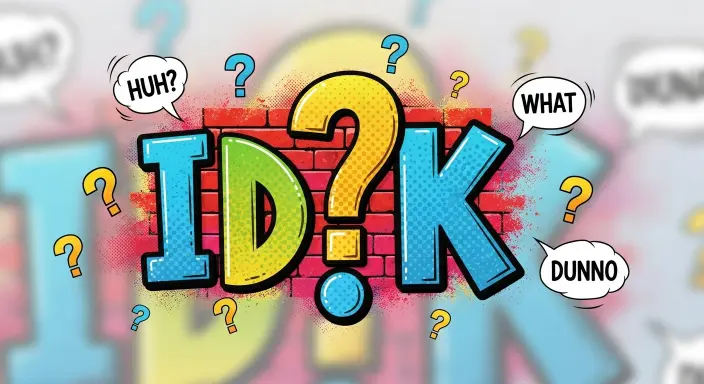
Have you ever been texting a friend and suddenly received a message that simply says “IDK”?
You might have paused for a second, wondering, “What does that even mean?” Don’t worry you’re not alone.
With the rise of texting, social media, and online chat platforms, abbreviations like IDK have become a staple in everyday digital conversations.
But while they’re short and convenient, not everyone knows their exact meaning or how to use them correctly.
In this guide, we’ll break down IDK, explaining what it stands for, where it comes from, and how people use it in texts, social media posts, and even memes.
We’ll also look at related slang, common mistakes to avoid, and tips for responding when someone sends IDK your way.
By the end, you’ll feel confident decoding this little three-letter abbreviation and maybe even using it yourself without hesitation.
What Does IDK Stand For?
IDK is a simple yet widely used abbreviation that stands for “I Don’t Know.” It’s one of the most common internet slang terms, appearing in texts, social media posts, instant messaging apps, and even memes.
The beauty of IDK lies in its brevity it lets you express uncertainty or lack of knowledge without typing out the full phrase.
For example, imagine a friend asks:
“Do you know when the new movie comes out?”
You could reply:
“IDK, maybe next week?”
In this context, IDK communicates the same meaning as “I don’t know” but in a quicker, casual way. It’s informal and friendly, making it perfect for texting or chatting online.
Some variations exist too. While most people simply type IDK, others might spell it out phonetically as “eye-dee-kay” when speaking or in voice chats. Despite these slight differences, the meaning remains the same.
IDK isn’t limited to personal conversations. You’ll see it in social media comments, memes, and even humorous content where someone wants to highlight their uncertainty or confusion in a playful way.
By understanding IDK, you not only decode a common piece of digital shorthand but also stay in tune with modern texting culture a must if you want to communicate smoothly online.
The Origin of IDK
Have you ever wondered where IDK came from and how it became one of the most recognizable abbreviations online? The history of IDK is deeply rooted in the early days of internet chat culture.
Back in the 1990s and early 2000s, people used instant messaging platforms like AOL Instant Messenger (AIM), ICQ, and MSN Messenger to communicate quickly.
Typing out long phrases like “I don’t know” in fast conversations felt cumbersome, so abbreviations like IDK naturally emerged.
IDK quickly spread beyond chatrooms into text messaging, as mobile phones with SMS became widely popular. People discovered that a three-letter acronym could save time and keep conversations flowing smoothly.
Its use wasn’t limited to personal messages either; it became a staple in forums, online communities, and eventually social media platforms like Twitter, Instagram, and TikTok.
Interestingly, IDK also gained popularity in memes and online humor. Creators used it to express confusion or uncertainty in a funny, relatable way, which helped cement the term in internet culture.
Today, IDK isn’t just a convenient shorthand it’s part of the digital language that defines how people communicate online.
Knowing its origin helps you appreciate why IDK is so widely used and why it feels natural in casual conversations. It’s a tiny acronym with a long history, bridging the gap between early internet chatrooms and today’s fast-paced social media world.
How to Use IDK in Texts and Social Media
Using IDK in conversations is easy, but knowing the right context makes it more effective. At its core, IDK communicates that you don’t know the answer to a question or are unsure about something. It’s casual, informal, and best suited for friendly chats, social media posts, and online discussions.
For example, in a text conversation:
Friend: “Do you know when the concert starts?”
You: “IDK, maybe around 7 PM?”
Here, IDK saves time while keeping your response natural and conversational.
On social media, IDK is often used in a playful or humorous way. People post memes or tweets like:
“IDK why Mondays exist, but here we are…”
This usage adds relatability and humor, making the abbreviation more than just a literal response.
A few tips for using IDK effectively:
- Keep it casual: Avoid using IDK in formal emails or professional messages.
- Use it sparingly: Overusing IDK can make you seem uninterested or dismissive.
- Combine with emojis: Adding 😅, 🤷♂️, or 🤔 can convey tone and emotion.
- Respond appropriately: If someone asks a serious question, consider expanding beyond IDK to provide context.
Ultimately, IDK is a versatile tool in modern texting and social media. If you’re expressing uncertainty, joking around, or reacting to something confusing, this simple three-letter acronym keeps your communication quick, clear, and relatable.
Variations and Related Abbreviations
While IDK is simple, there are several variations and related abbreviations that often appear in texting and online conversations. Understanding them can help you stay fluent in digital language and avoid confusion.
One common variant is IDC, which stands for “I Don’t Care.” While it may seem similar to IDK, it communicates a different feeling apathy rather than uncertainty. For example:
- IDK: “When is the meeting?” → “IDK, maybe 3 PM.”
- IDC: “Do you want to go to the party?” → “IDC, it’s fine either way.”
Other abbreviations often seen alongside IDK include:
- IMO – In My Opinion, used to express a personal viewpoint.
- BRB – Be Right Back, for temporarily leaving a conversation.
- SMH – Shaking My Head, to show disbelief or frustration.
- TBH – To Be Honest, used when sharing candid thoughts.
Knowing these related abbreviations can make your texting more fluid and help you interpret others’ messages accurately.
It also prevents awkward miscommunication, especially when chatting with someone who frequently uses internet slang.
Some people even combine IDK with other abbreviations for added effect, like “IDK lol” or “IDK tbh”, which adds humor or honesty to the message.
As internet slang evolves, new variations appear constantly, but IDK remains one of the most enduring and widely recognized acronyms.
By familiarizing yourself with IDK and its cousins, you’ll navigate online conversations like a pro.
IDK in Professional or Formal Settings
While IDK is perfectly acceptable in casual texting and social media, it’s generally not recommended in professional or formal settings.
Using abbreviations like IDK in emails, business chats, or official documents can come across as unprofessional or lazy, even if the meaning is clear to the recipient.
For example, replying to a manager’s email with “IDK” might make you seem disengaged. Instead, it’s better to use a full phrase like:
- “I’m not sure, but I will find out.”
- “I don’t have that information at the moment.”
- “Let me check and get back to you.”
The key is tone and clarity. Professional communication demands that your responses are precise, polite, and complete.
Abbreviations like IDK can sometimes convey uncertainty or lack of effort, which may harm your credibility in a workplace or academic context.
That said, IDK can be used in informal workplace chats, especially among colleagues who are familiar with texting slang. For instance, in a casual team chat:
Colleague: “Who’s presenting in the meeting?”
You: “IDK, maybe John?”
In this scenario, IDK works because the tone is light and the audience understands it.
In summary, while IDK is a useful shorthand for quick, casual communication, knowing when to switch to formal language is crucial. Using the right tone ensures your message is understood and professional relationships remain strong.
Fun Facts About IDK
Even though IDK is a simple abbreviation, it has some fun and interesting aspects that make it more than just three letters.
For starters, it’s one of the earliest internet slang terms to gain mainstream popularity, appearing in chatrooms, text messages, and even early memes.
Its simplicity and universality have helped it stand the test of time, making it recognizable across generations.
IDK is also incredibly versatile in pop culture. People use it in memes, tweets, and TikTok videos to express confusion, indecision, or humorous frustration.
For example, a meme might read:
“IDK why my phone autocorrects everything but here we are.”
Here, IDK conveys a relatable sentiment while keeping the post short and punchy.
Another fun fact is that IDK often appears alongside emojis to emphasize tone. Adding a shrug emoji 🤷♂️ or a laughing emoji 😅 can change the nuance from casual uncertainty to playful humor. This combination helps convey emotion that plain text sometimes lacks.
Lastly, IDK is part of a larger global texting culture. People worldwide use it to communicate quickly, making it a shared digital language that transcends borders. Its widespread recognition shows how online slang can influence everyday communication.
In short, IDK isn’t just a handy abbreviation it’s a cultural phenomenon. It reflects the evolution of digital communication, blending efficiency, humor, and relatability in just three letters.
How to Respond When Someone Sends IDK
Receiving IDK in a conversation can sometimes leave you wondering how to reply. The key is to consider the context, tone, and relationship you have with the person. IDK is casual and informal, so your response should match that style.
In a friendly chat, you can simply acknowledge it or follow up with a question. For example:
Friend: “Do you know what time the game starts?”
You: “IDK either! Should we check online?”
This keeps the conversation flowing without creating awkwardness.
You can also add humor to your reply. Many people respond to IDK with playful remarks or memes, such as:
“IDK? Well, now we’re both lost!”
or
“IDK… but I vote pizza instead of studying.”
In more serious situations, it’s helpful to expand beyond IDK. For instance, if someone asks about an important task or deadline, you could respond:
“IDK right now, but I’ll find out and get back to you.”
This shows that you’re attentive and willing to take action, even if you don’t have the answer immediately.
Another tip is to consider platform nuances. On social media, IDK might appear in memes or comments for humor, whereas in texts, it usually signals uncertainty. Adjust your tone accordingly to avoid misunderstandings.
By understanding how to respond effectively, you can handle IDK with confidence, maintain smooth conversations, and even inject a bit of personality into your replies.
Common Mistakes People Make With IDK
Even though IDK is a simple abbreviation, people often make mistakes when using it. Knowing these common pitfalls can help you communicate more effectively and avoid misunderstandings.
1. Using IDK in the wrong context:
IDK is informal, so using it in professional emails, school assignments, or formal documents can make you appear careless or unprofessional. For example, replying to a manager’s email with “IDK” is usually inappropriate.
2. Overusing IDK:
While convenient, replying with IDK too frequently can make you seem uninterested or dismissive. Constantly using it in conversations may frustrate friends or colleagues, as it can feel like you’re not putting effort into your responses.
3. Misinterpreting its meaning:
Sometimes people confuse IDK with IDC (“I Don’t Care”) or other abbreviations. Misreading the intention behind IDK can lead to awkward or tense situations. Always consider context and tone.
4. Lack of tone indicators:
Texting is prone to miscommunication. Using IDK without emojis or clarifying words can make it come across as rude or indifferent. Adding 🤷♀️, 😅, or “lol” can soften the message and show casual intent.
5. Ignoring audience familiarity:
Not everyone is familiar with texting abbreviations. Using IDK with someone who doesn’t understand it may confuse them, especially older family members or new acquaintances.
By avoiding these mistakes, you can use IDK effectively while keeping your communication clear, friendly, and appropriate. A little awareness goes a long way in digital conversations.
FAQs:
When it comes to IDK, people often have several questions about its meaning, usage, and context. Here are some of the most common FAQs:
1. What does IDK mean?
IDK stands for “I Don’t Know.” It’s a quick, casual way to express uncertainty or lack of knowledge in texting, social media, and online chats.
2. Is IDK considered rude?
Not usually. IDK is informal but not inherently rude. However, tone and context matter. If used carelessly in serious conversations, it can seem dismissive. Adding emojis or follow-up words like “lol” or “🤷♂️” can make it feel light and friendly.
3. Can IDK be used in professional writing?
Generally, no. In professional emails, reports, or formal communication, it’s better to write “I don’t know” or provide a more complete answer. IDK is best reserved for casual chats and informal messaging.
4. Are there similar abbreviations I should know?
Yes! Some common related abbreviations include:
- IDC – I Don’t Care
- IMO – In My Opinion
- BRB – Be Right Back
- TBH – To Be Honest
- SMH – Shaking My Head
5. Where is IDK commonly used?
IDK is used in text messages, WhatsApp chats, Instagram and TikTok comments, online forums, and memes. It’s widely recognized across generations and social media platforms.
By understanding these FAQs, you’ll be better equipped to use IDK confidently and interpret it correctly when others use it. This makes your online conversations smoother and more relatable.
Conclusion:
In today’s fast-paced digital world, IDK has become one of the most recognizable and widely used abbreviations.
Standing for “I Don’t Know,” it allows people to express uncertainty quickly, efficiently, and often with a touch of humor.
From texting and social media to memes and casual online conversations, IDK has cemented itself as a staple of modern communication.
Understanding IDK is not just about decoding a three-letter acronym it’s about being fluent in the digital language that shapes how we interact online.
By knowing its meaning, origin, proper usage, and related abbreviations, you can navigate conversations more confidently.
You’ll also avoid common mistakes like overusing it, misinterpreting its tone, or using it in the wrong context.
Additionally, being familiar with IDK helps you read the room in different online settings.
If responding to a friend’s casual message, interpreting a meme, or participating in social media discussions, you’ll know how to reply appropriately.
Even in professional or semi-formal situations, understanding IDK gives you insight into how digital shorthand differs from traditional communication.
In short, mastering IDK is a small but meaningful step toward digital literacy. It saves time, adds personality to your messages, and keeps you connected to the language of the internet.
So next time someone texts you IDK, you’ll not only know what it means you’ll know exactly how to respond.

I am Zadie Smith, the mind behind witty words and viral laughs on Jokestide.com.
I am here to turn everyday moments into clever jokes, puns, and share-worthy humor.
I am all about fresh, trending fun that makes you smile, scroll, and come back for more.