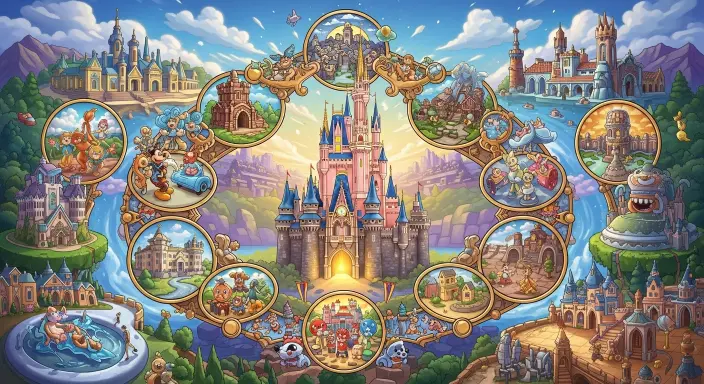
Disney is more than just Mickey Mouse, princesses, and magical theme parks it’s a global entertainment powerhouse with an empire that spans movies, TV, streaming, merchandise, and more.
From beloved classics like The Lion King and Cinderella to blockbuster franchises like Marvel and Star Wars, Disney has grown into a cultural and economic giant that touches nearly every part of our entertainment lives.
But many people don’t realize just how vast Disney’s ownership really is. They own entire movie studios, streaming platforms, sports networks, theme parks around the world, and countless licensed products.
Understanding what Disney owns isn’t just interesting trivia it reveals how the company dominates media and pop culture, shaping what we watch, play with, and experience every day.
In this article, we’ll take a deep dive into Disney’s empire, breaking down every major property and brand that falls under its magical umbrella.
Disney’s Movie Studios & Film Franchises
When it comes to movies, Disney’s reach is massive, spanning multiple studios and iconic franchises that dominate the box office.
At the heart of Disney’s empire is its classic animation division, which gave the world timeless films like Cinderella, The Lion King, Beauty and the Beast, and Frozen.
These films not only shaped generations but also laid the foundation for Disney’s storytelling legacy.
In 2006, Disney acquired Pixar, the studio behind Toy Story, Cars, and The Incredibles.
Pixar’s cutting-edge animation and heartwarming stories became an essential part of Disney’s film portfolio, bringing both critical acclaim and massive box office success.
Another major acquisition was Marvel Studios, home to the Marvel Cinematic Universe (MCU), featuring superheroes like Iron Man, Spider-Man, and the Avengers.
This acquisition allowed Disney to dominate the superhero genre, creating one of the most profitable franchises in movie history.
Disney also owns Lucasfilm, the studio behind Star Wars and Indiana Jones. These franchises continue to generate billions in ticket sales, merchandise, and spin-off series.
Additionally, Disney acquired 20th Century Studios (formerly 20th Century Fox), bringing franchises like Avatar, X-Men, and Deadpool under its umbrella.
Alongside this, Disney owns Searchlight Pictures, known for indie and award-winning films, and National Geographic, which produces documentaries that expand Disney’s reach into educational media.
Together, these studios and franchises make Disney a dominant force in entertainment, controlling some of the most beloved films and intellectual properties worldwide.
Television Networks & Streaming Services
Disney isn’t just a movie powerhouse it’s also a major player in television and streaming. The company owns some of the most well-known TV networks, giving it control over both entertainment and sports programming.
ABC is one of Disney’s flagship networks, offering everything from primetime dramas to popular reality shows.
Disney also owns Disney Channel, Disney Junior, and Disney XD, which deliver family-friendly content for kids and teens around the world.
Sports fans know Disney through ESPN, one of the largest sports networks globally. With broadcasting rights to major leagues, tournaments, and live events, ESPN allows Disney to reach millions of viewers daily while generating significant revenue.
On the streaming side, Disney has made huge moves to dominate the digital space.
Disney+ is the company’s flagship streaming platform, featuring classic Disney films, Pixar hits, Marvel blockbusters, Star Wars series, and original content exclusive to the service.
Disney also owns Hulu, which offers a mix of TV shows, movies, and originals, and ESPN+, a streaming platform dedicated to sports fans.
Through these networks and streaming services, Disney ensures that its content reaches every corner of the entertainment market, from traditional TV households to online viewers.
By controlling both content creation and distribution, Disney has built a media empire that spans generations, tastes, and platforms, making it nearly impossible to escape Disney’s influence in modern entertainment.
Theme Parks, Resorts & Experiences
Disney’s influence extends far beyond movies and TV it also dominates the theme park and vacation industry.
The company operates some of the most iconic theme parks and resorts in the world, providing immersive experiences that bring its stories and characters to life.
The first and most famous, Disneyland, opened in California in 1955, creating a new standard for theme parks with attractions, shows, and parades that capture the magic of Disney storytelling.
Its sister park, Walt Disney World in Florida, is even larger, spanning multiple parks including Magic Kingdom, EPCOT, Disney’s Hollywood Studios, and Animal Kingdom.
Disney’s reach goes global with parks in Tokyo, Paris, Shanghai, and Hong Kong, each offering unique rides, themed lands, and cultural adaptations while maintaining the Disney brand experience.
Beyond traditional parks, Disney operates the Disney Cruise Line, offering themed cruises with entertainment, character meet-and-greets, and exclusive onboard experiences.
Additionally, Adventures by Disney provides guided vacation experiences that combine travel with Disney storytelling, from European tours to African safaris.
These theme parks and experiences aren’t just attractions they’re part of Disney’s larger ecosystem. They generate billions in revenue each year, while also promoting Disney films, characters, and merchandise.
By connecting storytelling across films, TV, and real-life experiences, Disney creates an unmatched entertainment synergy that keeps fans engaged across multiple platforms.
Consumer Products & Licensing
Disney doesn’t just make movies, TV shows, or theme parks it also dominates the consumer products and licensing industry, turning beloved characters into a multi-billion-dollar merchandising empire.
From toys and clothing to home goods and video games, Disney products are everywhere. Fans of all ages can find items featuring Mickey Mouse, Marvel superheroes, Star Wars characters, Pixar icons, and Disney princesses, making it easy for the brand to stay relevant in everyday life.
Through licensing agreements, Disney allows other companies to manufacture and sell products using its characters and brands, creating additional revenue streams.
For example, major toy brands, apparel companies, and even food manufacturers pay Disney to use its intellectual property, ensuring that the brand maintains a presence in nearly every market.
Video games and mobile apps are another key area. Disney has released popular games based on its franchises, from Star Wars RPGs to Marvel superhero adventures and interactive apps for younger audiences featuring Disney characters.
Merchandise also ties into Disney’s broader ecosystem. Films, TV shows, and theme parks often promote products, creating a feedback loop where media drives sales and products reinforce the brand’s visibility.
By controlling both the creation and licensing of consumer products, Disney ensures that its characters and stories remain part of daily life, strengthening its position as a global entertainment and lifestyle powerhouse.
Publishing & Media Properties
Disney’s empire also extends into publishing and media, giving the company another way to engage fans and expand its intellectual properties.
Disney Publishing Worldwide is responsible for producing books, magazines, and digital content featuring Disney characters and stories.
This includes everything from children’s storybooks based on classic animated films to activity books, comics, and educational materials.
Through Marvel Comics, Disney controls one of the most influential comic book companies in the world.
Marvel has created an extensive universe of superheroes, including Spider-Man, Iron Man, and the X-Men, which have not only become blockbuster movie franchises but also a staple in comics and merchandise.
Similarly, Disney owns Lucasfilm’s publishing arm, which produces novels, graphic novels, and guides related to the Star Wars universe. These books expand the storylines beyond movies, keeping fans engaged with the characters and worlds they love.
Disney also invests in digital media platforms, offering e-books, interactive apps, and educational content that reach global audiences.
The publishing division ties directly into Disney’s broader strategy, as films, TV shows, and games often inspire books, and vice versa.
By controlling both traditional and digital publishing, Disney ensures that its stories and characters remain culturally relevant, accessible, and profitable across multiple platforms.
From comics to educational books, Disney’s publishing and media properties strengthen its position as a global entertainment powerhouse that reaches audiences of all ages.
Sports & Other Assets
Disney’s influence isn’t limited to movies, TV, and theme parks it also has a significant presence in the sports industry. The company owns ESPN, one of the largest and most recognized sports networks in the world.
ESPN broadcasts major sporting events, including the NFL, NBA, MLB, college football, and tennis tournaments, reaching millions of viewers daily.
Through ESPN, Disney controls not only live broadcasts but also sports analysis, highlights, and digital platforms, ensuring it remains a central player in the global sports market.
In addition to ESPN, Disney owns ABC Sports, which covers major televised sports events, including the Olympics, and special programming.
Disney’s sports holdings extend to ESPN+, its streaming service dedicated to live sports and exclusive content, appealing to cord-cutters and younger audiences who prefer digital streaming over traditional TV.
Beyond sports, Disney has other valuable assets, including regional networks, production studios, and media rights, which further expand its reach.
The company also owns stakes in international channels, licensing agreements, and broadcasting rights that allow it to control content distribution worldwide.
By diversifying into sports and other media assets, Disney not only strengthens its revenue streams but also broadens its cultural impact.
This strategy ensures that Disney maintains a dominant position across entertainment, education, sports, and lifestyle, making it nearly impossible for audiences anywhere in the world to avoid Disney’s influence.
Disney’s Global Influence & Market Dominance
Disney’s empire extends far beyond individual movies, TV shows, or theme parks it has become a cultural and economic powerhouse with a global reach.
By controlling a vast network of studios, franchises, networks, streaming services, theme parks, and consumer products, Disney shapes much of the entertainment consumed worldwide.
Its characters, from Mickey Mouse to Iron Man, are recognized across generations, making Disney a household name in virtually every corner of the globe.
The company’s cross-platform strategy strengthens its influence. Films launch in theaters and on Disney+, characters appear in merchandise, theme parks, and video games, and stories continue through books, comics, and interactive media.
This interconnected ecosystem keeps audiences engaged while maximizing revenue across multiple industries.
Disney’s acquisitions of Marvel, Lucasfilm, 20th Century Studios, and Pixar have solidified its dominance in the film industry, while ESPN and ABC reinforce its leadership in sports broadcasting.
Theme parks worldwide attract millions of visitors annually, contributing billions in revenue while promoting Disney’s brands and stories.
Economically, Disney’s market dominance allows it to invest in cutting-edge technology, original content, and global expansion initiatives, ensuring its relevance in an increasingly competitive entertainment landscape.
Culturally, Disney influences trends, storytelling, and even social conversations through its characters and franchises.
In short, Disney isn’t just a company it’s a global entertainment empire whose reach touches nearly every aspect of modern life, from movies and TV to parks, sports, and consumer products. Its influence is both far-reaching and enduring, making Disney one of the most powerful brands in the world.
FAQs:
1. What companies does Disney own?
Disney owns a wide range of companies, including movie studios like Pixar, Marvel Studios, Lucasfilm, 20th Century Studios, and Searchlight Pictures.
In television, it owns ABC, Disney Channel, FX, and ESPN, as well as streaming platforms like Disney+, Hulu, and ESPN+.
2. Does Disney own Marvel and Star Wars?
Yes. Disney acquired Marvel Studios in 2009, giving it control over the Marvel Cinematic Universe, and Lucasfilm in 2012, which includes the Star Wars franchise and Indiana Jones films.
3. How many theme parks does Disney own?
Disney operates multiple theme parks worldwide, including Disneyland (California), Walt Disney World (Florida), Tokyo Disneyland, Disneyland Paris, Shanghai Disneyland, and Hong Kong Disneyland.
It also owns the Disney Cruise Line and guided vacation experiences through Adventures by Disney.
4. Does Disney own sports networks?
Yes. Disney owns ESPN, one of the largest sports networks globally, ABC Sports, and the streaming platform ESPN+, giving it access to major sports leagues and events.
5. What other assets does Disney have?
Disney also owns publishing companies, consumer products and licensing, digital media, video games, and international channels.
This diversified portfolio makes Disney a dominant force in entertainment, sports, and global media.
Conclusion:
Disney is much more than a company that creates movies or operates theme parks it is a global entertainment empire with influence spanning multiple industries.
From classic animated films and blockbuster franchises like Marvel and Star Wars to world-famous TV networks, streaming services, and sports channels, Disney’s reach is unmatched.
Its theme parks and resorts bring stories to life in real-world experiences, while its consumer products, merchandise, and publishing ventures ensure that its characters are a part of daily life for millions around the globe.
What makes Disney truly unique is its ability to connect content across platforms.
A film can inspire merchandise, a theme park ride, a video game, and a streaming series, creating a seamless ecosystem that engages fans across generations.
Acquisitions like Pixar, Lucasfilm, Marvel, and 20th Century Studios have further strengthened its dominance, giving Disney control over some of the most beloved franchises in entertainment history.
Disney’s global influence is not just economic it shapes culture, trends, and storytelling worldwide.
If through movies, TV, sports, or immersive experiences, Disney touches nearly every aspect of modern entertainment.
Understanding what Disney owns provides insight into how it maintains its market dominance and cultural relevance.
In the end, Disney is more than just magic on the screen it’s a powerful, interconnected empire that continues to define entertainment for generations, proving that the Disney brand is truly everywhere, from your living room to theme parks around the world.

I am Zadie Smith, the mind behind witty words and viral laughs on Jokestide.com.
I am here to turn everyday moments into clever jokes, puns, and share-worthy humor.
I am all about fresh, trending fun that makes you smile, scroll, and come back for more.