Have you ever wondered why some cakes rise beautifully while others turn out flat and dense?
The secret often lies in a little white powder sitting in your pantry: baking powder.
But what exactly does baking powder do, and why is it so important in baking?
If you’re a beginner baker or just trying to perfect your pancakes, understanding this common ingredient can make a huge difference.
Baking powder is a type of chemical leavening agent that helps your dough and batter puff up, creating light, fluffy textures that melt in your mouth.
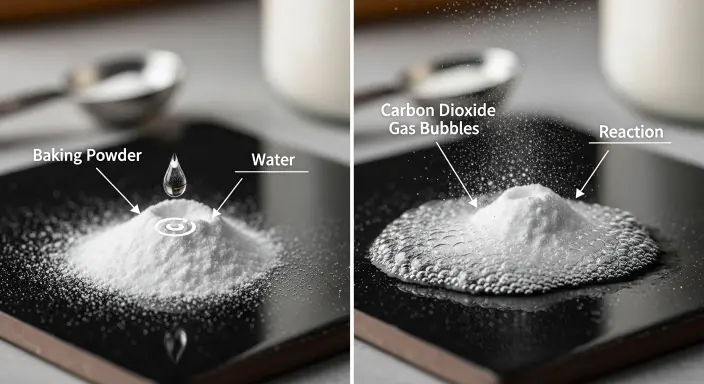
It works behind the scenes, producing carbon dioxide gas when it reacts with moisture and heat.
In this guide, we’ll break down how baking powder works, why it’s different from baking soda, tips for using it correctly, and even some clever experiments to see the magic in action.
What is Baking Powder?
Baking powder is one of the most essential ingredients in baking, yet many beginners aren’t sure what it actually does.
Simply put, it’s a chemical leavening agent that helps baked goods rise and become light and fluffy. Unlike yeast, which requires time to ferment and create gas, baking powder works quickly through a chemical reaction.
Composition: Baking powder is made up of three main components:
- Baking soda (sodium bicarbonate) – the base that reacts with acids to produce carbon dioxide.
- An acid – commonly cream of tartar, which reacts with the baking soda to trigger the rise.
- Starch – usually cornstarch, which absorbs moisture and prevents the powder from clumping or reacting prematurely.
Types of Baking Powder: There are two main types:
- Single-acting baking powder – reacts immediately when combined with a liquid. It’s less common today.
- Double-acting baking powder – the most widely used type. It reacts in two phases: once when mixed with wet ingredients, and again when exposed to heat in the oven. This ensures a steady rise and a lighter texture.
Understanding these basics helps explain why baking powder is so reliable in recipes.
It’s not just about making your cake rise it also contributes to texture, fluffiness, and even flavor by neutralizing some acidic ingredients.
Baking Powder vs Baking Soda
Many beginner bakers often wonder why recipes call for baking powder in one case and baking soda in another.
While both are leavening agents, they are not interchangeable, and using the wrong one can lead to flat or oddly flavored baked goods.
Baking soda, or sodium bicarbonate, is a pure base. It requires an acidic ingredient in the recipe like lemon juice, yogurt, or buttermilk to react and produce carbon dioxide gas, which makes the batter rise.
Without an acid, baking soda won’t work properly and can leave a bitter taste.
Baking powder, on the other hand, already contains both the base (baking soda) and the acid, along with starch to prevent clumping. This means it can leaven recipes that don’t include any naturally acidic ingredients.
Most modern recipes use double-acting baking powder, which reacts once when mixed with wet ingredients and again when exposed to heat.
When to Use Which:
- Use baking soda when your recipe has acidic ingredients that need neutralizing.
- Use baking powder when your recipe has little to no acidity but still needs to rise.
Knowing the difference can save a lot of baking disasters. Using the wrong leavening agent can result in cakes that are dense, flat, or bitter.
By understanding their unique properties, you can choose the right one to achieve perfectly risen, fluffy baked goods every time.
Why Baking Powder is Important in Baking
Baking powder is more than just a white powder in your pantry it’s the ingredient that turns ordinary batter into light, fluffy baked goods. Without it, cakes, muffins, pancakes, and quick breads would be dense, heavy, and far less enjoyable.
1. Leavening Effect:
The primary role of baking powder is to produce carbon dioxide gas when mixed with liquid and exposed to heat. These tiny gas bubbles get trapped in the batter, causing it to expand and rise. This is why your cakes puff up and your pancakes become airy instead of flat.
2. Texture and Consistency:
Beyond simply rising, baking powder contributes to the soft, tender crumb in baked goods. It prevents them from being tough or chewy by separating the proteins in the flour and allowing the batter to expand smoothly. This creates a light, melt-in-your-mouth texture that everyone loves.
3. Flavor Balance:
Baking powder can also help neutralize acidic ingredients, such as buttermilk or yogurt, ensuring that the flavor of your baked goods isn’t overly sour. While its main job is leavening, this subtle contribution to taste is another reason it’s a staple in many recipes.
In short, baking powder is both functional and transformative. It ensures your baked goods rise properly, maintain the right texture, and taste balanced.
Skipping it or using it incorrectly can turn a potentially delicious recipe into a dense, disappointing result.
How to Use Baking Powder Correctly
Using baking powder might seem simple, but even small mistakes can affect the rise, texture, and flavor of your baked goods. Knowing how to measure, store, and handle it properly can make a big difference in your baking results.
1. Measuring Tips:
Always use a level teaspoon or tablespoon when measuring baking powder. Too much can cause your baked goods to rise too quickly and then collapse, resulting in a dense or sunken texture.
Too little, and your recipe may turn out flat and heavy. For most recipes, 1 to 1.5 teaspoons of baking powder per cup of flour is sufficient, but always follow your recipe’s instructions.
2. Storage and Shelf Life:
Baking powder loses its potency over time. Keep it in a cool, dry place and tightly sealed to prevent moisture from triggering a reaction prematurely. Most baking powders last 6 months to 1 year.
To test if it’s still active, mix ½ teaspoon of baking powder with ¼ cup warm water it should fizz vigorously.
3. Common Mistakes to Avoid:
- Using baking powder in recipes that call for baking soda, or vice versa.
- Adding it too early or too late in the mixing process.
- Using expired or clumpy powder.
By following these tips, you can ensure that your baking powder works exactly as intended, producing light, fluffy, and perfectly risen cakes, muffins, and pancakes every time. Proper handling is key to avoiding common baking mishaps.
Fun Experiments and Real-Life Examples
One of the best ways to understand what baking powder does is to see it in action. Even simple experiments in your kitchen can demonstrate the magic of this leavening agent and help you become a better baker.
1. Pancake Experiment:
Try making two batches of pancakes one with baking powder and one without.
The batter with baking powder will rise, become fluffy, and form air pockets, while the one without will stay flat and dense. This simple test visually shows how carbon dioxide gas expands the batter and creates a light texture.
2. Cake Experiment:
Next, bake a small cake using the same recipe but omit the baking powder in one batch. The cake with baking powder will rise evenly and have a tender, spongy crumb. The cake without it will be dense, heavy, and less enjoyable to eat.
3. Easy Science Demonstration:
For a science-focused twist, mix ½ teaspoon of baking powder in a cup of warm water.
You’ll see bubbles forming immediately as carbon dioxide is released. This is the same reaction that happens inside your batter, only trapped and controlled by the mixture of flour, eggs, and other ingredients.
These experiments aren’t just fun they help you understand why baking powder is essential and how it affects texture, rise, and flavor.
By seeing the difference firsthand, you’ll know why following measurements and using the right type of baking powder matters in every recipe.
Substitutes and Alternatives for Baking Powder
Sometimes, you might find yourself out of baking powder or want to try a different leavening method. Luckily, there are several substitutes and alternatives that can help your baked goods rise properly.
1. Baking Soda + Acid:
Since baking powder contains both a base (baking soda) and an acid, you can create a substitute using baking soda and an acidic ingredient. The general rule is: for every 1 teaspoon of baking powder, use ¼ teaspoon baking soda + ½ teaspoon cream of tartar. You can also use lemon juice, yogurt, or buttermilk as the acid, adjusting liquids in the recipe accordingly.
2. Self-Rising Flour:
Self-rising flour already contains baking powder and salt. You can substitute 1 cup of all-purpose flour + 1 teaspoon baking powder + ½ teaspoon salt with 1 cup of self-rising flour. This works best in recipes where the additional salt won’t interfere with flavor.
3. Other Leavening Agents:
Depending on the recipe, other options include yeast for breads and rolls or whipped egg whites for delicate cakes and soufflés. These alternatives rely on different mechanisms yeast ferments sugars to produce gas, while whipped egg whites trap air but can achieve a similar rise when used correctly.
4. Tips When Substituting:
- Adjust liquids if using acidic ingredients.
- Remember that reactions might be faster or slower than with baking powder, affecting baking times and textures.
- Always experiment in small batches first to ensure consistent results.
Knowing these substitutes ensures you’ll never be stuck mid-recipe, while still achieving the fluffy, light texture that baking powder normally provides.
FAQs:
Even experienced bakers sometimes have questions about baking powder. Here are some of the most frequently asked questions and practical answers to help you bake with confidence.
1. Can I use expired baking powder?
Expired baking powder loses its effectiveness, which means your baked goods may not rise properly. To test it, mix ½ teaspoon of baking powder with ¼ cup warm water. If it fizzes vigorously, it’s still active. If not, it’s time to replace it.
2. What’s the difference between single-acting and double-acting baking powder?
Single-acting reacts immediately when combined with liquid, so you must bake the batter right away. Double-acting reacts in two phases: first when wet, and again when heated. Double-acting is more common and forgiving in recipes.
3. Why didn’t my cake rise?
Common reasons include using expired powder, too little baking powder, or overmixing the batter. High-altitude baking can also affect rise, requiring adjustments in leavening amounts.
4. Can I substitute baking soda for baking powder?
Not directly. Baking soda requires an acidic ingredient to react, while baking powder already contains acid. If a recipe calls for baking powder, you must adjust the ingredients to balance the acid if using baking soda.
5. How do I store baking powder?
Keep it in a cool, dry place, tightly sealed. Avoid moisture, as it can trigger a reaction and reduce effectiveness.
Answering these common questions helps prevent baking disasters and ensures your recipes come out light, fluffy, and delicious every time.
Understanding the science and proper handling of baking powder is the key to perfect baked goods.
Conclusion:
Baking powder may seem like a simple pantry staple, but its role in baking is truly magical.
From helping cakes rise to giving pancakes a fluffy texture, this chemical leavening agent is essential for creating light, tender, and delicious baked goods.
Understanding how baking powder works not just as a powder, but as a carefully balanced mix of baking soda, acid, and starch can completely transform your baking results.
Using it correctly, measuring accurately, and storing it properly ensures your recipes rise perfectly every time.
Knowing the difference between baking powder and baking soda, as well as the types of baking powder available, allows you to make informed choices in your kitchen.
Even if you run out, there are reliable substitutes that can help you achieve the same fluffy results.
Experimenting with baking powder in simple recipes like pancakes, muffins, or cakes can be a fun way to see science at work.
You’ll quickly notice the difference it makes in texture, rise, and overall success.
In short, baking powder is much more than an ingredient it’s a baker’s secret weapon for consistent, delicious results.
The next time you bake, pay attention to this little white powder.
Measure it carefully, use it wisely, and watch as it transforms ordinary batter into perfectly risen, mouthwatering baked goods.
Mastering baking powder is one small step that can make a big difference in your baking success.

I am Harper Lee, the voice behind Jokestide.com, where humor meets creativity.
I am here to serve fresh, trending jokes and puns that make every scroll worth it.
I am turning everyday smiles into share-worthy laughs welcome to the fun side of the web