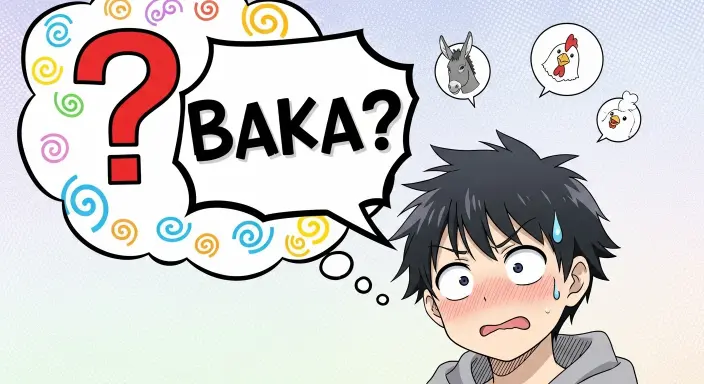
Have you ever been watching your favorite anime and heard a character shout “Baka!”, and wondered what it really means?
If you’re new to Japanese culture or anime fandom, that single word might seem confusing sometimes funny, sometimes harsh, and other times just playful teasing.
In Japanese, “baka” (バカ) literally translates to “fool” or “idiot,” but its meaning can change depending on the context, tone, and who is saying it.
Anime fans know it as a classic expression of frustration, embarrassment, or even affection, often delivered in a dramatic or comedic way.
Beyond anime, “baka” has also made its way into internet slang, memes, and social media, where it’s used humorously to tease friends.
In this article, we’ll explore what “baka” truly means, how to pronounce it, its cultural significance, and examples from anime and everyday usage so you can finally understand this iconic Japanese word.
What Does Baka Mean in Japanese?
In Japanese, the word “baka” (バカ) is commonly used to mean “fool,” “idiot,” or “foolish.” It’s one of the most well-known Japanese words outside of Japan, largely thanks to anime, manga, and Japanese pop culture.
But while the literal meaning is simple, the nuance can vary depending on tone, context, and relationship between people.
For example, if someone says “baka” in a serious tone, it can be insulting and hurtful, similar to calling someone an idiot in English.
On the other hand, in casual or comedic settings especially in anime it’s often used playfully or affectionately, like teasing a friend or a romantic partner.
The word also has historical roots in classical Japanese, where it could refer to someone lacking sense or judgment. Today, it’s a staple in everyday Japanese speech, anime dialogue, and internet slang.
Example sentences:
- 「バカ!宿題を忘れた!」(Baka! Shukudai o wasureta!) – “Idiot! You forgot your homework!”
- 「もう、バカだな!」(Mou, baka da na!) – “You’re such a fool!”
Understanding the tone and context is crucial because “baka” can range from light teasing to serious insult. It’s this flexibility that makes it so popular in anime and Japanese culture.
How to Pronounce Baka Correctly
Pronunciation is key when using Japanese words like “baka” (バカ), especially if you want to sound natural or avoid accidentally offending someone. The word is pronounced “BAH-kah”, with two simple syllables.
The first syllable, “ba,” is pronounced like the English word “bah,” and the second syllable, “ka,” is pronounced like “kah.”
Japanese is a syllable-timed language, meaning each syllable is given roughly equal emphasis, so it should sound even and clear: BA-ka, not “bay-kah” or “buh-kah.”
In anime, you might notice slight variations depending on the character’s emotion or tone. For example, a dramatic or angry shout of “baka!” might stretch the first syllable “Baaa-ka!” to show frustration or emphasis.
Conversely, a playful or teasing “baka” might be softer and quicker.
It’s also important to remember that pronunciation alone doesn’t convey meaning; tone and context matter.
Saying “baka” loudly at a stranger could come across as rude, while saying it jokingly to a friend in a familiar context is usually taken lightly.
Quick tips for non-native speakers:
- Keep it simple: “BAH-kah”
- Avoid over-pronouncing or adding extra syllables
- Match the tone to the context: playful, teasing, or frustrated
Getting the pronunciation right not only helps you speak naturally but also deepens your understanding of how this iconic Japanese word is used in everyday life and anime.
Usage in Anime and Manga
One of the main reasons the word “baka” (バカ) is so familiar to non-Japanese speakers is its frequent appearance in anime and manga.
In these media, “baka” is often used by characters to express frustration, embarrassment, or playful teasing.
Its tone can vary greatly, which makes it a versatile tool for storytelling and character development.
For example, in Naruto, Sakura often calls Naruto “baka” when he acts impulsively or annoys her, blending irritation with affection.
Similarly, in Toradora!, Taiga frequently calls Ryuuji “baka” in moments of comedic or romantic tension, highlighting both her fiery personality and their close relationship.
These repeated uses in anime help viewers understand not just the meaning of the word, but also its emotional nuance.
Anime fans quickly learn that “baka” isn’t always a serious insult. It can be playful teasing among friends, a comedic exaggeration, or a dramatic expression of embarrassment in romantic situations.
The exaggerated delivery often seen in anime loud shouts, drawn-out vowels, or flustered reactions adds to its charm and memorability.
Common scenarios in anime:
- Characters forgetting something important: “Baka! You forgot your homework!”
- Romantic teasing: “Don’t be such a baka, silly!”
- Comedy or slapstick moments: exaggerated frustration or slap reactions.
Understanding how “baka” is used in anime helps fans appreciate both the humor and cultural context of this iconic Japanese word.
Baka in Internet and Meme Culture
Beyond anime and manga, “baka” (バカ) has become a popular term in internet and meme culture, especially among anime fans worldwide.
Social media platforms like Twitter, TikTok, Instagram, and Reddit frequently feature “baka” in GIFs, memes, and humorous posts.
Here, the word is often used in a playful or exaggerated way, rather than as a serious insult.
Memes often show anime characters dramatically yelling “baka!” over minor mistakes or embarrassing situations, turning the word into a comedic tool.
For example, a meme might feature a character overreacting to a friend spilling a drink, with the caption “Baka!” emphasizing the silly mistake.
These memes spread quickly because they combine humor, emotion, and a touch of Japanese culture.
In addition to memes, “baka” is also used in casual internet conversations among anime fans. People might jokingly call each other “baka” during gaming sessions, online chats, or fan discussions.
This usage mirrors the playful tone seen in anime, making it familiar and accessible even to those who don’t speak Japanese fluently.
It’s important to note that in internet culture, context is everything. A “baka” comment among friends is often taken humorously, while the same word directed at strangers or without context might be misunderstood.
Overall, the online popularity of “baka” demonstrates how a simple Japanese word has transcended its origins to become a global expression of fun, teasing, and shared fandom.
Image idea: A meme-style anime panel with a character yelling “Baka!” in bold letters.
Related Words and Expressions
While “baka” (バカ) is the most famous Japanese word for “fool” or “idiot,” there are several related words and expressions that convey similar meanings, each with its own nuance.
Understanding these helps you grasp the subtleties of Japanese language and culture.
One common alternative is “aho” (アホ), which also means “fool” or “idiot.” The main difference is regional: “aho” is more commonly used in western Japan, especially in Osaka, whereas “baka” is more common in eastern Japan, including Tokyo.
While both words can be playful or insulting, “aho” is often considered slightly lighter or sillier than “baka.”
Another expression is “temee” (てめえ), a more aggressive word meaning “you idiot” or “jerk.” Unlike “baka,” which can be playful, “temee” is rude and confrontational, usually reserved for heated arguments or strong insults.
Other casual alternatives include words like “dame” (だめ) meaning “useless” or “no good,” and “atama ga warui” (頭が悪い) meaning “you’re not smart” or “bad-headed.” These phrases are less dramatic but often appear in everyday conversation or comedic anime scenes.
By comparing these words, you can see why context and tone matter in Japanese. Saying “baka” to a close friend is often playful, but using “temee” or even misusing “aho” could cause misunderstandings.
Fans of anime and Japanese culture often enjoy these subtle differences, which add richness to dialogue, jokes, and character interactions.
Image idea: A simple chart comparing “baka,” “aho,” and “temee” with their meanings and usage.
Fun Facts About Baka
The word “baka” (バカ) has a surprisingly rich history and some fun cultural twists that make it more than just a simple insult. One interesting fact is that the origins of “baka” are debated among linguists.
Some suggest it comes from Sanskrit “moha”, meaning “delusion” or “foolishness,” which made its way into Japanese through Buddhist texts. Others believe it may have evolved from classical Japanese literature, where it was used to describe someone lacking judgment or sense.
Beyond history, “baka” has taken on a life of its own in pop culture. Anime and manga have popularized it to the point that fans worldwide recognize it, even if they don’t speak Japanese. It often appears in songs, video games, cosplay, and memes, making it a symbol of playful teasing in Japanese media.
Another fun fact is how “baka” can be combined with other words for emphasis. For instance, “baka yarou” (バカ野郎) literally means “foolish guy” or “idiot,” adding intensity to the expression. Similarly, “baka mitai” (バカみたい) translates to “like an idiot,” commonly used to express regret or self-deprecation in anime and music lyrics.
Even today, “baka” continues to evolve. Social media has transformed it into a playful, global expression, while anime continues to teach fans the subtle nuances of its tone, emotion, and humor. It’s a word that’s simple, versatile, and endlessly entertaining.
Image idea: A timeline-style graphic showing the evolution of “baka” from historical roots to modern memes.
How to Use Baka Correctly
Using “baka” (バカ) correctly requires understanding context, tone, and your relationship with the person you’re addressing. While it can be playful and fun, misusing it may come across as rude or offensive.
In casual settings, “baka” is often used among friends or in romantic teasing. For example, in anime, a character might exclaim, “Baka! Don’t do that!” when a friend makes a silly mistake.
This type of usage conveys frustration but also affection and familiarity. When speaking in real life, it’s best to reserve “baka” for people you know well, as saying it to strangers could be interpreted as insulting.
Adding words like “yarou” or changing intonation can increase intensity or humor. For example, “Baka yarou!” is more dramatic and stronger than simply “baka,” often used in comedic or angry situations.
On the other hand, a soft, playful tone makes the word lighthearted and teasing, perfect for memes or friendly banter.
Another tip is to observe how it’s used in anime or online culture. The exaggerated deliveries, drawn-out vowels, and expressions help you understand the emotional nuance behind the word.
Quick tips for safe usage:
- Only use with friends or in playful contexts.
- Match tone to emotion: playful, frustrated, or dramatic.
- Avoid using it aggressively toward strangers.
- Pair it with gestures, expressions, or anime-style humor for effect.
By using “baka” thoughtfully, you can enjoy this iconic Japanese word without offending anyone, while also appreciating its playful charm in both anime and real-life interactions.
FAQs:
1. Is “baka” rude?
The meaning of “baka” (バカ) depends on context and tone. Among friends, it’s often playful and teasing, but in serious situations or directed at strangers, it can be insulting, equivalent to calling someone an idiot. Always consider your audience before using it.
2. Can I use “baka” with friends?
Yes! In casual, friendly settings, “baka” is commonly used as a fun way to tease or joke. Anime fans often use it among peers or online friends, especially when mimicking characters or memes.
3. How is “baka” different from “aho”?
Both words mean “fool” or “idiot,” but “aho” is more common in western Japan (Osaka), while “baka” is widely used in eastern Japan (Tokyo). “Aho” can be lighter or sillier, while “baka” can range from playful to serious.
4. What is “baka yarou”?
“Baka yarou” (バカ野郎) translates to “foolish guy” or “idiot.” It’s a stronger, more intense version of “baka,” often used in anime for dramatic or comedic effect.
5. How do I pronounce “baka”?
Pronounce it as “BAH-kah”, with two equal syllables. The first syllable “ba” sounds like “bah,” and the second “ka” sounds like “kah.” Tone and context are important to convey the correct emotion.
6. Can “baka” be used in memes?
Absolutely! “Baka” is widely used in internet memes and GIFs to exaggerate mistakes, frustration, or comedic situations. It’s playful and often used humorously rather than seriously.
Conclusion:
In Japanese, the word “baka” (バカ) is more than just a simple insult it’s a versatile expression that can mean “fool,” “idiot,” or “silly,” depending on context and tone.
Anime and manga have popularized the term worldwide, making it recognizable even to those who don’t speak Japanese.
If shouted in frustration, whispered playfully, or used dramatically in a romantic scene, “baka” carries nuance that reflects emotion, relationships, and cultural context.
Beyond Japanese media, “baka” has also become a staple in internet and meme culture, where fans use it humorously to tease friends or highlight funny situations.
Its playful tone, dramatic delivery, and global familiarity make it a perfect example of how language evolves and spreads through popular culture.
For learners of Japanese or fans of anime, understanding “baka” means more than memorizing a translation it’s about recognizing when and how to use it appropriately.
From casual teasing among friends to comedic exaggeration in media, the word’s impact lies in tone, timing, and intent.
By learning about related expressions like “aho” or “baka yarou”, observing usage in anime, and practicing pronunciation, you can confidently understand and even use “baka” in context without offending anyone.
Ultimately, “baka” is a fun, expressive, and culturally rich word that shows the playful side of Japanese language.
If you’re watching anime, sharing memes online, or exploring Japanese culture, knowing what “baka” means and how to use it correctly adds a layer of understanding and enjoyment to your experience.
Image idea: A collage of anime characters from different shows shouting “Baka!” in playful or dramatic ways.

I am Neil Gaiman, where imagination meets mystery and stories come alive.
I am a master of fantasy and myth, turning dark tales into unforgettable worlds.
I am proudly featured on Jokestide.com, a place where creativity and storytelling never sleep.