Termites are small, seemingly harmless insects, but they can silently wreak havoc on your home if left undetected.
Many people confuse termites with ants or other tiny bugs, but knowing what a termite looks like is key to spotting an infestation early.
These wood-eating insects come in different types, sizes, and colors, each with unique characteristics that make identification possible.
From pale, soft-bodied workers to darker, winged swarmers, understanding their physical features body shape, color, size, wings, and antennae can help homeowners and pest control enthusiasts recognize termites before serious damage occurs.
In this guide, we’ll break down the appearance of various termite species, show how to distinguish them from ants, and provide practical tips for spotting these hidden invaders in your home.
By the end, you’ll be equipped to identify termites and take action to protect your property.
Termite Physical Features
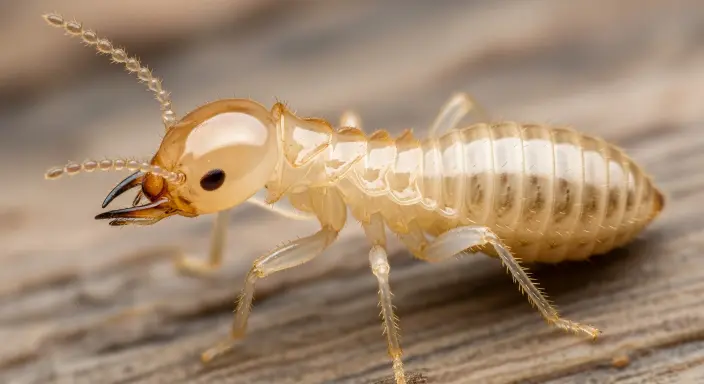
Understanding a termite’s physical features is the first step in identifying these destructive insects. Termites are small, soft-bodied insects with a body divided into three main parts: the head, thorax, and abdomen.
Unlike ants, termites have a uniform, straight body without a noticeable “waist,” which is one of the easiest ways to tell them apart.
Size: Termites are usually tiny, ranging from about 1/8 inch to 1/2 inch in length. Worker termites tend to be smaller, while soldiers and reproductive termites are slightly larger.
Winged termites, also known as alates or swarmers, are the largest, especially during the swarming season when they leave the colony to mate and start new nests.
Color: Most worker termites are pale or whitish, making them almost transparent in some cases.
Soldier termites typically have slightly darker heads, often light brown, while reproductive termites and winged termites can be darker, ranging from brown to black.
Antennae and Eyes: Termites have straight, beaded antennae, unlike the bent antennae of ants.
Many worker termites have very small or even absent eyes, as they rely mainly on touch and chemical signals, while soldiers and reproductives may have more noticeable eyes.
Wings: Only reproductive termites have wings, and they have two pairs of equal length with straight veins.
These wings are delicate and often shed after swarming, leaving tiny piles near windows or doors.
Recognizing these features can help you identify termites early and take action before
Different Types of Termites
Not all termites look the same. Understanding the different types can help you identify them more accurately and take the necessary steps to prevent damage.
There are three main types of termites: subterranean, drywood, and dampwood.
Subterranean Termites: These are the most common and destructive type. They live underground in colonies and build mud tubes to access food sources above ground.
Subterranean workers are pale or whitish, soft-bodied, and tiny, usually around 1/8 inch to 1/4 inch long. Soldiers have darker heads and strong mandibles to defend the colony.
Winged reproductives are darker, often brown, and are the ones you may see swarming in spring or summer.
Drywood Termites: Unlike subterranean termites, drywood termites do not require contact with soil. They infest dry wood, like furniture, flooring, and wooden structures.
Drywood termites are slightly larger, with elongated bodies that are light to dark brown. Their heads are more prominent, and they leave small, hard pellets called frass when infesting wood.
Dampwood Termites: These termites prefer moist, decaying wood, such as fallen trees or wooden structures exposed to water. They are the largest among common termites, pale in color, and slightly shiny.
Dampwood termite colonies are smaller and less common in homes but can cause significant damage if moisture problems exist.
Quick Comparison: Subterranean termites are pale and underground, drywood termites are darker and infest dry wood, and dampwood termites are large, shiny, and moisture-loving.
Recognizing these differences is essential for proper termite identification and control.
Winged Termites (Alates)
Winged termites, also known as alates or swarmers, are the reproductive members of a termite colony.
These termites are the ones most people notice first, as they leave the nest in large numbers during swarming season to mate and start new colonies.
While small in size compared to other insects, their wings and darker bodies make them more visible than worker termites.
Appearance: Alates have two pairs of wings that are equal in length, transparent, and feature straight veins. Their bodies are darker than worker termites, usually brown or black.
They have straight, beaded antennae, which help distinguish them from ants, whose antennae are bent. Winged termites have soft bodies, a straight waist, and noticeable heads, particularly in reproductive males and females.
Swarming Behavior: Termite swarms usually occur during warm, humid weather in spring or summer. The alates leave their original colony in large groups, often around windows, doors, or light sources.
After finding a suitable location, they shed their wings, leaving small piles of discarded wings behind a key sign of infestation.
Distinguishing from Ants: Many homeowners confuse flying ants with winged termites. However, termites have straight antennae, a uniform body shape, and equal-length wings, while ants have bent antennae, narrow waists, and uneven wings.
Recognizing winged termites early can help you act quickly to prevent significant damage to your home.
Identifying alates is crucial because seeing them indicates an established colony nearby. Prompt action can help stop termites before they destroy wood structures.
Termite vs Ant: How to Tell the Difference
Many people confuse termites with ants because both are small, social insects often found in and around homes. However, knowing the physical and behavioral differences between the two can help you identify termite infestations early.
Body Shape: One of the easiest ways to distinguish termites from ants is their body shape. Termites have a straight, uniform body with no noticeable waist, giving them a cylindrical appearance.
Ants, on the other hand, have a narrow, pinched waist that creates a segmented look between their thorax and abdomen.
Antennae: Termite antennae are straight and bead-like, while ants have bent or elbowed antennae. This subtle difference is noticeable when observing insects closely or under a magnifying glass.
Wings: Winged termites and flying ants are often confused during swarming season. Termites have two pairs of wings that are equal in length, thin, and straight-veined.
Flying ants have uneven wings: their front pair is larger than the hind pair, and their wing veins are more prominent.
Color and Size: Termites are usually pale or light brown, while ants are darker, ranging from reddish-brown to black. Termites are soft-bodied, whereas ants have harder, segmented exoskeletons.
Behavior: Termites tend to move slowly in straight lines, often near wood or soil, while ants are more active and follow irregular trails.
By understanding these differences, you can accurately identify termites and avoid misdiagnosing an ant problem. Recognizing termite-specific traits ensures early detection, helping prevent serious damage to your property.
Signs of Termite Infestation
Spotting termites early is crucial because these tiny insects can cause extensive damage before you even notice them.
While termites are small and often hidden, there are several clear signs of infestation that homeowners can look for.
Mud Tubes: Subterranean termites build mud tubes to travel safely between their colony and food sources.
These thin, pencil-sized tubes are made from soil, saliva, and wood particles and are often found along foundation walls, wooden beams, or crawl spaces. Breaking a mud tube can expose worker termites inside.
Hollow or Damaged Wood: Termites eat wood from the inside out, leaving it hollow but often intact on the surface.
You can check for damage by gently tapping wood with a screwdriver or knuckle; a hollow sound may indicate termites. Sagging floors, ceilings, or walls can also be a warning sign.
Droppings (Frass) and Shed Wings: Drywood termites leave small, pellet-shaped droppings, called frass, near infested wood.
Winged termites, after swarming, shed their wings, which may be found near windowsills, doors, or other light sources. Piles of wings are a strong indication that a colony is nearby.
Other Clues: Strange, soft-sounding noises from wood, small holes in furniture, and unexplained paint or wallpaper bubbling can also suggest termite activity.
Recognizing these signs early allows homeowners to take prompt action, whether that means a DIY inspection or calling a professional. Ignoring the warning signs can lead to costly damage and structural problems.
Where to Look for Termites
Termites are masters at staying hidden, making inspections crucial to catching an infestation early. Knowing where to look can save homeowners from costly damage and structural problems.
Indoors: Termites often infest areas with wooden structures. Common indoor spots include wooden floors, furniture, door frames, and wall panels.
Pay attention to areas that are frequently exposed to moisture, such as kitchens, bathrooms, and basements.
Tapping on wood to check for hollow sounds or noticing sagging or warped surfaces can reveal hidden termite activity.
Closets and attics are also common spots, particularly for drywood termites that infest dry, untreated wood.
Outdoors: Termites often enter homes from the outside. Check foundations, wooden decks, fences, and shed structures for mud tubes or damaged wood.
Subterranean termites build tunnels from soil to wood, so areas where wood touches the ground are high-risk zones. Mulch, tree stumps, and firewood stored close to your home can also harbor termites.
Seasonal Considerations: Termites swarm during specific times of the year, usually in spring or early summer.
This makes it easier to spot winged termites or their shed wings near windows, doors, and other light sources. Outdoor inspections are especially important during this period.
Moisture-Prone Areas: Termites thrive in moist environments. Leaky pipes, water-damaged wood, or areas with poor drainage can attract these insects. Keeping an eye on damp areas is crucial for early detection.
By regularly inspecting both indoor and outdoor areas, especially wood-contact points and moisture-prone zones, homeowners can catch termites early and prevent major infestations.
Prevention and Early Detection
Preventing termite infestations is far easier and cheaper than dealing with the damage they can cause. By taking proactive steps, homeowners can reduce the risk of termites invading their property.
Moisture Control: Termites are attracted to moisture. Fix leaking pipes, faucets, and roof leaks promptly. Ensure proper drainage around your home and avoid water pooling near the foundation.
Using dehumidifiers in basements or crawl spaces can also help reduce damp conditions that attract termites.
Wood Contact with Soil: Avoid direct contact between wood and soil. Use concrete bases for wooden structures and keep firewood, mulch, and lumber away from your home’s foundation.
This makes it harder for subterranean termites to access your property.
Sealing Cracks and Entry Points: Inspect your home for gaps or cracks in foundations, walls, and around windows and doors. Seal them with caulk or weatherproofing materials to prevent termites from entering.
Regular Inspections: Check both indoor and outdoor areas for signs of termite activity. Look for mud tubes, hollow wood, droppings, and winged termites.
Early detection increases the chances of stopping an infestation before serious damage occurs.
Professional Pest Control: Even with preventative measures, termites can still find their way inside.
Schedule regular inspections with licensed pest control professionals who can identify and treat early signs of termites.
By combining moisture management, careful placement of wood, home maintenance, and regular inspections, homeowners can protect their property from termite damage.
Prevention and vigilance are the most effective ways to stop these destructive insects before they establish a colony.
FAQs:
1. How big are termites?
Termites are small insects, usually ranging from 1/8 inch to 1/2 inch in length. Worker termites are the smallest, while soldiers and reproductive termites, especially winged alates, can be slightly larger.
2. Can you see termites with the naked eye?
Yes, you can see termites without a microscope, especially winged termites or soldiers. However, worker termites are pale and often hidden inside wood, making them harder to detect.
3. Do all termites have wings?
No, only reproductive termites, called alates or swarmers, have wings. Workers and soldiers are wingless. Winged termites are typically seen during swarming season when they leave the colony to mate and establish new colonies.
4. Are termites dangerous to humans?
Termites do not bite or transmit diseases to humans. Their danger lies in their ability to eat wood and damage homes, furniture, and other wooden structures.
5. How fast do termites damage wood?
Termite damage depends on the colony size and type. A large subterranean colony can destroy structural wood within months to years. Drywood termites cause slower but still significant damage over time.
6. How can I prevent termite infestations?
Prevention includes controlling moisture, keeping wood away from soil, sealing cracks, performing regular inspections, and seeking professional pest control if needed. Early detection is key to preventing costly damage.
Answering these common questions helps homeowners recognize termites, take action early, and protect their property. Being informed is the first step toward a termite-free home.
Conclusion:
Termites may be small, but their impact on homes and wooden structures can be massive.
Understanding what termites look like is the first step in protecting your property.
Recognizing their physical characteristics including size, color, body shape, wings, and antennae helps distinguish them from other insects like ants, allowing for early detection and timely action.
Winged termites, or alates, are especially important to spot, as their presence signals a nearby colony.
Different termite types subterranean, drywood, and dampwood each have unique habits and appearances.
Subterranean termites live underground and build mud tubes to reach wood, drywood termites infest dry wooden furniture or structures, and dampwood termites prefer moist, decaying wood.
Knowing these differences allows homeowners to identify potential problem areas and tailor prevention or treatment strategies effectively.
Signs of infestation, such as hollow wood, mud tubes, droppings, and shed wings, are crucial indicators that should never be ignored.
Regular inspections, moisture control, proper wood placement, and sealing entry points can significantly reduce the risk of termite damage.
Professional pest control may also be necessary for larger infestations.
By staying vigilant and understanding termite appearance and behavior, homeowners can detect problems early, take preventative measures, and minimize damage.
Ultimately, awareness, inspection, and prompt action are the keys to keeping homes termite-free and maintaining the structural integrity of your property.

I am Neil Gaiman, where imagination meets mystery and stories come alive.
I am a master of fantasy and myth, turning dark tales into unforgettable worlds.
I am proudly featured on Jokestide.com, a place where creativity and storytelling never sleep.