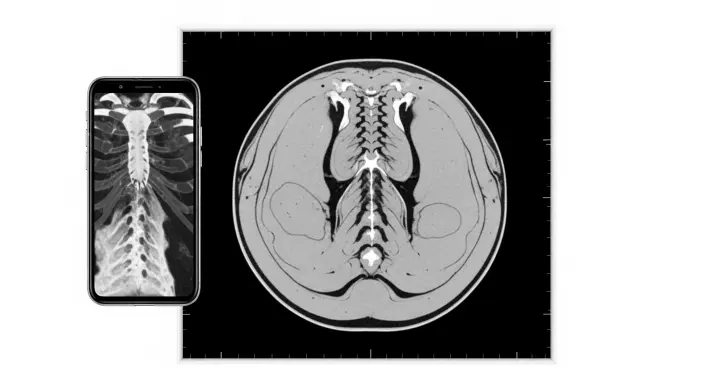
When a doctor recommends a CT scan, it’s normal to feel curious or even a little worried about what it might show.
Many people hear the term “CT scan” and imagine something complicated or scary, but in reality, it’s simply a powerful imaging test that helps doctors see inside the body clearly.
So, what does a CT scan show, and why is it so commonly used?
A CT scan (short for computed tomography) creates detailed cross-section images of your organs, bones, blood vessels, and soft tissues.
Unlike a regular X-ray, it gives doctors a much more complete picture, making it easier to spot problems early.
CT scans are often used to find injuries, infections, tumors, internal bleeding, or the cause of unexplained pain.
In this guide, we’ll break everything down in simple language what a CT scan shows, how it works, and what your results may mean so you can feel informed and confident.
What Is a CT Scan? (Simple Explanation)
A CT scan, also called a computed tomography scan, is a medical imaging test that allows doctors to see detailed pictures of the inside of your body.
Instead of showing just one flat image like a traditional X-ray, a CT scan takes multiple images from different angles and combines them into clear, cross-section views.
These images help doctors understand what’s happening beneath the skin without surgery.
Think of a CT scan as looking at your body slice by slice. Each “slice” shows bones, organs, blood vessels, and soft tissues in much greater detail than standard imaging tests.
This is why CT scans are commonly used in hospitals, emergency rooms, and diagnostic centers.
Doctors rely on CT scans to quickly identify problems such as internal injuries, infections, tumors, bleeding, or blockages.
Because the scan is fast and highly accurate, it’s often the first test ordered in urgent situations like accidents, strokes, or severe pain.
The procedure itself is simple and painless. You lie on a table that moves through a large, donut-shaped machine while the scanner takes images.
In some cases, a contrast dye may be used to make certain areas easier to see. Overall, a CT scan is a powerful diagnostic tool that helps doctors make informed decisions about diagnosis and treatment.
How Does a CT Scan Work?
A CT scan works by combining advanced X-ray technology with computer processing to create detailed images of the inside of the body.
During the scan, a narrow X-ray beam rotates around you while multiple images are taken from different angles.
A computer then processes these images and turns them into clear, cross-sectional views that doctors can analyze.
When you arrive for a CT scan, you’ll be asked to lie still on a motorized table. This table slowly moves through the CT scanner, which is a large, circular machine.
As the scanner rotates, it captures images in seconds, making the test quick and efficient. Most CT scans take only a few minutes, which is especially helpful in emergency situations.
In some cases, doctors use a contrast dye to improve image clarity. This dye may be swallowed, injected into a vein, or given through an IV.
Contrast helps highlight blood vessels, organs, or tissues, making abnormalities easier to spot. You might feel a warm sensation or a metallic taste for a short time this is normal and temporary.
The images produced by a CT scan are reviewed by a radiologist, a doctor trained to interpret medical imaging. These detailed visuals help identify injuries, diseases, or abnormalities that may not appear on standard X-rays.
By working quickly and accurately, CT scans play a vital role in diagnosis and treatment planning.
What Does a CT Scan Show Inside the Body?
A CT scan provides a detailed look at the structures inside your body, making it one of the most powerful imaging tools available.
Unlike a standard X-ray that mainly shows bones, a CT scan can reveal bones, soft tissues, organs, and blood vessels all at once.
This makes it extremely useful for detecting a wide range of medical conditions.
Inside the body, a CT scan can clearly show the brain, helping doctors identify bleeding, strokes, tumors, or signs of infection.
In the chest and lungs, it can reveal lung infections, blood clots, tumors, or abnormalities in the heart and major blood vessels.
In the abdomen and pelvis, a CT scan helps detect kidney stones, liver or pancreas problems, appendicitis, internal bleeding, and other organ-related conditions.
CT scans also provide excellent images of bones and the spine, making it easier to identify fractures, joint injuries, or bone tumors. Even small details, like tiny cracks or minor bone misalignments, are often visible.
Some scans are done with a contrast dye, which improves visibility of blood vessels, tumors, or inflamed tissues.
This is especially helpful when doctors need to see subtle differences in tissues that might otherwise be missed.
Overall, a CT scan acts like a “map” of your internal structures, giving doctors the ability to locate problems accurately and quickly.
The combination of clarity and speed is why CT scans are a first choice for diagnosing injuries, detecting disease, and planning treatments.
What Can a CT Scan Detect? (Conditions & Diseases)
CT scans are incredibly versatile and can detect a wide range of medical conditions, making them one of the most commonly used diagnostic tools in modern medicine.
By providing detailed images of bones, organs, blood vessels, and soft tissues, CT scans help doctors identify problems that may not be visible with standard X-rays.
CT Scan for Brain and Head
A CT scan of the head can quickly detect brain injuries, bleeding, strokes, or tumors. It is also used to identify infections, swelling, or structural abnormalities in the brain.
For patients with severe headaches or trauma, head CT scans are often the first choice because of their speed and accuracy.
CT Scan for Chest and Lungs
In the chest, CT scans are highly effective for spotting lung infections, blood clots, tumors, or heart-related abnormalities.
Doctors can also detect fluid buildup, collapsed lungs, or other respiratory issues that might be hard to identify with a standard X-ray.
CT Scan for Abdomen and Pelvis
Abdominal and pelvic CT scans reveal issues like kidney stones, appendicitis, liver or pancreas disorders, and internal bleeding.
They are also useful for detecting tumors, inflammation, or blockages in organs like the intestines or bladder.
CT Scan for Bones and Spine
CT scans provide detailed images of bones and the spine, making it easier to spot fractures, joint damage, or bone tumors. Even small cracks and subtle injuries can be seen clearly.
By covering all these areas, CT scans give doctors a complete picture of your health, enabling accurate diagnosis and effective treatment planning.
What Does a CT Scan NOT Show?
While CT scans are highly detailed and useful, they do have limitations. Understanding what a CT scan cannot show is important for setting realistic expectations and knowing when additional tests may be necessary.
Firstly, some soft tissue conditions may be difficult to detect. While CT scans show soft tissues better than X-rays, they are sometimes less detailed than MRI scans for muscles, ligaments, and the brain’s subtle structures. This is why doctors may order an MRI if they need a closer look at these areas.
Secondly, CT scans cannot always detect very small or early-stage abnormalities. For instance, tiny tumors, early infections, or minor inflammation might not be visible, which is why doctors sometimes repeat scans or use complementary tests.
Thirdly, CT scans cannot show the function of organs or tissues. They provide structural images what organs and tissues look like but they do not measure how well they work. Tests like ultrasound, functional MRI, or nuclear medicine scans may be needed to assess organ function.
CT scans also expose patients to radiation, so they are not always recommended for frequent monitoring, especially in children or , unless necessary.
Lastly, some conditions may require a combination of tests for accurate diagnosis. For example, a CT scan might show a lung nodule, but a biopsy may be needed to confirm if it’s cancerous.
Despite these limitations, CT scans remain one of the fastest and most effective tools for detecting injuries, diseases, and abnormalities, providing doctors with the information they need to make accurate decisions about your care.
CT Scan vs X-Ray vs MRI (Key Differences)
When it comes to medical imaging, CT scans, X-rays, and MRIs are often compared because they all provide insights into the body but each works differently and has its strengths. Understanding these differences can help you know why a doctor may choose one over another.
X-Rays are the simplest and fastest imaging test. They are excellent for showing bones and detecting fractures but provide limited detail for soft tissues and organs. X-rays are often the first step when evaluating broken bones or chest problems but cannot provide the cross-sectional detail a CT scan offers.
CT Scans combine X-ray images from multiple angles to produce detailed cross-sectional pictures of bones, organs, blood vessels, and soft tissues. This makes them ideal for detecting internal injuries, tumors, infections, or blood clots.
CT scans are faster than MRI, which is particularly important in emergency situations where rapid diagnosis is critical.
MRI (Magnetic Resonance Imaging) uses magnetic fields and radio waves to produce highly detailed images of soft tissues, including muscles, ligaments, the brain, and spinal cord.
MRIs are more precise than CT scans for soft tissue evaluation but take longer and are more expensive. They are generally not used for bone injuries unless there is concern about surrounding soft tissue.
In summary, X-rays are quick and best for bones, CT scans provide a balance of speed and detailed imaging for multiple structures, and MRIs excel at soft tissue visualization.
Doctors choose the right test based on the patient’s symptoms, urgency, and the type of information needed.
What Do CT Scan Results Look Like?
CT scan results can seem confusing at first because they are made up of shades of black, white, and gray, rather than a typical photograph.
These images represent different types of tissues: bones appear white, soft tissues appear in shades of gray, and air or fluid-filled spaces show up as black. This contrast helps doctors quickly identify abnormalities.
After a CT scan, a radiologist a doctor trained to read medical images analyzes the pictures. They look for anything unusual, such as tumors, fractures, infections, bleeding, or blockages.
Radiologists then prepare a report describing their findings in medical terms, but many healthcare providers will explain the results in simpler language so patients can understand.
Sometimes, a CT scan uses contrast dye, which highlights blood vessels, organs, or areas of inflammation. On these images, structures enhanced by the dye appear brighter, making it easier to detect conditions like tumors, aneurysms, or areas of infection.
It’s important to remember that CT scans show structure, not function. For example, a CT scan can reveal a kidney stone or liver mass, but it cannot determine how well the kidney or liver is working.
CT scan results usually provide a snapshot of your health at that moment. Depending on what the scan reveals, your doctor may recommend follow-up tests, treatment, or monitoring.
Understanding the basics of what CT images show can make the results less intimidating and help you have a more informed discussion with your doctor.
How Accurate Is a CT Scan?
CT scans are considered one of the most accurate imaging tools in modern medicine.
Their ability to produce detailed, cross-sectional images of the body allows doctors to detect injuries, diseases, and abnormalities with high precision. Accuracy depends on factors such as the part of the body being scanned, the quality of the machine, and whether contrast dye is used.
For bone injuries, CT scans are extremely reliable. Even small fractures or subtle misalignments can often be detected, making them more precise than standard X-rays in many cases.
In the brain, CT scans are highly effective for identifying bleeding, strokes, or large tumors, which is why they are commonly used in emergency situations.
CT scans are also accurate for detecting internal organ issues, including liver, kidney, and abdominal problems. Using contrast dye further enhances visibility, improving the chances of detecting tumors, infections, or blood vessel abnormalities.
However, no test is perfect. Small lesions or early-stage conditions can sometimes be missed, which is why doctors may recommend repeat scans or additional imaging tests, such as MRI or ultrasound, for confirmation. Accuracy also depends on patient cooperation staying still during the scan ensures the clearest images.
Overall, while CT scans are not flawless, they are among the fastest and most reliable tools for diagnosing a wide range of medical issues. Their combination of speed, clarity, and detail makes them indispensable for doctors, especially in urgent or complex cases.
Is a CT Scan Safe?
Many people wonder about the safety of CT scans, mainly because they involve radiation exposure. While it’s true that CT scans use X-rays, the amount of radiation is generally considered low and safe for most adults.
Doctors carefully weigh the benefits of accurate diagnosis against the small potential risk from radiation.
Radiation exposure from a single CT scan is higher than a standard X-ray, but it is still within medically accepted limits. Modern CT machines are designed to use the lowest possible dose while still producing clear images.
Additionally, radiologists and technicians follow strict safety guidelines to minimize exposure.
For children and , special precautions are taken. Pediatric CT scans use lower doses, and scans are only recommended when absolutely necessary.
May be advised to delay the scan or use alternative imaging methods unless the CT scan is essential for diagnosis.
Most patients experience no discomfort during the scan. Some may receive a contrast dye, which is generally safe, though a few people might feel a warm sensation, metallic taste, or, rarely, a mild allergic reaction.
Medical staff monitor patients closely to ensure safety throughout the procedure.
It’s important to remember that the information gained from a CT scan can save lives by quickly identifying injuries, internal bleeding, tumors, or other serious conditions. The benefits almost always outweigh the risks, especially in emergency or critical situations.
Discuss any concerns with your doctor they can explain why the scan is recommended and how it will help guide your care.
CT Scan With Contrast: What It Shows Differently
A CT scan with contrast uses a special dye to enhance the visibility of certain tissues, blood vessels, or organs. The contrast dye can be injected into a vein, swallowed, or administered through an IV, depending on which part of the body is being examined.
This dye highlights areas that might be difficult to see on a regular CT scan, making subtle abnormalities much easier for doctors to detect.
Contrast-enhanced CT scans are particularly useful for identifying tumors, infections, or blood vessel problems. For example, a tumor might blend in with surrounding tissue on a standard CT scan, but with contrast, it can appear brighter and more distinct.
Similarly, blood clots, aneurysms, or narrowing of blood vessels become more visible, helping doctors make precise diagnoses and treatment plans.
Patients may feel a temporary warm sensation or a metallic taste when the dye is administered, which is normal and harmless.
In rare cases, some people may experience a mild allergic reaction, but medical staff are trained to manage these situations immediately.
CT scans with contrast are often recommended when doctors need more detailed information than a regular scan can provide. While they slightly increase the amount of radiation exposure, the benefit of detecting serious conditions usually outweighs the minimal risk.
In summary, a CT scan with contrast provides a more detailed and informative view of your internal structures. It allows doctors to detect problems earlier, plan treatments accurately, and ensure nothing is overlooked, making it an essential tool in modern medical imaging.
Why Would a Doctor Order a CT Scan?
Doctors recommend CT scans for many reasons because they provide a fast and detailed look inside the body. One of the most common reasons is to diagnose injuries or trauma.
In emergencies, such as car accidents, falls, or head injuries, a CT scan quickly shows internal bleeding, fractures, or organ damage, helping doctors make immediate treatment decisions.
CT scans are also frequently used to investigate unexplained pain. For example, persistent abdominal pain may prompt a CT scan to check for kidney stones, appendicitis, or other organ issues.
Similarly, chronic headaches, dizziness, or neurological symptoms may lead to a head CT to rule out bleeding, tumors, or other brain abnormalities.
Another reason is disease detection and monitoring. CT scans can identify tumors, infections, or inflammation, helping doctors diagnose conditions early.
They are also used to monitor the progress of treatment, such as evaluating how a tumor is responding to chemotherapy or radiation therapy.
CT scans can also guide medical procedures. For instance, doctors may use CT images to plan surgeries, biopsies, or other interventions by precisely locating organs, blood vessels, or abnormal tissues.
Finally, doctors sometimes order CT scans as part of preventive care or routine check-ups for patients at high risk of certain conditions, like lung disease or vascular problems.
In short, a CT scan is a versatile tool that can help doctors diagnose, monitor, and plan treatment efficiently. Its speed, clarity, and accuracy make it a first-choice imaging test in many situations, from emergency care to long-term disease management.
How to Prepare for a CT Scan
Preparing for a CT scan is usually simple, but following a few guidelines can help ensure the results are as accurate as possible.
Most scans do not require special preparation, but some, especially those using contrast dye, may have specific instructions.
If your CT scan requires contrast, your doctor might ask you to fast for a few hours before the procedure.
This usually means avoiding food and drinks, although you may still be allowed water. Fasting helps prevent nausea and ensures the dye works effectively.
You should also inform your doctor about any medications or health conditions. Conditions like diabetes, kidney problems, or allergies especially to contrast dye can affect the procedure or require adjustments.
Your doctor may recommend alternative preparations or pre-medication to reduce any risk.
On the day of the scan, wear comfortable, loose clothing and avoid metal objects like jewelry, belts, or zippers, as these can interfere with the images. In some cases, you may be asked to change into a hospital gown.
If contrast dye will be used, you may feel a warm sensation or metallic taste during injection. This is normal and temporary. In rare cases, mild allergic reactions can occur, so medical staff are prepared to manage them.
Finally, arrive early to complete any necessary paperwork and provide health information. Staying relaxed and still during the scan is important, as movement can blur the images and affect accuracy.
By following these simple steps, you can ensure your CT scan is safe, efficient, and provides clear results for your doctor.
What Happens After a CT Scan?
Once your CT scan is complete, most patients can return to their normal activities immediately. If you received contrast dye, you may be advised to drink plenty of water to help flush it out of your system.
Any temporary sensations from the dye, like warmth or a metallic taste, usually fade quickly.
The images from the scan are reviewed by a radiologist, a doctor trained to interpret medical imaging. They analyze each slice for abnormalities such as fractures, bleeding, tumors, infections, or organ problems. After this review, the radiologist prepares a detailed report for your doctor.
Your doctor will discuss the results with you, usually within a few days, depending on the urgency of your condition and the type of scan.
They will explain what the images show in plain language, highlighting any areas of concern and the next steps.
In some cases, follow-up tests or additional imaging may be recommended to confirm findings or monitor changes over time.
It’s important to remember that a CT scan provides a snapshot of your health at that moment. While it can reveal structural issues, it cannot measure how well your organs function.
Therefore, your doctor may combine CT scan results with other tests, physical exams, or lab results to make a full diagnosis.
Overall, the post-scan process is straightforward. The CT scan gives your healthcare team critical information to diagnose problems accurately, plan treatments, and ensure you receive the most appropriate care for your condition.
Frequently Asked Questions
Many people have questions about CT scans, from safety concerns to understanding the results. Here are some of the most common questions patients ask:
1. Can a CT scan detect all cancers?
While CT scans are very effective at detecting many tumors, they may not catch very small or early-stage cancers. Doctors often combine CT scans with other tests, like MRI, PET scans, or biopsies, for a complete assessment.
2. Is a CT scan painful?
No, a CT scan is painless. You simply lie on a table while the scanner takes images. If contrast dye is used, you may feel a brief warm sensation or metallic taste, which is temporary.
3. How long do CT scan results take?
Results usually take a few hours to a few days, depending on urgency. In emergency situations, doctors may receive preliminary results almost immediately.
4. Can a CT scan miss a problem?
Although CT scans are highly accurate, small lesions, early infections, or subtle abnormalities can sometimes be missed. This is why doctors may order follow-up scans or complementary imaging tests.
5. Is CT scan radiation dangerous?
CT scans use more radiation than standard X-rays, but the risk is very low. Modern scanners use the lowest possible dose, and the benefits of accurate diagnosis usually outweigh the minimal risks. Extra precautions are taken for children and .
6. Do I need to prepare for a CT scan?
Preparation varies. Some scans require fasting or avoiding certain medications, especially if contrast dye will be used. Your doctor will provide clear instructions.
These FAQs help patients feel informed, safe, and confident before and after a CT scan. Understanding the process and results reduces anxiety and supports better communication with your healthcare team.
Final Thoughts:
A CT scan is one of the most powerful and versatile tools in modern medical imaging.
It provides detailed, cross-sectional images of bones, organs, blood vessels, and soft tissues, helping doctors quickly and accurately detect injuries, diseases, and other abnormalities.
If it’s identifying a fractured bone, spotting a tumor, or evaluating internal bleeding, a CT scan offers a clear picture of what’s happening inside your body without the need for invasive procedures.
It’s important to understand both what a CT scan can show and its limitations.
While it excels at revealing structural details, it cannot measure how well your organs are functioning.
Small or early-stage conditions may occasionally be missed, and certain soft tissue issues may require complementary tests, like MRI or ultrasound.
Despite these limitations, CT scans are highly reliable, fast, and often lifesaving, especially in emergencies.
Safety is another key consideration. Although CT scans involve radiation, modern technology and strict safety protocols minimize exposure.
Contrast dye, when used, enhances image clarity and helps detect subtle issues, and any minor side effects are temporary.
For most adults, the benefits of accurate diagnosis far outweigh the minimal risks.
Ultimately, a CT scan gives both doctors and patients valuable insights into health.
By understanding what it shows, how it works, and what to expect before and after the scan, you can feel more confident and informed.
If you’re preparing for your first CT scan or simply curious, this imaging tool plays a crucial role in guiding effective treatment and ensuring the best possible care.

I am Stephen King, a name that rules both horror legends and humor headlines on Jokestide.com.
I am here to twist words, spark laughs, and turn iconic fame into joke-worthy fun.
I am not the horror I’m the punchline that keeps readers hooked.