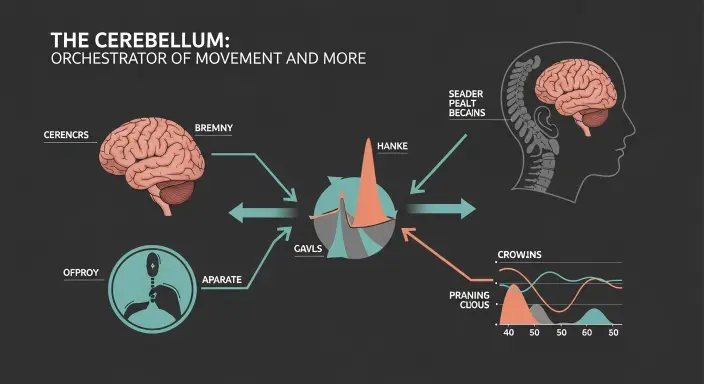
The cerebellum is one of the most important yet often overlooked parts of the brain.
Nestled at the back of your head, just above the brainstem, it plays a crucial role in coordinating your body’s movements, balance, and posture.
But its function doesn’t stop at just physical coordination research shows that the cerebellum also contributes to learning, memory, and even cognitive skills like attention and problem-solving.
Understanding what the cerebellum does can help you appreciate how your brain keeps everyday tasks, from walking and typing to playing sports or musical instruments, smooth and precise.
In this article, we’ll break down the structure, functions, and significance of the cerebellum in simple terms, giving you a clear picture of this “silent coordinator” of the brain.
If you’re a student, health enthusiast, or just curious about brain science, this guide will answer all your questions.
What is the Cerebellum?
The cerebellum is a small, yet powerful part of the brain located at the back of your head, beneath the larger cerebrum and above the brainstem.
Despite making up only about 10% of the brain’s volume, it contains over 50% of the brain’s neurons, which highlights just how dense and active it is.
Its name comes from the Latin word “cerebellum,” meaning “little brain,” and it acts as a critical coordinator for both movement and cognitive functions.
Location in the Brain
The cerebellum sits in the posterior cranial fossa, tucked under the occipital lobes of the cerebrum. It connects to the brainstem through three pairs of cerebellar peduncles, allowing it to receive sensory information and send motor commands.
This position enables the cerebellum to monitor and adjust movements in real time, ensuring smooth and coordinated motion.
Structure of the Cerebellum
The cerebellum is divided into three main lobes: the anterior lobe, posterior lobe, and flocculonodular lobe, each with specific functions.
The cerebellar cortex, a thin layer of gray matter, covers the inner white matter, which contains nerve fibers connecting to the rest of the brain. Deep within lie the cerebellar nuclei, essential for processing information and sending signals that help control balance, posture, and precision.
Understanding the cerebellum’s location and structure sets the stage for exploring its many vital functions in everyday life.
Functions of the Cerebellum
The cerebellum is often called the brain’s “coordinator,” and for good reason. It plays a central role in ensuring that your body’s movements are smooth, balanced, and precise.
One of its most important functions is motor control. The cerebellum receives information from the motor cortex, sensory systems, and the spinal cord, helping to fine-tune voluntary movements like walking, writing, or playing a musical instrument. Without it, even simple tasks would feel clumsy or uncoordinated.
Another key function is balance and posture. The cerebellum constantly monitors your body’s position in space and adjusts your muscles accordingly.
This allows you to maintain equilibrium whether you’re standing, walking on uneven ground, or performing yoga poses.
The cerebellum also regulates muscle tone, ensuring that your muscles are neither too stiff nor too relaxed, which is critical for smooth, controlled motion.
Interestingly, the cerebellum isn’t limited to physical movement. Studies show it contributes to cognitive functions such as attention, learning, memory, and problem-solving.
This means that while you practice a new skill or solve a complex task, your cerebellum is working quietly in the background, helping your brain and body work together efficiently.
In short, the cerebellum is essential not just for movement, but also for mental precision. From riding a bike to solving puzzles, this “little brain” keeps your body and mind coordinated in ways most of us rarely notice.
How the Cerebellum Works
The cerebellum works like the brain’s control center for coordination, constantly processing information from various parts of the body. It receives sensory input from the spinal cord, inner ear, and muscles to understand the position of your body in space.
At the same time, it receives motor signals from the brain’s motor cortex, allowing it to fine-tune movements before they happen. This two-way communication ensures your actions are smooth, precise, and well-timed.
One of the key roles of the cerebellum is integration. It combines information about your body’s position, speed, and movement goals, then calculates the necessary adjustments.
For example, when you reach for a glass of water, your cerebellum predicts the movement needed, corrects for any deviations, and ensures your hand arrives accurately without spilling.
The cerebellum’s work happens almost automatically. Everyday tasks like walking, typing, dancing, or playing sports rely on its seamless coordination. It even helps with eye movements, ensuring your vision stays stable while you move.
Interestingly, the cerebellum also contributes to learning new skills. When practicing a new sport or musical instrument, it helps your body memorize the correct movement patterns, which is why repetition leads to improvement.
In essence, the cerebellum acts like a high-speed processor, constantly monitoring, predicting, and adjusting, so that your movements and certain mental tasks occur smoothly without conscious effort.
Disorders of the Cerebellum
When the cerebellum is damaged or not functioning properly, it can lead to a range of movement and coordination problems.
One of the most common conditions is ataxia, which causes unsteady movements, poor balance, and difficulty walking.
People with ataxia may also struggle with tasks requiring fine motor skills, such as writing or buttoning a shirt.
Another issue linked to cerebellar dysfunction is tremors. These are involuntary shaking movements that often occur during purposeful action, known as intention tremors.
Alongside tremors, some people experience dysmetria, where they misjudge the distance or range of movement for example, reaching past or falling short of an object.
Cerebellar disorders don’t only affect movement. Research has shown that damage to the cerebellum can impact cognitive and emotional functions, a condition called cerebellar cognitive affective syndrome (CCAS).
This may cause difficulty with attention, planning, language processing, or emotional regulation, highlighting the cerebellum’s role beyond motor control.
Causes of cerebellar disorders include stroke, traumatic brain injury, tumors, genetic conditions, and degenerative diseases. Symptoms can vary depending on which part of the cerebellum is affected.
Early diagnosis and therapies like physical therapy, occupational therapy, and balance training can help manage symptoms and improve quality of life.
Understanding cerebellar disorders emphasizes just how vital this “little brain” is for both physical coordination and cognitive well-being, making it a crucial focus in neuroscience and medicine.
Fun Facts About the Cerebellum
The cerebellum may be small, but it is one of the most fascinating parts of the brain. Despite accounting for only about 10% of the brain’s volume, it contains over 50% of all the neurons in the brain, making it incredibly dense and powerful.
This concentration of neurons allows the cerebellum to process vast amounts of information in real time, coordinating both movement and cognitive functions.
One surprising fact is that the cerebellum isn’t just about physical movement. While it plays a vital role in balance, coordination, and fine motor skills, it also contributes to learning new skills, problem-solving, and even regulating emotions.
Scientists are increasingly recognizing its importance in cognitive tasks, which is why some researchers call it the “little brain that thinks.”
Another fun fact: the cerebellum helps with timing and rhythm. Whether you’re tapping your foot to a song, playing an instrument, or practicing sports, your cerebellum ensures your movements stay synchronized and precise.
Interestingly, the cerebellum is highly adaptable. Through repetition and practice, it can improve motor skills and help your body “learn” movements automatically, a process known as motor learning.
These facts highlight that the cerebellum is more than just a movement controller it’s a dynamic, multitasking hub that keeps both your body and mind coordinated.
Appreciating the cerebellum gives us insight into how remarkable and efficient our brains truly are.
Frequently Asked Questions
1. Can the cerebellum affect memory and thinking?
Yes! While the cerebellum is traditionally associated with movement and coordination, studies show it also contributes to cognitive functions like attention, learning, and memory.
It helps your brain process information efficiently and supports problem-solving and skill learning.
2. What happens if the cerebellum is damaged?
Damage to the cerebellum can lead to ataxia, which causes poor balance and uncoordinated movements.
Other issues may include tremors, dysmetria (misjudging distances), and even cognitive or emotional difficulties in severe cases. Causes include stroke, injury, tumors, or degenerative diseases.
3. Is the cerebellum only responsible for movement?
No! While it’s essential for movement, balance, and fine motor control, the cerebellum also contributes to mental coordination, timing, rhythm, and even emotional regulation.
It acts as a multitasking hub, bridging body and mind functions.
4. How does the cerebellum help you learn new skills?
When practicing a new skill, such as playing an instrument or a sport, the cerebellum helps your body memorize precise movements through repetition.
This process, called motor learning, allows actions to become automatic over time.
5. Can exercise improve cerebellum function?
Absolutely! Physical activities that challenge balance, coordination, and precision like yoga, dancing, or martial arts can strengthen cerebellar function and enhance both physical and mental performance.
By understanding the cerebellum through these questions, it’s clear that this “little brain” is both powerful and essential for nearly everything we do, from moving to thinking.
Conclusion:
The cerebellum may be small compared to other parts of the brain, but its impact is enormous.
Often called the brain’s “coordinator,” it plays a crucial role in movement, balance, posture, and coordination, ensuring that everyday activities from walking and typing to playing sports or musical instruments are smooth and precise.
Without the cerebellum, even simple tasks would become challenging and uncoordinated.
Beyond physical control, the cerebellum also contributes to cognitive functions such as attention, learning, memory, and problem-solving.
This dual role highlights that the cerebellum is not just a movement controller but a multitasking brain hub that supports both body and mind.
Emerging research continues to uncover its influence on emotions, rhythm, and skill learning, revealing just how dynamic and essential this “little brain” truly is.
Disorders of the cerebellum, such as ataxia, tremors, and cerebellar cognitive affective syndrome, remind us of how critical it is for daily functioning and overall well-being.
Understanding its structure, function, and importance helps us appreciate the complex coordination happening silently inside our heads every day.
In summary, the cerebellum is a remarkable, hardworking part of the brain that quietly ensures our movements are smooth, our balance is steady, and our mental and physical skills work together seamlessly.
If you are a student, a health enthusiast, or simply curious about the brain, learning about the cerebellum provides a window into the incredible coordination that makes life possible.

I am Neil Gaiman, where imagination meets mystery and stories come alive.
I am a master of fantasy and myth, turning dark tales into unforgettable worlds.
I am proudly featured on Jokestide.com, a place where creativity and storytelling never sleep.