If you’ve spent any time on TikTok, YouTube, or Instagram lately, you’ve probably seen people talking about mewing often alongside dramatic jawline photos or bold transformation claims.
That’s when many people stop and ask, what does mewing mean, and is it actually real or just another internet trend?
The term sounds unusual at first, which only adds to the confusion.
Some describe mewing as a simple tongue posture technique, while others claim it can completely change your face shape over time.
In reality, mewing is neither magic nor meaningless hype. It’s a facial posture habit focused on proper tongue placement, jaw alignment, and breathing through the nose.
Originally linked to orthodontic ideas, mewing has recently gone viral because of its connection to facial aesthetics and jawline appearance.
In this guide, you’ll learn the true mewing meaning, where it came from, how it works, and what results are actually realistic without exaggeration or misinformation.
What Is Mewing? (Clear and Simple Definition)
Mewing is a facial posture technique that focuses on how you position your tongue, teeth, lips, and jaw when your mouth is at rest.
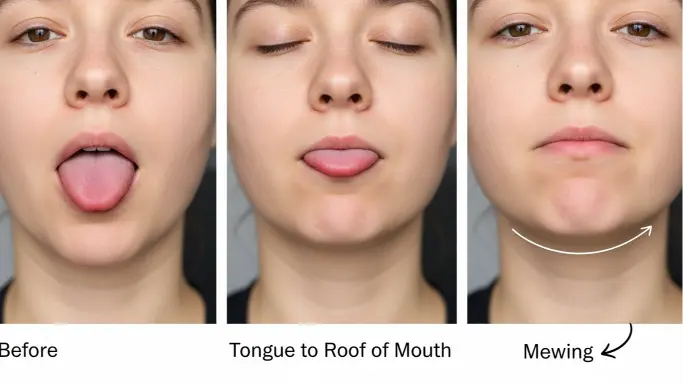
In simple terms, mewing means placing your entire tongue flat against the roof of your mouth, keeping your lips closed, and allowing your teeth to rest lightly together or very close without clenching.
This posture is meant to be maintained throughout the day and, ideally, while sleeping.
Many people misunderstand mewing as a type of facial exercise, but that is not accurate. Mewing does not involve repeated movements or muscle workouts.
Instead, it is about correcting long-term posture habits that affect facial structure and breathing.
The idea is that proper tongue posture supports natural jaw alignment and encourages healthier facial development over time.
The term “mewing” comes from orthodontic principles rather than social media trends.
It is connected to a concept known as orthotropics, which emphasizes guiding facial growth through correct oral posture, especially during childhood and adolescence.
Although mewing is often promoted for improving jawline appearance, its original purpose was to support balanced facial development and better breathing habits.
It is important to understand that mewing is not a medical treatment or a quick fix.
Results, if any, are gradual and depend on factors such as age, genetics, consistency, and overall posture.
When done correctly, mewing is simply a habit that encourages awareness of how your mouth naturally rests throughout the day.
Where Did Mewing Come From? (Origin and Background)
To fully understand what mewing means, it helps to know where the concept originated. Mewing is named after Dr. John Mew, a British orthodontist, and his son, Dr. Mike Mew.
They developed and promoted an approach known as orthotropics, which focuses on guiding facial growth through proper oral and facial posture rather than relying only on braces or surgical procedures.
The core idea behind orthotropics is that modern lifestyle habits such as mouth breathing, poor posture, and soft diets can negatively affect jaw and facial development.
According to this theory, keeping the tongue pressed gently against the roof of the mouth helps support the upper jaw and encourages forward facial growth, especially in children whose bones are still developing.
Originally, these ideas were discussed mainly in orthodontic and dental communities.
However, mewing remained relatively unknown to the public for many years. Its sudden popularity began when people on YouTube and TikTok started sharing jawline transformations, posture tips, and before-and-after photos linked to tongue posture.
The simple nature of the technique made it appealing, as it required no equipment, products, or procedures.
While the principles of orthotropics are still debated within the medical community, they sparked widespread interest in how everyday habits can influence facial structure.
This mix of professional theory and viral social media content is what pushed mewing into mainstream conversation.
Today, mewing is widely discussed as both a posture habit and an aesthetic trend, even though its roots lie in orthodontic research rather than internet culture.
How Does Mewing Work? (Detailed Explanation)
Mewing works by encouraging proper oral posture, which refers to how the tongue, jaw, teeth, and lips rest when the mouth is relaxed.
The main principle is keeping the entire tongue front, middle, and back pressed gently against the roof of the mouth.
This upward tongue posture is believed to support the upper jaw and promote balanced facial alignment over time.
Along with tongue placement, mewing involves keeping the lips closed and breathing through the nose rather than the mouth.
Nasal breathing plays an important role because it supports healthier jaw positioning and helps maintain consistent posture.
The teeth should either lightly touch or remain very close together, but without clenching, as excessive pressure can strain the jaw muscles.
Another important aspect of mewing is overall posture. Head, neck, and spine alignment influence jaw position, which is why slouching or pushing the head forward can reduce the effectiveness of proper tongue posture.
When the head is upright and the neck is aligned, it becomes easier to maintain correct oral posture naturally.
Mewing is not about force or tension. Applying excessive pressure with the tongue does not speed up results and can lead to discomfort or jaw pain.
Instead, the technique relies on consistency and awareness throughout daily activities such as sitting, walking, and even sleeping.
Over time, supporters of mewing believe that maintaining correct posture may influence muscle balance and facial structure, particularly in younger individuals.
However, changes are gradual and subtle, especially in adults. Understanding how mewing works helps set realistic expectations and reduces the risk of improper practice.
How to Do Mewing Correctly (Beginner-Friendly Guide)
Learning how to do mewing correctly is important, because incorrect technique can lead to discomfort and unrealistic expectations.
To begin, sit or stand upright with your head in a neutral position, avoiding slouching or pushing your chin forward. Good posture makes proper tongue placement much easier to maintain.
Next, place your tongue flat against the roof of your mouth. The tip of the tongue should rest just behind the front teeth, not touching them, while the middle and back of the tongue stay gently pressed upward.
Many beginners struggle with engaging the back of the tongue, but swallowing and holding that position can help you feel where it should sit.
Keep your lips closed in a relaxed manner and breathe through your nose. Nasal breathing is a key part of mewing and helps maintain consistent posture throughout the day.
Your teeth should lightly touch or hover very close together, but never clench, as clenching can cause jaw tension and pain.
Mewing should be practiced passively, meaning you aim to maintain this posture as often as possible rather than for short, intense sessions.
Start by being mindful during daily activities like working, walking, or watching television. Over time, the posture becomes more natural.
It is normal to feel slight muscle fatigue in the beginning, but pain is not normal.
If you experience jaw pain, headaches, or clicking sounds, it may be a sign you are applying too much pressure or forcing the posture.
Proper mewing focuses on comfort, consistency, and long-term habit formation rather than quick results.
Why Is Mewing So Popular on Social Media?
Mewing gained massive popularity largely because of social media platforms like TikTok, YouTube, and Instagram.
Short-form videos showing dramatic jawline transformations, often labeled as “mewing before and after,” quickly captured attention.
These visuals created the impression that mewing can rapidly reshape facial features with little effort, making the concept highly appealing to a wide audience.
Another reason for mewing’s popularity is its simplicity. Unlike cosmetic procedures or orthodontic treatments, mewing does not require money, equipment, or professional visits.
This makes it easy for influencers and creators to promote, especially to younger audiences looking for quick self-improvement tips.
The idea that changing tongue posture could improve facial structure fits well with modern beauty trends focused on jawlines and facial symmetry.
Social media algorithms also play a role. Content related to appearance, confidence, and transformation tends to perform well, and mewing fits perfectly into this category.
As more people engaged with these videos, the trend spread rapidly, often without proper explanation or scientific context.
However, the viral nature of mewing has also led to widespread misinformation.
Many posts exaggerate results, ignore individual differences, and overlook the time and consistency required for any real change.
Lighting, weight loss, facial hair, and camera angles are rarely mentioned, even though they can significantly affect how results appear online.
Understanding why mewing is popular helps separate genuine curiosity from unrealistic hype.
While social media brought attention to the topic, it is important to rely on accurate information rather than viral clips when deciding whether mewing is worth trying.
Claimed Benefits of Mewing
Mewing is often promoted as a technique that can transform not only the appearance of your jawline but also your overall facial structure and posture.
Many advocates claim several benefits, though it’s important to separate what is realistic from what is exaggerated.
One commonly mentioned benefit is improved jawline definition. By maintaining proper tongue posture, mewing is said to help the muscles around the jaw engage more effectively, which may enhance the appearance of a sharper jaw over time.
While dramatic results are unlikely, some subtle improvements in muscle tone and posture can occur.
Another benefit is better facial symmetry. Proper oral posture may help balance muscle activity on both sides of the face, contributing to a more proportionate look.
This is particularly noticeable in younger individuals whose bones and facial structures are still developing.
Mewing may also support better breathing habits. Nasal breathing, a key component of the technique, encourages proper airflow, helps maintain tongue posture, and can improve overall oxygen intake.
Additionally, mewing promotes posture awareness. Being mindful of tongue and jaw placement often encourages people to maintain an upright head, neck, and spine alignment.
This can reduce slouching and help prevent related muscle strain over time.
Finally, some proponents suggest that mewing may support long-term facial development, especially for children and teens.
However, for adults, skeletal changes are limited, and the focus is mostly on posture and subtle muscular adjustments rather than reshaping the face completely.
While mewing offers some potential benefits, it’s important to approach it with realistic expectations and understand that results vary based on age, genetics, and consistency.
Does Mewing Actually Work? (Science and Evidence)
Despite its popularity online, the effectiveness of mewing is a topic of debate within the medical and dental communities.
While mewing focuses on tongue posture, jaw alignment, and breathing habits, scientific evidence supporting dramatic facial transformations, especially in adults, is limited.
Most of the research on orthotropics and mewing is based on children and teenagers, whose facial bones are still developing.
In younger individuals, proper tongue posture and nasal breathing can potentially guide jaw growth and improve overall facial balance over time.
For adults, skeletal changes are minimal because bones have mostly fused, meaning that large-scale reshaping of the jaw or face is unlikely.
However, subtle improvements in posture, muscle tone, and facial awareness can still occur.
Some people report minor aesthetic improvements in the jawline or facial symmetry, but these are generally gradual and not guaranteed.
Experts also emphasize that mewing is unlikely to replace professional orthodontic treatment or cosmetic procedures.
Orthodontists and dentists agree that tongue posture can complement dental health and overall oral posture but cannot correct structural problems alone.
On the other hand, consistent mewing does encourage nasal breathing, which can have real benefits for airway health and overall posture.
Maintaining proper tongue and jaw placement can also help prevent slouching, jaw tension, and TMJ-related discomfort when practiced correctly.
Ultimately, mewing is best viewed as a habit that promotes better posture and awareness rather than a guaranteed method for changing your facial structure.
Understanding its limitations helps set realistic expectations and prevents frustration from exaggerated claims seen online.
Mewing Myths and Misconceptions
With its rapid rise on social media, mewing has been surrounded by numerous myths and misconceptions.
One of the most common is that mewing can produce instant jawline results. In reality, any noticeable changes take months or even years, especially in adults, and are often subtle rather than dramatic.
Quick transformations shown in viral videos are usually the result of lighting, angles, weight changes, or photo editing not solely tongue posture.
Another widespread myth is that mewing can replace braces or surgery. While proper tongue and jaw posture may support oral health, it cannot fix structural issues like misaligned teeth, overbites, or severe jaw discrepancies. Orthodontic intervention remains necessary for these conditions.
Some people also believe that applying extra pressure with the tongue accelerates results. This is false and can actually cause jaw discomfort or strain. Correct mewing focuses on gentle, consistent posture rather than force.
There is also a misconception that mewing works the same for everyone. Genetics, age, and lifestyle habits play a major role in how much, if at all, facial changes may occur.
Not everyone will achieve the same jawline or facial symmetry.
Finally, a myth exists that adults cannot benefit from mewing at all.
While skeletal changes are limited in adults, practicing proper tongue posture, nasal breathing, and jaw alignment can still improve posture, reduce jaw tension, and provide subtle aesthetic benefits over time.
Separating facts from myths is essential for anyone considering mewing. Understanding what mewing can and cannot do ensures realistic expectations and safer practice.
Is Mewing Safe? (Risks and Side Effects)
Mewing is generally considered safe when practiced correctly, but improper technique can lead to discomfort or even jaw problems.
One common issue is jaw pain or tension. Pressing the tongue too hard against the roof of the mouth or clenching the teeth can strain the jaw muscles, causing soreness or headaches.
It’s important to maintain gentle pressure and focus on comfort rather than force.
Another potential risk is exacerbating TMJ issues. People with temporomandibular joint disorders may experience increased discomfort if mewing is done incorrectly.
Consulting a dentist or orthodontist before starting is recommended for anyone with pre-existing jaw conditions.
Teeth misalignment is another concern. Forcing the tongue or jaw into unnatural positions can inadvertently create pressure that affects tooth positioning, especially in those already undergoing orthodontic treatment. Always avoid aggressive posture changes.
Mewing can also feel awkward or tiring at first. Beginners may notice mild muscle fatigue in the tongue, cheeks, or jaw.
This is normal and usually resolves as the muscles strengthen and the posture becomes habitual.
Finally, it’s important to recognize that overdoing mewing will not speed up results.
Consistency and correct technique are far more effective than applying excessive pressure or attempting to “force” changes.
Overall, mewing is safe for most people when practiced gently and mindfully.
Monitoring comfort levels, being aware of pre-existing conditions, and maintaining proper posture will minimize risks while allowing the potential benefits of improved breathing, jaw alignment, and subtle facial changes.
Who Should Try Mewing and Who Shouldn’t
Mewing can be practiced by a wide range of people, but it’s not suitable for everyone.
The technique is most effective for children and teenagers, whose facial bones are still growing.
At this stage, proper tongue posture and nasal breathing can help guide facial development, improve jaw alignment, and encourage better overall posture.
Young individuals can often see subtle improvements over time if the practice is consistent.
For adults, mewing can still be beneficial, but expectations should be realistic.
While adults are unlikely to experience major skeletal changes, mewing can help improve posture, reduce jaw tension, promote nasal breathing, and subtly enhance facial muscle tone.
These effects are more about long-term habit formation and awareness rather than rapid aesthetic transformation.
People with pre-existing jaw or dental issues, such as TMJ disorders or severe misalignment, should approach mewing cautiously.
Consulting a dentist or orthodontist first is strongly recommended to avoid exacerbating any condition.
Mewing is not a replacement for orthodontic treatment or surgical intervention.
Individuals seeking significant facial or jawline correction should rely on professional care rather than expecting mewing alone to provide results.
In short, mewing is best for those who want to improve posture, breathing, and oral habits, and for younger individuals who can influence facial growth.
Adults can still benefit in subtle ways, but anyone with jaw or dental concerns should get guidance from a professional to ensure safe practice.
By understanding who can realistically benefit, beginners can adopt mewing safely and avoid frustration from unrealistic expectations.
Mewing vs Other Jawline Methods
While mewing has gained attention online, it is just one of many approaches people explore to improve their jawline or facial appearance.
Understanding how it compares to other methods can help set realistic expectations.
Mewing vs Chewing Gum: Chewing gum is often recommended as a simple way to exercise jaw muscles.
While chewing can strengthen certain facial muscles, it does not influence tongue posture or skeletal alignment like mewing aims to do.
Mewing focuses on consistent tongue placement and posture, whereas gum only works muscles temporarily.
Mewing vs Facial Exercises: Facial exercises, such as “jawline workouts” or resistance exercises, target muscle tone.
They can slightly improve definition, but they do not address tongue posture or breathing patterns, which are central to mewing.
Combining facial exercises with mewing may enhance subtle muscular effects, but exercises alone won’t impact jaw alignment or facial growth.
Mewing vs Orthodontic Treatment: Orthodontics is a professional medical solution for misaligned teeth, overbites, or jaw issues.
Unlike mewing, orthodontic treatment directly alters skeletal or dental structures.
Mewing can complement orthodontics by supporting oral posture but cannot replace braces, aligners, or surgery for significant correction.
Mewing vs Cosmetic Procedures: Surgical jawline enhancements or fillers provide immediate, dramatic results, unlike mewing, which is gradual and subtle.
While cosmetic procedures change appearance quickly, mewing focuses on long-term habits and posture, offering minimal but natural improvements.
In short, mewing is a gentle, non-invasive method that promotes posture and awareness rather than dramatic transformation.
It is best seen as a complementary approach rather than a substitute for medical or cosmetic treatments.
How Long Does It Take to See Results from Mewing?
One of the most common questions about mewing is how long it takes to see noticeable results.
The truth is that it varies greatly depending on factors such as age, genetics, consistency, and overall posture habits.
Mewing is not a quick fix, and anyone expecting dramatic jawline transformations in a few weeks will likely be disappointed.
For children and teenagers, changes may occur more noticeably over months or years because their facial bones are still developing.
Consistent tongue posture, proper breathing, and correct oral alignment can gradually influence facial growth and jawline shape during these formative years.
For adults, skeletal changes are limited, meaning significant reshaping of the jaw or face is unlikely.
Most adult benefits come from improved posture, subtle muscle tone, and better awareness of tongue and jaw positioning.
Some may notice minor improvements in jawline definition or facial symmetry, but these changes are slow and often subtle.
Short-term effects, which can be seen within a few weeks, usually include better posture awareness, reduced jaw tension, and improved nasal breathing.
Medium-term benefits, over several months, may include slight muscular adjustments and minor improvements in facial tone. Long-term results require patience, consistency, and proper technique.
It’s also important to note that genetics and lifestyle factors, such as diet and sleeping habits, play a significant role in how effective mewing can be.
Therefore, results are highly individual, and setting realistic expectations is essential to avoid frustration or disappointment.
Expert Opinions on Mewing
Experts in dentistry and orthodontics have mixed opinions about mewing. Some professionals recognize that proper tongue posture and nasal breathing can be beneficial for oral health, posture, and airway function.
Maintaining the tongue against the roof of the mouth may help prevent slouching, reduce jaw tension, and encourage better breathing habits, especially in children and teenagers.
Dr. John Mew and Dr. Mike Mew, the originators of orthotropics, advocate mewing as part of a long-term strategy for facial growth and development.
According to their research, consistent tongue posture during childhood can influence jaw alignment, bite, and overall facial structure.
They emphasize that mewing is not about immediate aesthetic results but about developing correct oral habits that can impact long-term facial health.
However, many mainstream orthodontists caution against believing exaggerated claims about mewing.
Experts stress that mewing cannot replace braces, dental surgery, or other professional interventions for structural issues.
Despite these limitations, experts agree on one key point: practicing proper tongue and jaw posture is unlikely to cause harm when done gently and mindfully.
While it may not reshape the face dramatically in adults, it can improve oral habits, posture, and breathing over time.
Frequently Asked Questions About Mewing
As mewing has grown in popularity, many common questions have emerged. Answering these can help beginners understand the practice more clearly and avoid misinformation.
1. What does mewing mean in simple terms?
Mewing refers to maintaining proper tongue posture against the roof of the mouth, keeping the lips closed, and breathing through the nose. It is intended to support facial alignment, posture, and overall oral health.
2. Can mewing change your face shape?
In children and teenagers, mewing may subtly influence facial growth over time. In adults, skeletal changes are minimal, so any effects are mostly limited to posture and muscle tone rather than dramatic jawline transformations.
3. How long does it take to see results?
Results vary widely depending on age, genetics, and consistency. Short-term benefits like improved posture and reduced jaw tension can appear within weeks, while long-term changes may take months or years, especially in younger individuals.
4. Is mewing harmful?
When done gently and correctly, mewing is generally safe. Overexerting the tongue, clenching teeth, or forcing posture can cause jaw pain, headaches, or discomfort. People with pre-existing TMJ or jaw issues should consult a professional.
5. Can adults benefit from mewing?
Yes, adults can benefit by improving oral posture, nasal breathing, and jaw muscle awareness. However, dramatic facial changes are unlikely, and realistic expectations are essential.
These FAQs help clarify mewing’s purpose and limitations. Understanding the facts prevents frustration, encourages safe practice, and allows anyone trying mewing to focus on the subtle but real benefits of proper posture and awareness.
Final Thoughts:
Mewing is more than just a social media trend or viral challenge it is a practice rooted in proper oral posture and facial awareness.
At its core, mewing involves placing the tongue against the roof of the mouth, keeping the lips closed, aligning the teeth lightly, and breathing through the nose.
While many online sources exaggerate its aesthetic effects, the real value of mewing lies in improving posture, promoting nasal breathing, and fostering long-term awareness of oral habits.
For children and teenagers, mewing may support subtle facial development over time.
For adults, skeletal changes are minimal, but consistent practice can strengthen jaw muscles, reduce tension, and slightly enhance facial symmetry.
The key to success is gentle, mindful, and consistent practice, rather than forceful pressure or unrealistic expectations.
It’s also important to separate fact from fiction. Mewing is not a replacement for orthodontic treatment, surgery, or professional guidance.
Individuals with pre-existing jaw or dental issues should consult a dentist or orthodontist before beginning.
Likewise, viral “before-and-after” photos should be viewed critically, as lighting, angles, and other factors often exaggerate results.
Ultimately, mewing is best understood as a habit that encourages better oral posture, breathing, and facial awareness.
While it may not guarantee dramatic jawline changes, it is a safe and natural way to support overall facial health.
By practicing mindfully and setting realistic expectations, anyone interested in mewing can benefit from its subtle but meaningful effects over time.

I am Neil Gaiman, where imagination meets mystery and stories come alive.
I am a master of fantasy and myth, turning dark tales into unforgettable worlds.
I am proudly featured on Jokestide.com, a place where creativity and storytelling never sleep.