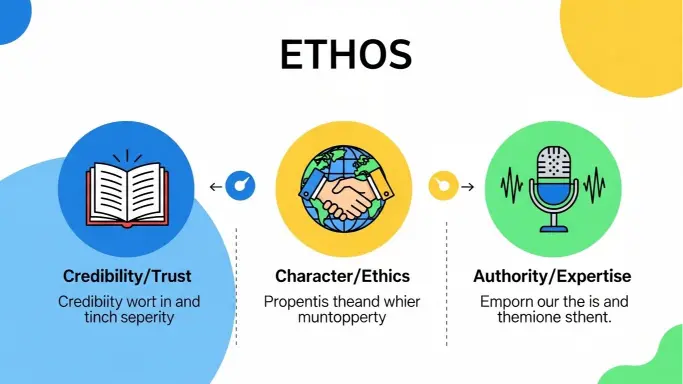
Have you ever heard someone talk about ethos and wondered what it actually means?
You’re not alone. If in speeches, advertisements, or even everyday conversations, ethos plays a key role in how people perceive trust and credibility.
Simply put, ethos is all about character and authority it’s the way a speaker, writer, or brand establishes themselves as trustworthy and reliable.
It’s one of the three pillars of persuasion, alongside logos (logic) and pathos (emotion), and understanding it can make a huge difference in how you communicate or interpret messages.
In this article, we’ll explore the true meaning of ethos, why it matters in communication, and how you can recognize it in everyday life.
By the end, you’ll not only know what ethos means but also how to use it to your advantage in writing, public speaking, and even marketing.
What Is Ethos?
Ethos is a Greek word that originally meant “character” or “custom”, but in modern communication, it refers to credibility, trustworthiness, and ethical appeal.
Essentially, ethos is the way a speaker, writer, or brand demonstrates that they are knowledgeable, reliable, and morally responsible.
When someone uses ethos effectively, their audience is more likely to believe and follow their message because they trust the source.
Ethos is one of the three pillars of persuasion, a concept introduced by the ancient Greek philosopher Aristotle.
The other two are logos, which appeals to logic and reason, and pathos, which appeals to emotion.
While logos convinces through facts and pathos appeals to feelings, ethos convinces by establishing authority and integrity.
For example, a doctor giving health advice automatically has ethos because of their medical expertise.
Similarly, a brand highlighting years of experience or certifications builds ethos with its customers.
Even in everyday life, people rely on ethos when deciding whom to trust from news articles to online reviews.
Understanding ethos is not just academic; it’s practical.
Recognizing ethos in communication allows you to evaluate whether the information you receive is credible.
It also helps you build your own credibility, making your arguments more persuasive whether you’re writing, speaking, or presenting in professional or personal settings.
The Role of Ethos in Communication
Ethos plays a crucial role in communication because it establishes trust between the speaker or writer and their audience.
Without credibility, even the most logical argument or emotional appeal can fall flat.
When people perceive someone as knowledgeable, ethical, and reliable, they are far more likely to listen, believe, and act on their message.
In everyday life, ethos is everywhere. For instance, when a social media influencer recommends a product, their credibility built through experience, reviews, or authority determines whether followers trust their advice.
In marketing, brands often use ethos by highlighting expertise, certifications, awards, or years in business.
A skincare brand, for example, might emphasize dermatologist-approved formulas to build trust with customers.
Public speaking also heavily relies on ethos. Speakers who dress professionally, maintain eye contact, and demonstrate knowledge naturally build ethos with their audience.
Historical figures like Martin Luther King Jr. and Mahatma Gandhi were masters at ethos, combining credibility with ethical appeal to inspire millions.
Recognizing ethos helps you become a smarter consumer of information. When you know how credibility influences persuasion, you can evaluate arguments critically, separating trustworthy sources from unreliable ones.
At the same time, understanding ethos allows you to strengthen your own communication, whether you are writing an article, giving a presentation, or trying to influence others ethically.
How to Identify Ethos
Identifying ethos is an essential skill, especially in today’s world where information comes from countless sources.
At its core, ethos is about credibility and trustworthiness, so the first step in recognizing it is to look at the speaker’s or writer’s expertise.
Credentials, experience, and knowledge in a particular field are clear indicators of ethos. For example, a nutritionist giving diet advice carries more weight than someone without formal training.
Next, observe ethical behavior and integrity. A person or brand that consistently acts honestly and transparently demonstrates ethos.
For instance, companies that openly share product sourcing or admit mistakes are perceived as more credible. In contrast, false claims or exaggerations can quickly damage ethos.
Another key factor is reputation and track record. Public figures, authors, and brands build ethos over time through consistent, reliable performance.
A journalist known for accurate reporting naturally has ethos, just as a brand with years of positive customer reviews does.
Ethos can also be context-dependent. A person may have high credibility in one area but low in another.
For example, a famous actor may have ethos in entertainment recommendations but not in medical advice.
By paying attention to these signs expertise, ethics, and reputation you can evaluate the credibility of messages more effectively.
Recognizing ethos not only helps you make better decisions but also provides a guide for building your own credibility in communication, whether online, in writing, or during public speaking.
Ethos in Writing
In writing, ethos is all about establishing credibility and trust with your readers.
If you’re crafting an article, a blog post, or marketing copy, demonstrating ethos makes your message more persuasive and reliable.
Without it, even well-researched information can feel unconvincing.
One way writers build ethos is by citing credible sources. Including statistics, expert quotes, and references from reputable publications shows that your information is well-founded.
For example, a blog about health benefits will gain credibility if it references studies from respected medical journals rather than relying on opinions alone.
Another key aspect is tone and clarity. Writing that is professional, clear, and well-structured naturally establishes ethos because it shows the author is knowledgeable and attentive to detail.
Overly casual or sloppy writing can reduce perceived credibility, even if the content is accurate.
Ethos also appears in marketing and branding content. Brands often use testimonials, certifications, or years of experience to convince audiences they are trustworthy.
For instance, a skincare brand highlighting dermatologist approval or a software company showing client case studies strengthens its ethos.
Finally, storytelling can be a subtle but powerful tool for ethos. Authors who share personal experiences or demonstrate ethical perspectives often connect with readers on a deeper level, reinforcing credibility.
By mastering ethos in writing, you can make your content more persuasive, trustworthy, and engaging, whether your goal is to inform, sell, or inspire your audience.
Ethos in Public Speaking
Ethos is especially powerful in public speaking, where credibility can determine whether an audience listens, trusts, and acts on a message.
In this context, ethos is the speaker’s ability to demonstrate knowledge, authority, and ethical character.
Without it, even the most logical arguments or emotional appeals may fail to persuade.
One way speakers establish ethos is through demonstrating expertise. Sharing credentials, experience, or firsthand knowledge instantly signals authority.
For example, a scientist presenting climate research gains credibility by mentioning years of study and relevant publications.
Similarly, motivational speakers often cite personal achievements to establish authority and relatability.
Ethos also comes from presentation style and behavior. Professional attire, confident body language, and clear articulation show the audience that the speaker is competent and trustworthy.
Eye contact and engagement further enhance credibility by creating a personal connection.
Historical speeches provide excellent examples of ethos in action. Martin Luther King Jr.
combined his ethical integrity, deep knowledge, and moral authority to inspire millions. Similarly, Steve Jobs built ethos through expertise, vision, and authenticity, making his presentations memorable and persuasive.
Recognizing ethos in public speaking allows audiences to evaluate credibility and avoid being misled, while speakers can use it to strengthen their influence.
By combining knowledge, ethics, and professional delivery, anyone can build ethos and make their message more persuasive, memorable, and impactful.
Importance of Ethos in Everyday Life
Ethos is not just a concept for speeches or writing it plays a vital role in everyday life.
If you are making decisions, evaluating information, or communicating with others, ethos influences how much trust and credibility you assign to people and ideas. Understanding it can help you make smarter, more informed choices.
For example, when reading news articles or social media posts, considering the author’s ethos helps you determine whether the information is reliable.
A journalist with a strong reputation for accurate reporting is more credible than an unknown or unverified source.
Similarly, online reviews often rely on ethos; reviews from verified buyers or experts carry more weight than anonymous opinions.
Ethos also affects personal relationships. People naturally trust those who demonstrate honesty, consistency, and knowledge.
Maintaining ethical behavior and credibility in your interactions fosters stronger connections, whether at work, school, or in social settings.
In the professional world, ethos can influence success. Presenting yourself as knowledgeable, reliable, and ethical builds trust with colleagues, clients, and employers.
Even small actions, like following through on promises or demonstrating expertise in your field, enhance your ethos.
Ultimately, ethos is everywhere from everyday conversations to major decisions.
Recognizing and cultivating ethos allows you to evaluate messages critically and communicate persuasively, making it a powerful tool both personally and professionally.
Ethos vs. Other Persuasive Techniques
Ethos is one of the three main pillars of persuasion, alongside logos and pathos, but it is important to understand how it differs and interacts with them.
While ethos focuses on credibility and trust, logos appeals to logic and reasoning, and pathos appeals to emotion and feelings.
Each technique can strengthen communication, but they work best when combined strategically.
For example, a speaker presenting a new health product may use logos by citing scientific studies, pathos by sharing stories of people who benefited, and ethos by emphasizing their medical expertise or professional experience.
Without ethos, the audience might question the reliability of the data or the authenticity of the story, even if logos and pathos are strong.
Ethos is often the foundation of persuasion, because people are more likely to accept logical arguments or emotional appeals when they trust the source.
A lawyer presenting a case relies heavily on ethos: their credibility as an expert affects how seriously the jury considers their arguments. In contrast, a passionate but inexperienced speaker may fail to persuade, even if their logic is solid.
Understanding the differences between these techniques allows you to analyze messages critically and craft more effective communication.
By combining ethos, logos, and pathos strategically, you can create messages that are credible, logical, and emotionally resonant, whether in writing, marketing, or public speaking.
Tips for Using Ethos Yourself
Building and using ethos effectively can greatly enhance your communication, whether in writing, public speaking, or everyday interactions. The first step is to demonstrate expertise.
Show that you have knowledge, experience, or qualifications relevant to your topic. For instance, citing research, sharing professional experience, or referencing authoritative sources immediately establishes credibility with your audience.
Next, maintain ethical behavior and honesty. People trust communicators who are transparent and consistent.
Avoid exaggerations or misleading information, and acknowledge when you don’t have all the answers. Ethical conduct not only strengthens ethos but also protects your long-term reputation.
Presentation matters too. In public speaking or professional settings, confident body language, clear articulation, and professional appearance reinforce your credibility.
Even in writing, a well-structured, polished, and grammatically correct article reflects authority and reliability.
Another effective tip is to use relatable examples and stories. Sharing personal experiences or real-life case studies makes your message more authentic and believable, enhancing ethos.
Testimonials or endorsements from respected figures can also strengthen credibility in marketing or online content.
Finally, consistently deliver on promises and follow through in professional and personal interactions.
Reliability is a key component of ethos when people see that you act responsibly and ethically, your credibility grows naturally.
By combining knowledge, ethics, professionalism, and reliability, you can harness ethos to persuade, inspire, and build trust in any setting, making your communication far more effective.
FAQs:
1. What does ethos mean in simple words?
Ethos is a term from Greek that means character or credibility. In communication, it refers to the trustworthiness and authority of the speaker, writer, or brand. When someone demonstrates ethos, their audience is more likely to believe and follow their message.
2. What is the difference between ethos, logos, and pathos?
Ethos appeals to credibility and trust, logos appeals to logic and reasoning, and pathos appeals to emotion and feelings. All three are persuasive techniques, but ethos forms the foundation. People are more likely to accept logical or emotional arguments if they trust the source.
3. How can I identify ethos in communication?
Look for expertise, ethical behavior, and reputation. Speakers or writers with relevant knowledge, honesty, and a consistent track record demonstrate strong ethos. Red flags include exaggeration, dishonesty, or lack of credibility.
4. How can I use ethos in my own writing or speaking?
You can build ethos by showing expertise, citing credible sources, being honest, using clear and professional language, and sharing relatable stories. Consistency and reliability in your actions also strengthen credibility.
5. Why is ethos important in everyday life?
Ethos helps you evaluate information critically, make informed decisions, and communicate more persuasively. It is valuable in professional settings, social interactions, online content, and public speaking.
6. Can ethos be faked?
Yes, but it’s risky. False credibility may persuade briefly, but audiences usually detect dishonesty, which can damage trust permanently. Authenticity and integrity are key to lasting ethos.
Conclusion:
In summary, ethos is all about credibility, trust, and ethical persuasion. It is one of the three key pillars of communication, alongside logos (logic) and pathos (emotion), and plays a vital role in determining If your audience believes and follows your message.
Understanding ethos allows you to evaluate the reliability of information, recognize trustworthy sources, and communicate more effectively yourself.
Ethos is everywhere in writing, public speaking, marketing, social media, and everyday conversations. It can be established through expertise, ethical behavior, a strong reputation, and clear communication.
If you are delivering a speech, writing an article, or making a professional decision, your credibility impacts how others perceive you and respond to your message.
Building ethos takes practice but pays off in both personal and professional life.
By consistently demonstrating knowledge, honesty, and reliability, you can persuade others more effectively while maintaining long-term trust.
Recognizing ethos in others also helps you filter misinformation, make informed choices, and engage with credible content.
Next time you encounter a speech, article, or advertisement, take a moment to ask: “Does this person or brand have ethos?”
Understanding and applying ethos can not only improve your communication skills but also help you navigate the world of information more confidently.
By mastering this essential persuasive tool, you empower yourself to be both a critical consumer and an influential communicator.

I am Neil Gaiman, where imagination meets mystery and stories come alive.
I am a master of fantasy and myth, turning dark tales into unforgettable worlds.
I am proudly featured on Jokestide.com, a place where creativity and storytelling never sleep.