Have you ever come across the acronym ATP and wondered what it really stands for?
If in a biology textbook, a tennis broadcast, or even in finance, ATP is a term that pops up in different fields and its meaning changes depending on the context.
Understanding ATP is more than just memorizing its full form; it’s about knowing how it functions and why it matters.
In biology, ATP stands for Adenosine Triphosphate, the energy currency that powers almost every process in our cells, from muscle movement to nerve signaling.
In sports, especially tennis, ATP refers to the Association of Tennis Professionals, the organization that manages professional men’s tennis tournaments and player rankings worldwide.
This article will break down the meaning of ATP in all its major contexts, explain its importance, and give you examples that make it easy to understand.
By the end, you’ll never be confused about ATP again.
ATP in Biology Adenosine Triphosphate
In the world of biology, ATP stands for Adenosine Triphosphate, a molecule that is often called the “energy currency of the cell.” Simply put, ATP is what powers almost every activity in living organisms.
Without it, cells wouldn’t be able to perform essential functions such as muscle contraction, nerve impulse transmission, or even basic chemical reactions.
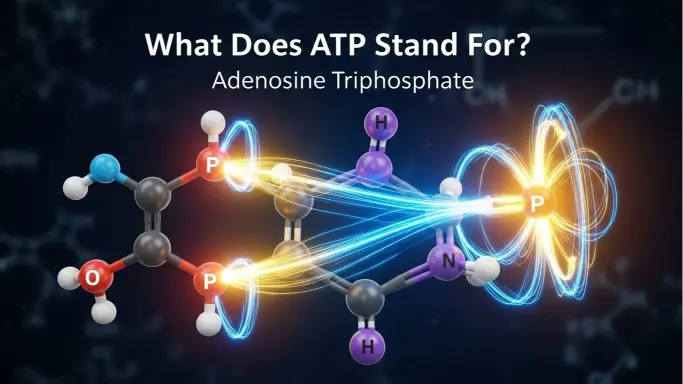
Structurally, ATP is made of three main components: an adenine base, a ribose sugar, and three phosphate groups linked together. The magic of ATP lies in these phosphate bonds.
When a cell needs energy, it breaks one of the phosphate bonds, converting ATP into ADP (Adenosine Diphosphate) and releasing usable energy.
This process fuels everything from moving your fingers to thinking and even digesting food.
ATP is not just important for humans it is vital for all forms of life, including plants, bacteria, and animals.
Cells continuously produce and recycle ATP to ensure there is a constant supply of energy.
In short, ATP is the hidden powerhouse inside every cell, keeping your body alive, active, and functioning efficiently.
Understanding ATP in biology gives you a glimpse into the incredible energy system that powers all living things.
ATP in Sports Association of Tennis Professionals
Outside biology, ATP has a completely different meaning in the world of sports.
In tennis, ATP stands for the Association of Tennis Professionals, the organization responsible for running men’s professional tennis tournaments and managing the official player rankings worldwide.
Founded in 1972, the ATP has grown to become the backbone of professional men’s tennis, ensuring that tournaments, rankings, and prize money are organized fairly and transparently.
The ATP Tour is the most well-known platform run by the association. It includes high-profile tournaments such as the Wimbledon Championships, US Open, and ATP Finals, where the top male players compete for ranking points and prize money.
These rankings are crucial because they determine seedings in tournaments, eligibility for major events, and even sponsorship opportunities for players.
The ATP ranking system is based on a points system. Players earn points by progressing through tournaments, with bigger events offering more points. This encourages competition and ensures that only the best-performing players rise to the top.
The ATP is not just about rankings; it also works to promote tennis globally, develop young talent, and maintain the sport’s integrity.
So, whether you’re watching a thrilling five-set match or following your favorite player on the leaderboard, the ATP is behind the scenes, keeping the world of professional tennis running smoothly.
In short, in sports, ATP represents organization, structure, and excellence in men’s professional tennis, showing that the same acronym can have completely different yet significant meanings depending on the context.
Other Uses of ATP Beyond Biology and Sports
While most people know ATP from biology or tennis, the acronym also appears in finance, technology, and other fields, each with a unique meaning.
Understanding these uses helps avoid confusion, especially when reading specialized articles or reports.
In finance, ATP can stand for Automatic Transfer Plan. This is a system used by banks or financial institutions that automatically transfers a fixed amount of money from one account to another at regular intervals.
It’s a convenient tool for savings, loan payments, or investment contributions, helping people manage their finances efficiently without having to remember manual transfers each month.
In technology, ATP is sometimes used in networking or IT contexts, such as Advanced Threat Protection. This refers to cybersecurity tools designed to detect, prevent, and respond to sophisticated digital threats.
Companies and individuals rely on ATP solutions to protect sensitive information from hackers and malware.
ATP can also appear in other niche contexts, like aviation or manufacturing, where it might mean Airline Transport Pilot or Acceptance Test Procedure, respectively.
Although these uses are less common, they highlight the importance of context when interpreting acronyms.
Overall, ATP is a versatile term whose meaning changes drastically depending on where it’s used. Whether it’s powering your cells, ranking tennis players, managing finances, or securing networks, ATP plays a critical role in different areas of life and work.
Recognizing the context ensures you understand its true significance in any given situation.
Differences Between ATP in Biology and Sports
The acronym ATP may seem simple, but its meaning changes drastically depending on the context.
Understanding the differences between ATP in biology and sports helps prevent confusion and makes the term easier to remember.
In biology, ATP stands for Adenosine Triphosphate, the molecule that powers almost every cellular process. It is the energy currency of the cell, essential for activities like muscle contraction, nerve signal transmission, and metabolic reactions.
ATP in this context is a chemical compound, constantly produced and recycled within cells to meet the energy demands of the organism. Without ATP, life as we know it would not exist.
In sports, ATP refers to the Association of Tennis Professionals, an organization that manages men’s professional tennis tournaments and player rankings.
Here, ATP is not a molecule but an institution that ensures fair competition, organizes events, and tracks player performance through a ranking system. The focus is on structure, organization, and promoting tennis globally.
A simple comparison highlights these differences:
| Field | Full Form | Function | Example |
| Biology | Adenosine Triphosphate | Provides energy to cells | Muscle movement |
| Sports | Association of Tennis Professionals | Organizes tournaments & rankings | Wimbledon, ATP Tour |
In essence, ATP in biology is a source of energy, while ATP in sports is a governing body.
Despite sharing the same acronym, their functions, forms, and impacts are completely different, showing the importance of context when encountering the term.
Fun Facts About ATP
ATP isn’t just a scientific term or a sports organization it’s also full of fascinating facts that make it even more interesting.
Whether you’re a science enthusiast or a tennis fan, learning these fun facts will give you a new appreciation for the versatility of ATP.
In biology, ATP is truly remarkable. Did you know that your body contains only about 0.1 grams of ATP at any given moment, yet you use roughly 50–75 kilograms every single day?
This happens because ATP is recycled constantly and cells regenerate ATP from ADP millions of times per second to keep energy flowing efficiently.
Without ATP, processes like muscle contraction, brain function, and digestion would simply stop.
Another fun fact: plants also produce ATP during photosynthesis, which powers growth and development.
In sports, the ATP the Association of Tennis Professionals has its own set of interesting facts. The ATP Tour includes over 60 tournaments worldwide, and players’ rankings are updated weekly based on their performance.
The ATP logo has become a symbol of professional tennis excellence, recognized by millions of fans globally.
Even beyond biology and sports, ATP appears in finance, IT, and aviation, making it a truly versatile acronym.
From powering our cells to ranking tennis champions, ATP plays a significant role in many aspects of life. Knowing these fun facts makes the term easier to remember and more engaging to discuss.
Frequently Asked Questions
1. What is the full form of ATP?
ATP has multiple meanings depending on the context. In biology, it stands for Adenosine Triphosphate, the energy molecule that powers cellular processes. In sports, ATP refers to the Association of Tennis Professionals, which manages men’s professional tennis tournaments and player rankings.
2. What does ATP do in the body?
In biological terms, ATP provides energy for nearly all cellular activities. When ATP is broken down into ADP (Adenosine Diphosphate), it releases energy that fuels muscle contractions, nerve signals, digestion, and other vital functions. Cells continuously regenerate ATP to meet the body’s energy demands.
3. How does ATP function in sports?
In tennis, ATP governs professional men’s tennis tournaments and maintains the global ranking system. Players earn ATP points based on their performance in tournaments, which determine their rankings, seedings, and eligibility for major events like Wimbledon or the US Open.
4. Are there other uses of ATP?
Yes, ATP is used in finance as Automatic Transfer Plan, in IT as Advanced Threat Protection, and in aviation as Airline Transport Pilot. Context is key to understanding which meaning applies.
5. How is ATP different in biology vs. sports?
ATP in biology is a chemical molecule that provides energy, while ATP in sports is an organization that manages tennis tournaments and rankings. They share the acronym but are completely unrelated in function and context.
Conclusion
In conclusion, ATP is an acronym with multiple important meanings, and understanding the context is key to interpreting it correctly.
In biology, ATP stands for Adenosine Triphosphate, the tiny molecule that powers almost every process in our cells.
It fuels muscle contractions, nerve signals, digestion, and countless other cellular activities, making it essential for life itself.
The fact that our bodies continuously recycle ATP to meet daily energy needs highlights just how vital this molecule is.
In sports, ATP represents the Association of Tennis Professionals, the organization that manages professional men’s tennis tournaments and player rankings globally.
From the ATP Tour to major tournaments like Wimbledon and the US Open, ATP ensures fair competition, keeps rankings up-to-date, and promotes tennis worldwide.
Beyond biology and sports, ATP appears in other fields like finance, technology, and aviation, demonstrating its versatility as an acronym.
If it’s powering cells, organizing tennis events, securing networks, or automating financial transfers, ATP plays a significant role in many aspects of life.
By understanding the different contexts of ATP, you can confidently use or interpret the term without confusion.
So next time you hear ATP, If in a science lab, on a tennis court, or in a finance article, you’ll know exactly what it means.
Share this article with friends or colleagues who might be curious about ATP and its fascinating roles in life and sports.

I am Zadie Smith, the mind behind witty words and viral laughs on Jokestide.com.
I am here to turn everyday moments into clever jokes, puns, and share-worthy humor.
I am all about fresh, trending fun that makes you smile, scroll, and come back for more.