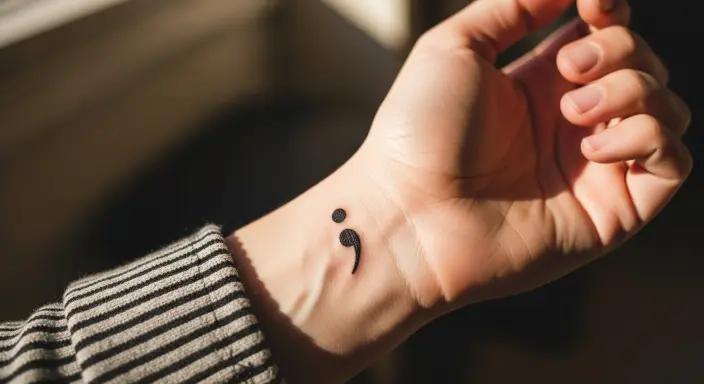
Tattoos often carry deep personal meaning, but few are as powerful and symbolic as the semicolon tattoo.
At first glance, it might seem like a simple punctuation mark, yet for many, it represents much more than ink on skin it is a symbol of hope, resilience, and the courage to continue one’s story.
Originating from Project Semicolon, a movement founded in 2013 to raise awareness about mental health and suicide prevention, the semicolon tattoo reminds people that their journey is not over.
Much like a semicolon in a sentence, which indicates a pause rather than an end, this tattoo embodies the choice to move forward despite life’s struggles.
Over the years, it has become a beacon for those who have faced depression, anxiety, or suicidal thoughts, serving as both a personal reminder and a public statement of solidarity.
In this article, we’ll explore the meaning, history, designs, and significance behind this unique tattoo.
The Origin of the Semicolon Tattoo
The semicolon tattoo has a powerful origin rooted in hope, resilience, and mental health awareness. It was popularized by Project Semicolon, a movement founded in 2013 by Amy Bleuel.
Amy started the project after losing her father to suicide, aiming to create a platform that would raise awareness about depression, mental illness, and suicide prevention.
The semicolon itself is a fitting symbol: in writing, a semicolon is used when an author could have ended a sentence but chose to continue. Similarly, the tattoo represents a choice to keep going when life feels overwhelming.
Early adopters of the semicolon tattoo were individuals who had faced mental health struggles or survived suicidal thoughts.
For them, the tattoo became a tangible reminder of strength, resilience, and the decision to continue their life story. Over time, it gained recognition not just among survivors, but also as a symbol of solidarity for friends, family, and communities supporting mental health awareness.
Today, the semicolon tattoo is more than just a design it’s a movement, inspiring conversations, providing hope, and creating a visible mark of courage and perseverance for millions around the world.
Symbolism and Meaning of the Semicolon Tattoo
The semicolon tattoo carries a deep and multifaceted meaning, resonating with people across the globe. At its core, it symbolizes resilience and the choice to continue.
Just as a semicolon in writing indicates a pause rather than the end of a sentence, the tattoo represents an individual’s decision to keep going despite life’s struggles.
For many, it serves as a reminder that their story isn’t over and that they have the strength to face difficult moments.
Beyond personal resilience, the semicolon tattoo is also a symbol of hope and mental health awareness.
It allows wearers to honor their own battles with depression, anxiety, or suicidal thoughts, while also acting as a visible sign of solidarity for others facing similar challenges.
The tattoo’s symbolism extends to loved ones, representing support, compassion, and understanding for those who may feel alone or overwhelmed.
Additionally, the semicolon tattoo has grown into a community symbol, connecting people who share similar journeys and experiences.
It’s not just a piece of body art; it’s a conversation starter, a statement of empathy, and a mark of courage.
Every tattoo tells a story, and for those who choose the semicolon, it is a personal emblem of strength, hope, and the unwavering will to continue life’s narrative.
Personal Stories Behind the Semicolon Tattoo
For many, the semicolon tattoo is more than just a symbol it represents personal triumphs and life-changing experiences.
Countless individuals have shared that getting a semicolon tattoo marked a pivotal moment in their mental health journey.
Some see it as a celebration of survival, a permanent reminder that they overcame depression, anxiety, or suicidal thoughts.
For others, it serves as a daily encouragement, a small yet powerful symbol that they have the strength to continue even on their toughest days.
Take, for example, individuals who struggled silently with mental health issues for years. A semicolon tattoo became a turning point a personal commitment to keep moving forward.
Many describe the moment of getting the tattoo as emotional, empowering, and therapeutic.
Beyond personal stories, the tattoo often sparks conversations with friends, family, or strangers, allowing survivors to connect with supportive communities and share their experiences.
Some people also get semicolon tattoos in honor of loved ones who have faced similar challenges or lost their battle to mental health struggles.
In these cases, the tattoo becomes a symbol of remembrance and advocacy, raising awareness while keeping memories alive.
Each story is unique, but all share a common thread: the semicolon tattoo is a mark of resilience, hope, and the courage to continue life’s story despite hardships.
Design Variations and Placement Ideas
One of the reasons the semicolon tattoo has become so popular is its versatility. While some people prefer a simple, minimalist semicolon, others incorporate creative elements to personalize its meaning.
A semicolon with a heart symbolizes love and self-compassion, while a butterfly-semicolon combination represents transformation, growth, and the beauty of overcoming struggles.
Some people add meaningful words like “hope,” “stay,” or “survive” alongside the semicolon, emphasizing their journey and resilience.
The tattoo’s size and placement also carry significance. Many choose the wrist or forearm for visibility, making it a constant reminder of their strength and survival.
Others prefer more private locations, like the ankle, behind the ear, or shoulder, allowing the tattoo to serve as a personal emblem rather than a public statement.
Finger or collarbone placements are also common among those seeking subtle yet symbolic designs.
Colors and styles vary as well. Some opt for a classic black ink semicolon, while others use vibrant colors or watercolor effects to create a more expressive design.
Minimalist designs resonate with those who want simplicity and elegance, whereas detailed or artistic designs allow individuals to express deeper layers of meaning.
Ultimately, the beauty of the semicolon tattoo lies in its ability to be both personal and universal. Each design tells a story, honors a journey, and serves as a visible symbol of courage, hope, and perseverance.
The Tattoo’s Role in Mental Health Advocacy
The semicolon tattoo is not only a personal symbol but also a powerful tool for mental health advocacy.
By wearing the tattoo, individuals contribute to raising awareness about depression, anxiety, and suicide prevention. It serves as a conversation starter, encouraging open discussions about mental health that might otherwise remain stigmatized or ignored.
In this way, the tattoo helps normalize talking about struggles, breaking down barriers and fostering understanding among friends, family, and communities.
Organizations like Project Semicolon have played a major role in turning the tattoo into a movement. Through social media campaigns, events, and awareness programs, the semicolon has become a universal emblem of solidarity for mental health survivors and supporters.
Wearing the tattoo communicates a message of empathy and connection, signaling that no one has to face their struggles alone.
Additionally, the tattoo empowers people to advocate for themselves and others. Many survivors share their stories publicly, inspiring others to seek help or simply know they are not alone.
Mental health professionals also recognize the tattoo as a meaningful form of self-expression that reinforces resilience and healing.
Overall, the semicolon tattoo has transcended its role as body art. It has become a symbol of hope, support, and community, reminding individuals that life’s challenges can be faced together, and that each pause in life can be a choice to continue rather than give up.
Critiques, Misconceptions, and Respectful Considerations
While the semicolon tattoo carries deep meaning for many, it has also faced critiques and misconceptions. Some critics argue that the tattoo has become a trend, with people getting it purely for aesthetics rather than personal significance.
While trends are natural in the world of tattoos, it’s important to recognize and respect the semicolon’s original purpose: raising awareness about mental health struggles and symbolizing resilience and hope.
Another common misconception is that the tattoo is only for individuals who have experienced suicidal thoughts. In reality, it represents a broader message: perseverance, support, and mental health advocacy.
Many people get the tattoo to honor loved ones, support mental health causes, or signify personal strength, even if they have not personally struggled with mental illness.
Respectful considerations are essential when choosing this tattoo. It’s important to reflect on the personal meaning behind the design and understand its significance.
Consulting with mental health professionals or talking with others who have the tattoo can provide insight and help ensure the choice is meaningful rather than superficial.
Additionally, placement, design, and context matter. A semicolon tattoo can be small and subtle or bold and artistic, but it should always be approached with intention.
By understanding its history and symbolism, individuals can ensure that their semicolon tattoo honors the movement, spreads awareness, and remains a genuine emblem of courage and hope.
How to Decide If a Semicolon Tattoo Is Right for You
Choosing to get a semicolon tattoo is a deeply personal decision, and it’s important to reflect on its significance before committing. The tattoo carries emotional weight and represents resilience, hope, and mental health advocacy, so understanding your personal connection to it is key.
Start by asking yourself what the tattoo means to you: Is it a symbol of survival, a reminder of your strength, or a tribute to someone you love? Your answers will guide the design, placement, and style that best align with your story.
It can also be helpful to consult with mental health professionals or supportive communities, especially if the tattoo relates to personal struggles with depression, anxiety, or suicidal thoughts.
Talking through your intentions can provide clarity and ensure the tattoo is a positive and empowering symbol rather than a trigger.
Consider the design and placement carefully. A wrist or forearm tattoo might serve as a constant reminder, while a more private location, like the ankle or shoulder, may feel personal and intimate.
Think about colors, additional symbols, or words that enhance the meaning for you.
Finally, remember that a semicolon tattoo is not just body art it is a statement, a conversation starter, and a personal emblem of courage.
By reflecting on its meaning, consulting with professionals or loved ones, and planning intentionally, you can ensure that your semicolon tattoo truly represents your story and your choice to continue your life’s narrative.
FAQs:
1. Is the semicolon tattoo only for survivors of mental health struggles?
No. While it originated as a symbol for those who have faced depression, anxiety, or suicidal thoughts, the tattoo has a broader meaning.
It represents resilience, hope, and the choice to continue life’s journey, making it meaningful for anyone who wants to honor personal strength or support mental health awareness.
2. What does a semicolon tattoo with a heart or butterfly mean?
A semicolon combined with a heart symbolizes love, self-compassion, and emotional healing.
A butterfly-semicolon design often represents transformation, growth, and overcoming challenges. Adding personal symbols allows the tattoo to tell a unique story.
3. Can I get the tattoo if I haven’t experienced mental health struggles?
Yes. Many people get the tattoo to support friends, loved ones, or mental health causes.
The key is understanding and respecting its significance rather than treating it as a trend.
4. Where should I place a semicolon tattoo?
Common placements include the wrist, forearm, ankle, fingers, or behind the ear.
The choice depends on whether you want it visible as a reminder or private as a personal emblem.
5. Does the tattoo have to be black ink only?
Not at all. While black ink is classic, people often add colors, watercolor effects, or other symbols to personalize the design.
These FAQs help clarify the semicolon tattoo’s meaning, versatility, and importance, ensuring that anyone considering it approaches the decision with thoughtfulness, respect, and understanding.
Conclusion:
The semicolon tattoo is far more than a simple punctuation mark it is a symbol of resilience, hope, and the courage to continue one’s story.
Originating from Project Semicolon, the tattoo has become a powerful emblem for those who have faced mental health struggles, as well as a meaningful way to support friends, family, and broader mental health awareness.
Every semicolon tattoo carries a story, whether it represents survival, personal growth, or solidarity with others navigating life’s challenges.
Beyond personal significance, the semicolon tattoo has become a movement, connecting people worldwide and sparking important conversations about mental health.
Its versatility in design from minimalist semicolons to heart or butterfly combinations allows individuals to express their journey uniquely while honoring the movement’s message of hope and perseverance.
If you are considering a semicolon tattoo, it’s important to reflect on its meaning, choose a design that resonates with your story, and approach it with respect for its origins.
Ultimately, this small yet powerful symbol serves as a reminder that life’s challenges can be met with strength, and that each pause is an opportunity to continue your story.
It is both a personal testament and a public statement of courage, resilience, and hope.
I am Toni Morrison, the creative voice behind jokestide.com where humor meets trending jokes and puns.
I craft fresh, fun, and share-worthy content designed to make people smile instantly.
If you love viral laughs and clever wordplay, you’ve landed on the right joke tide.